Video
Agenda
- Pre-meeting: Holding screen before the meeting begins. (00:00:00)
- 1. CALL TO ORDER / 2. ROLL CALL (STUDY SESSION): The study session is called to order and roll call is taken. (00:04:36)
- 3.1 City Decarbonization Goal and Five-Year Plan Approach and Actions: Presentation, public comment, and council discussion on the city decarbonization goal. (00:05:01)
- Break: Meeting is recessed before the regular session. (01:13:30)
- 1. CALL TO ORDER/PLEDGE OF ALLEGIANCE / 2. ROLL CALL (REGULAR SESSION): The regular session begins with the pledge of allegiance and roll call. (01:15:33)
- 3.1 Bike Month Proclamation: Proclamation for Bike Month is presented. (01:16:36)
- 3.2 Asian American and Pacific Islander Heritage Month Proclamation: Proclamation for AAPI Heritage Month is presented. (01:18:40)
- 3.3 Update on Summer of Soccer World Cup Events and Public Safety and Security: Presentation on the upcoming Summer of Soccer events. (01:20:34)
- 4. CONSENT CALENDAR: Approval of the consent calendar, with item 4.3 pulled for separate consideration. (01:24:19)
- 4.3 Economic Vitality Strategy Annual Progress Report: Item 4.3 is discussed and voted on separately. (01:25:15)
- 5. ORAL COMMUNICATIONS FROM THE PUBLIC ON NONAGENDIZED ITEMS: Public comments on items not on the agenda. (01:25:46)
- 6.1 5-Year Update to the Urban Water Management Plan and Water Shortage Contingency Plan: Public hearing and action on the Urban Water Management Plan update. (01:27:06)
- 6.2 City Code Amendments to Allow Streamlined Administrative Approval for Housing Development Projects Utilizing Assembly Bill 130 and Other Minor Updates: Public hearing and action on city code amendments related to AB 130. (01:30:58)
- 6.3 North Bayshore Area Plan Amendment: Public hearing and action on the North Bayshore Area Plan Amendment. (01:45:29)
- 7.1 Parks and Recreation Strategic Plan Adoption: Discussion and adoption of the Parks and Recreation Strategic Plan. Includes a motion to continue the meeting past 10 PM. (01:57:38)
- 8.1 AB 481 Military Equipment Annual Report and Policy Adoption: Presentation and action on the military equipment annual report and policy. (02:08:52)
- 9. COUNCIL, STAFF/COMMITTEE REPORTS / 10. ADJOURNMENT: Council members share reports and the meeting is adjourned. (02:18:42)
Speaker Summary
(48 speakers)
| Speaker | Words | Time |
|---|---|---|
| Mayor Emily Ann Ramos | 6,198 | 45m |
| Vice Mayor Chris Clark | 2,135 | 13m |
| Councilmember Pat Showalter | 3,952 | 28m |
| Councilmember Alison Hicks | 3,786 | 28m |
| Councilmember Lucas Ramirez | 4,122 | 28m |
| Councilmember John McAlister | 3,559 | 23m |
| Councilmember Ellen Kamei | 2,536 | 15m |
| City Manager Kimbra McCarthy | 254 | 1m |
| City Attorney Jennifer Logue | 605 | 3m |
| City Staff | 4,382 | 27m |
| Danielle Lee, Chief Sustainability and Resiliency Officer | 3,011 | 23m |
| Principal Planner Diana Pancholi | 1,100 | 8m |
| City Staff Christine Crosby | 1,170 | 8m |
| Jim Zeroski | 936 | 7m |
| City Staff Arn Andrews | 982 | 6m |
| Economic Vitality Manager Amanda Rotella | 1,283 | 6m |
| Anthony Yulo, Silicon Valley Clean Energy | 656 | 4m |
| Alexander Amoroso | 770 | 4m |
| Captain Matthew Atkins | 582 | 3m |
| Peter Katz | 558 | 3m |
| Bruce Karney | 464 | 3m |
| Water Resources Manager Elizabeth Flegal | 619 | 2m |
| Lieutenant Lorena Holt | 337 | 2m |
| City Staff Christian Murdock | 430 | 2m |
| Mary Dateo | 250 | 1m |
| John Schatter | 247 | 1m |
| April Webster | 244 | 1m |
| Deb Hennigson | 244 | 1m |
| Zoe Chen | 229 | 1m |
| Tracy Chu | 199 | 1m |
| Monica Teyscher | 268 | 1m |
| Kevin Ma | 265 | 1m |
| Tracy Ferea | 182 | 1m |
| Ronit Bryant | 203 | 1m |
| Zoe Zeroski | 260 | 1m |
| Eric Poycon | 290 | 1m |
| Albert Jeans | 239 | 1m |
| City Staff Ed Arango | 189 | 1m |
| Ling Xie | 159 | 1m |
| John Scarborough | 186 | 1m |
| Alex Brown | 124 | <1m |
| Anthony Yulo | 127 | <1m |
| Assistant City Clerk | 57 | <1m |
| Community Development Director Christian Murdock | 28 | <1m |
| Public Speaker Rashmi | 265 | 1m |
| Public Speaker Ronnie | 287 | 1m |
| Public Speaker Dashleitz | 261 | 1m |
| Public Speaker | 132 | 1m |
Transcript
Pre-meeting
[00:04:28] Mayor Emily Ann Ramos: Okay everyone, we are getting ready to call the meeting to order. Always makes me happy to hit that.
1. CALL TO ORDER / 2. ROLL CALL (STUDY SESSION)
[00:04:36] Mayor Emily Ann Ramos: Um, all right, thank you for joining us for our study session. The Assistant City Clerk will take attendance by roll call.
[00:04:44] Assistant City Clerk: Councilmember Hicks?
[00:04:45] Councilmember Alison Hicks: Here.
[00:04:46] Assistant City Clerk: Councilmember Kamei?
[00:04:47] Councilmember Ellen Kamei: Here.
[00:04:48] Assistant City Clerk: Councilmember McAlister?
[00:04:50] Councilmember John McAlister: Yo.
[00:04:51] Assistant City Clerk: Councilmember Ramirez?
[00:04:51] Councilmember Lucas Ramirez: Here.
[00:04:52] Assistant City Clerk: Councilmember Showalter?
[00:04:53] Councilmember Pat Showalter: Here.
[00:04:54] Assistant City Clerk: Vice Mayor Clark is absent. Mayor Ramos?
[00:04:57] Mayor Emily Ann Ramos: Here.
[00:04:58] Assistant City Clerk: Thank you. We have a quorum.
[00:04:59] Mayor Emily Ann Ramos: All right, we will now move on to...
3.1 City Decarbonization Goal and Five-Year Plan Approach and Actions
[00:05:01] Mayor Emily Ann Ramos: Moving on to item 3.1, City Decarbonization Goal and Five-Year Plan Approach and Actions. The purpose of the study session is to review and provide feedback on the city decarbonation goal and draft actions and strategy. Chief Sustainability and Resiliency Officer Danielle Lee and Assistant City Manager Audrey Seymour will present the item. If you would like to speak on this item in person, please submit a blue speaker card to the assistant city clerk now. Go ahead.
[00:05:39] Danielle Lee, Chief Sustainability and Resiliency Officer: Good evening, Danielle Lee, Chief Sustainability and Resiliency Officer. I'm pleased to be joined by Miss Seymour, and also Rebecca Lucky, Senior Sustainability Programs Manager, as well as Anthony Yulo from Silicon Valley Clean Energy online. This evening, we are going to be discussing the city's decarbonization goal and proposed five-year action plan approach and actions.
[00:06:25] Danielle Lee, Chief Sustainability and Resiliency Officer: The purpose of our discussion is really threefold. We'd like to confirm the city's 2045 decarbonization goal, confirm the five-year approach to planning for our decarbonization actions, and then to delve more deeply in and refine and confirm the draft priority actions that were included in the report to council.
[00:06:55] Danielle Lee, Chief Sustainability and Resiliency Officer: A more extensive background on the city's sustainability efforts was provided in the memo, but a few of the main drivers that got us to this evening's discussion include the council's carbon neutrality declaration. The city has committed to achieving carbon neutrality by 2045.
[00:07:19] Danielle Lee, Chief Sustainability and Resiliency Officer: We've also in this interim period been working on significant action related to decarbonization through the actions identified in our city's sustainability action plans. And then in November of 2024, Council approved a scope of work with Cascadia and asked staff to evaluate whether the city could accelerate its decarbonization goal, and also directed staff to develop a plan related to decarbonization so that we can achieve our goals.
[00:08:03] Danielle Lee, Chief Sustainability and Resiliency Officer: Also by way of background, I want to highlight some of the significant efforts that have been undertaken by the city. Mountain View has long been a leader in sustainability work and you'll see that we have not only been planning over the last stretch of time, but also doing the work. We've made major accomplishments in sustainability initiatives across a variety of topics. I won't read them all to you, but we did give a more thorough update in the memo and also recently provided an update to the Council Sustainability Committee.
[00:08:49] Danielle Lee, Chief Sustainability and Resiliency Officer: So as we began to undertake this analysis in the early part of 2025, we were really struck by this shifting policy landscape and you know, of course, I would like to acknowledge that that's a recurring, it's a regular factor for the policy landscape to move, but in the last 18 months, we have observed significant changes at the federal and state and even regional levels.
[00:09:24] Danielle Lee, Chief Sustainability and Resiliency Officer: One example that I'd like to highlight is at mid-2025, the EPA rescinded a waiver that it had given to California, which would have allowed the state to ban the sale of non-electric vehicles starting in 2035. So by 2035, California, one of the largest automotive markets in the country, would have only allowed the sale of new electric vehicles.
[00:09:55] Danielle Lee, Chief Sustainability and Resiliency Officer: As you can imagine, that would have led to a significant shift in our emissions. Revoking that waiver has shifted significant responsibility to the local level to deal with greenhouse gas emissions. Our initial analysis of emissions showed 7% of emissions remaining by 2045.
[00:10:19] Danielle Lee, Chief Sustainability and Resiliency Officer: With the revocation of this one waiver, it pushed our emissions up to 40% of all emissions being responsible, you know, the city being responsible for, the local level having to deal with. So, you know, I can say the shifting policy landscape, we happen to be undertaking analysis right at this moment, so we have numbers to put to this to really underscore just how significant the impact has been.
[00:10:49] Danielle Lee, Chief Sustainability and Resiliency Officer: Obviously, this landscape helped inform our analysis. We had many insights from it. I think it was a fascinating time to be asking these questions. We could see in real time what how significant the impacts are from the state and the federal levels, and how important coordination across all these levels of government is to achieve major reductions in greenhouse gas emissions.
[00:11:26] Danielle Lee, Chief Sustainability and Resiliency Officer: We also learned that local actions alone are not sufficient. We can't get to zero emissions all by ourselves. But we don't throw in the towel because of this. Local actions are insufficient, but they are essential. You know, we enable broader policy success and implementation by accelerating policies that are adopted at the state level or the regional level.
[00:11:54] Danielle Lee, Chief Sustainability and Resiliency Officer: Cities help to fill policy and market gaps. You know, if you think about EV charging, for example, we've seen a proliferation of EV chargers. You know, we have them at workplaces, we have them at grocery stores, the city has been installing them in parking garages, but where we don't see them being installed as much are at places like multi-family dwellings. And so you know, we're using this plan as an opportunity to fill a gap where the market might not solve for it. And that's one of the critical roles that local governments can play.
[00:12:35] Danielle Lee, Chief Sustainability and Resiliency Officer: And then finally, at the local level, we can pilot solutions that can be scaled regionally and statewide. Reach codes are a great example of this. Many of the most successful building code changes were piloted at the local level through reach codes and then eventually adopted statewide. So it's this model for change that cities can help to instigate.
[00:13:05] Danielle Lee, Chief Sustainability and Resiliency Officer: Before I walk you through the actual items that are in the five-year plan, I just wanted to point out that the draft measures before you are highly focused on buildings and transportation. And that's because 90% of our emissions come from our buildings and our transportation systems. So you'll see in the five-year draft action plan that that's where our focus is as well.
[00:13:40] Danielle Lee, Chief Sustainability and Resiliency Officer: Some of the key actions related to building electrification, we've just chosen a few to highlight here, but you know, we're trying to think about how can we lay the groundwork for things? That includes electrification readiness, some of our reach codes included pre-wiring requirements, so we won't make you have an electric appliance, but we'd like you to have the electricity available there so that if your appliance dies, you can buy an electric one.
[00:14:14] Danielle Lee, Chief Sustainability and Resiliency Officer: Targeted outreach and education, maybe you saw me dressed up as a heat pump water heater on Earth Day or at other events. Miss Lucky as well, we all get the chance to do that. But really reaching out to the community, engaging with folks, and talking about appliances and making that fun. We're exploring incentives for small businesses, lower income households, trying to think about pilot programs. How can we find those unique opportunities to achieve scale?
[00:14:49] Danielle Lee, Chief Sustainability and Resiliency Officer: There is a program right now that Mountain View is currently on the list as one of the potential participants for, which is basically zonal decarbonization where the utilities would cover the cost to electrify a small area of a neighborhood in lieu of investing in the natural gas infrastructure. So in places where natural gas pipelines need upgrades, we could instead take those funds and electrify the homes.
[00:15:22] Danielle Lee, Chief Sustainability and Resiliency Officer: Additional items include end of flow of natural gas, policy advocacy. We've been active at the regional and state level to help spur our partners on, whether it's the Air District through the Sprint to 9-6 rule making group, or through at the state level to the legislature through the Local Government Climate Alliance.
[00:15:53] Danielle Lee, Chief Sustainability and Resiliency Officer: And then of course, we're building in contingencies. If one measure in our plan fails, what can we do? What would be the plan B or in this case C or D, you know, we've seen many policies be removed.
[00:16:08] Danielle Lee, Chief Sustainability and Resiliency Officer: Some of the transportation related actions include providing better access to EV charging, especially in our multi-family residences. Exploring mobility hubs, the development of a transit benefit district, expanding our shuttle service. What are all the ways that we can both electrify our transportation options and get people into public transit or into more active transportation modes?
[00:16:45] Danielle Lee, Chief Sustainability and Resiliency Officer: So why this approach? Why five years? Why the shorter term and the focus on the local? We've really tried to hone in on our highest impact options. There are so many things that we could work on and many great ideas out there. What we've tried to do through this analysis is understand what will have the most impact and what fills the most important gap.
[00:17:14] Danielle Lee, Chief Sustainability and Resiliency Officer: This approach will enable faster implementation and hopefully lay the groundwork for broader policy, program, and technology changes. As we do this work, we're also keeping an eye on the regional collaborative opportunities that we have. How can we work together with our partners such as Joint Venture Silicon Valley, Silicon Valley Clean Energy, the county, our neighboring cities? You know, what are they doing, where can we work together?
[00:17:49] Danielle Lee, Chief Sustainability and Resiliency Officer: We also took direction from the Council Sustainability Committee and the committee really emphasized rapid execution. What can we do? What are the next best things that we can do? CSC also suggested that we uphold our existing carbon neutrality goal rather than accelerating it, and directed staff to prioritize the creation of a five-year plan, knowing that it's very hard to predict out to 2045.
[00:18:22] Danielle Lee, Chief Sustainability and Resiliency Officer: Okay, with that, Mayor, I would like to turn it back to you. We have two questions for the council this evening.
[00:18:31] Mayor Emily Ann Ramos: Thank you. We will now move on to public comment. Would any member of the public joining us virtually or in person like to provide comment on this item? If so, click the raise hand button in Zoom or submit a blue speaker card to the assistant city clerk. We will take in-person speakers first. I am not seeing any... there's no one showing up on my queue, but... do you know how many speakers are there?
[00:18:59] Assistant City Clerk: Just two.
[00:19:01] Mayor Emily Ann Ramos: Just two? Okay, you get three minutes then.
[00:19:05] Bruce Karney: I'm Bruce Carney. I had the pleasure of chairing ESTF-1 18 years ago, and ESTF-2 nine years ago. I've spent 18 years trying to understand Mountain View's greenhouse gas emissions and how they can be reduced. One of the things we learned from both of those task forces was that presenting too many recommendations to the council is a really bad idea.
[00:19:27] Bruce Karney: And I'm glad to see that in bullet two, staff is asking council for additions, and in particular deletions. I would recommend that you add workplace charging as a very high impact, very important thing in this jobs-rich city. The people who commute from far away to work in Mountain View contribute vast amounts of GHGs to the measurement that we use to decide whether our city is growing its emissions or shrinking them.
[00:20:00] Bruce Karney: And they have over the last five years have grown, not shrunk, and this is largely because Silicon Valley Clean Energy in 2024 added a lot of carbon in their product. The staff proposal doesn't mention that, but it does inherently assume that SVCE is going to keep providing carbon-free electricity into the 2045 timeframe. That assumption really needs to be thought about, because Silicon Valley Clean Energy is facing some financial challenges that may cause them to back off of their 100% carbon-free goal which they've had for 10 years.
[00:20:36] Bruce Karney: So let's talk about how you would sensibly delete some of the 36 recommendations in attachment one. What I would recommend is that you say, will this idea, this proposed thing that's in attachment one, reduce our emissions within five years by 1%, or in 10 years by 3%, or is it a small thing that doesn't deserve staff time or city budget attention?
[00:21:04] Bruce Karney: In ESTF-2, we were most proud of recommending the creation of a new Chief Sustainability Officer role, adding staff to the sustainability department, which used to be Steve Attinger, a one-man army fighting climate change, and increasing the budget for sustainability. I'm sure you're going to need to increase the budget and the staff again, no matter whether you have five objectives or 36 objectives, because we are absolutely convinced, or the task force was absolutely convinced, that staff and budget are the gating factors for achieving GHG reduction.
[00:21:37] Bruce Karney: And it's interesting to me that in the staff report, there's no mention of changes to either staffing or budget. I don't know why that is. Also I would have to say that the concern about the lack of the Clean Cars program probably shouldn't be taken as that big a deal because I'm sure there will be a change in the administration and something very much like Clean Cars by 2035 will come back or be accelerated. Thanks for your time and attention.
[00:22:06] Mayor Emily Ann Ramos: Thank you. Next speaker, Alex Brown.
[00:22:10] Alex Brown: Hi friends. Alright, I'm going to start with the request. We have six mobile home parks in the city, and almost... as far as I know, every mobile home is constrained by supply for electrification where they could not, if they wanted to, fully electrify. A lot of them, you have to have gas for heating or for the dryer and the stove. If that's something that the city could help with, to help the parks to upgrade their infrastructure, that would be a great place to start.
[00:22:43] Alex Brown: I appreciate all the images in the presentation, but we have to move beyond corporate Memphis. It is just so boring. Like, it looks good overall, but we can do better. Anyway, yes, thank you. Decarbonize.
[00:23:04] Mayor Emily Ann Ramos: Alright, seeing no more speakers, I'm going to bring it back to council. Oh wait, sorry. One more virtual speaker?
[00:23:08] Danielle Lee, Chief Sustainability and Resiliency Officer: Mayor Ramos, we have Anthony from Silicon Valley Clean Energy on Zoom. Who'd like to speak?
[00:23:11] Mayor Emily Ann Ramos: Oh, there we go. We have our virtual speakers. So, Anthony.
[00:23:21] Anthony Yulo, Silicon Valley Clean Energy: Okay, just like to confirm you can hear me. I did unmute it.
[00:23:24] Mayor Emily Ann Ramos: We can hear you.
[00:23:25] Anthony Yulo, Silicon Valley Clean Energy: Awesome, thank you. Hey, I just wanted to start by really acknowledging your staff and the leadership that they display. You know, I get to work with staff from every city in our territory, and really, you guys should be extremely pleased with the outstanding staff team that you've put together.
[00:23:48] Anthony Yulo, Silicon Valley Clean Energy: And that's really a reflection of your community and your leadership as a council in funding this group of folks. So thank you for doing that, because ideas that are implemented by Mountain View, it displays leadership and makes it that much easier to spread these good programs throughout the region.
[00:24:08] Anthony Yulo, Silicon Valley Clean Energy: So from SVCE's perspective, I just wanted to say that we continue to remain willing and able to partner with the city on a variety of initiatives. Currently, you probably know that we're jointly operating a heat pump water heater rebate program. That's a program SVCE has stood up and the city is contributing to, to make it especially feasible for folks in Mountain View to transition to a heat pump water heater.
[00:24:36] Anthony Yulo, Silicon Valley Clean Energy: So I think that the plan as drafted is a very reasonable approach. I love looking at things in smaller chunks of time, because as Ms. Lee reported, things do change rapidly, and so it's really important to have some flexibility, do what you can when you can, and move on as things change. Thanks very much. I will be here throughout the study session if there are other questions for SVCE that comes up. Thank you.
[00:25:07] Mayor Emily Ann Ramos: Thank you. Now we will bring it back to council. Oh wait, sorry. One more virtual speaker. Mary Addato.
[00:25:18] Mary Dateo: Good evening. I just want to say that I appreciate the focus on buildings and transportation, and I urge the City of Mountain View to maintain its focus on climate change. Thank you.
[00:25:31] Mayor Emily Ann Ramos: Thank you. We will now bring it back to council. Council will have the opportunity to ask questions, and then discuss and provide feedback on the study session questions. Does any member of the council have any questions? Councilmember Hicks.
[00:25:48] Councilmember Alison Hicks: Yes, I do. First, I wanted to thank staff for the presentation. I am on the Council Sustainability Committee, and I feel like, without bleeding too much into comments, there's just been a sea change in... unfortunately, from the federal level, if anybody has read the paper over the past couple years, in terms of downscaling policy addressing climate change.
[00:26:21] Councilmember Alison Hicks: And on the Council Sustainability Committee, we've certainly talked about that, but it seemed like time for a check-in from the full council. So I really look forward to hearing, and with the public, although they do come to our CSC meetings. And so I really look forward to hearing everybody's questions and comments.
[00:26:39] Councilmember Alison Hicks: As for mine, my first question is... so, Mr. Carney suggested that we should look at possibly adding actions, but also maybe deleting some. And I'm wondering, I guess I saw your list of actions not so much as a list that you had to complete every single one, but more that we're in very much changing times. I mean, I never know what's going to happen next, and I hope for positive change in November, but I have to say I'm just crossing my fingers.
[00:27:25] Councilmember Alison Hicks: Do you... so I was kind of seeing them as a menu that you could pick from as appropriate. And I'm hesitant to delete anything in case it becomes appropriate. But I would love to hear from you, do you think deleting... I figure that you can delete them yourself if you feel that they're not... you know, that they don't rise to the top, but please tell me how you think about them. Because I certainly don't want to give staff too many assignments. I also don't want to take things off that may become appropriate, say in November.
[00:28:02] Danielle Lee, Chief Sustainability and Resiliency Officer: Thank you for the question. The way that you described it as a menu with an assumption of the need for contingencies is exactly how we've been thinking about it. So, for example, the Air District has rules that it's considering related to appliances, natural gas appliances specifically.
[00:28:21] Danielle Lee, Chief Sustainability and Resiliency Officer: And if they move forward with the rules, they would basically ban the sale of natural gas appliances in the Bay Area. At which point, we could assume significant electrification in buildings without local action, really, aside from spurring adoption. If those rules are modified, you know, if they have significant loopholes, if you will, or exemptions that are added, if their implementation is delayed, we have also included policies that could act as a backstop that would achieve some portion of the building electrification that would have been achieved by the Air District rules.
[00:29:00] Danielle Lee, Chief Sustainability and Resiliency Officer: So we do have kind of an overly exhaustive list because the policy landscape is moving so quickly.
[00:29:09] Councilmember Alison Hicks: Okay, so I'll take that, that you would like a rich menu.
[00:29:13] Danielle Lee, Chief Sustainability and Resiliency Officer: We would, if that's the council's pleasing.
[00:29:15] Councilmember Alison Hicks: Okay, and my second question is... and this maybe more for the member of the public who spoke on this, or maybe staff will know... I don't remember ever talking about mobile home electrification, and that is a significant number of households in the city. I would like, if anybody knows, like from practical... it sounds like not much has been done here in Mountain View, if it has it's been done behind my back. And I'd like to know what the first steps generally are, you know, hopefully there are other examples out there outside Mountain View.
[00:30:05] Danielle Lee, Chief Sustainability and Resiliency Officer: Certainly. I think that decarbonizing mobile home communities is uniquely challenging. Often the constraint is driven by the power supply that's available to those given sites, and so the electrification measures that could be pursued can be constrained. It's a site-by-site analysis though.
[00:30:28] Danielle Lee, Chief Sustainability and Resiliency Officer: We have had some very initial discussions with Silicon Valley Clean Energy about looking into this as an initiative that we could undertake. I think it would be slow going in the sense of each site having to be analyzed on its own, it's less cookie-cutter than other types of electrification.
[00:30:53] Danielle Lee, Chief Sustainability and Resiliency Officer: That being said, it's been under discussion. We did not include it in this list, but this is only the draft list, and we would not be bringing the final list to council for adoption until later this year. So we could certainly evaluate that further and see if we recommend including it.
[00:31:11] Councilmember Alison Hicks: Okay, thank you. And then let's see, other questions... in the staff report, there was mention of implementation of renewable energy battery storage. I think, can you give me more details on that? Was that here... I mean, was that within the city... within the city...
[00:31:36] Danielle Lee, Chief Sustainability and Resiliency Officer: I think it's a model that we would love to see both in municipal facilities and in people's homes, places of residence. The city has been pursuing municipal solar and we are also installing battery storage, I believe at the community center was our first battery installation.
[00:32:00] Danielle Lee, Chief Sustainability and Resiliency Officer: So as we start to have more of these assets, the next opportunity is how can we connect them better. You know, renewable battery storage is solar plus battery. So on the sites that we have solar, is there an opportunity to add battery to make it a more functional asset. And then eventually, you know, once we have practiced what we've preached, we would also like to promote it across the community.
[00:32:29] Councilmember Alison Hicks: Okay, those are my questions. Thank you.
[00:32:33] Mayor Emily Ann Ramos: Thank you, Councilmember Hicks. Councilmember Showalter.
[00:32:40] Councilmember Pat Showalter: Well, I was going to ask you about the mobile home parks, because it's definitely something we haven't really talked about. But we do have at least five mobile home parks, and I'm sure that other communities in Silicon Valley Clean Energy's territory have a number of them as well. So something to take back to the board.
[00:33:04] Councilmember Pat Showalter: I am the rep at the moment, and Chris Clark is the alternate, so we are glad to answer any questions people have privately and talk about things. I have to say, serving on this board has been a great pleasure, but it's also really been a technical challenge. I was just surprised, I mean very surprised at how long it took to kind of feel like I knew enough to not be embarrassed by the questions I was asking.
[00:33:42] Councilmember Pat Showalter: And I found out from talking to my fellow board members that everybody has the same experience, it wasn't just me. Most of us don't know very much about the power business, is the honest truth, and that's what Silicon Valley Clean Energy is about.
[00:33:59] Councilmember Pat Showalter: Anyway, I digress. So I wanted to ask you about what you feel kind of gets the most bang for the buck in decarbonization at the moment.
[00:34:15] Danielle Lee, Chief Sustainability and Resiliency Officer: I think that the basic two buckets of building and transportation electrification are really our biggest opportunities. So you'll see the city is investing in heat pump water heater rebates, you know, we see the air district contemplating these rules, and so our biggest and best effort should be to getting the community ready for this major transition.
[00:34:41] Danielle Lee, Chief Sustainability and Resiliency Officer: Heat pump water heaters are extremely effective at reducing emissions, they're cost effective for homeowners. So it's a great move, a first move in decarbonization, and once residents undertake that first move, they might be just a little more likely to then, when their furnace dies, consider a heat pump, or the next thing in their decarbonization journey.
[00:35:04] Danielle Lee, Chief Sustainability and Resiliency Officer: So because of the regional regulations that are being contemplated, we think that heat pump water heaters, and then also heat pumps within the context of buildings, is really one of our biggest opportunities.
[00:35:15] Councilmember Pat Showalter: And just to give my colleagues a kind of an understanding of the order of magnitude of how important this is, we heard in a public comment at a meeting that essentially the average heat pump water heater and the average family gas car use... produce the same amount of greenhouse gas emissions. So it's not a minor thing in terms of decarbonization to get a heat pump, it's like getting rid of a gasoline car. So it's a big deal.
[00:35:51] Danielle Lee, Chief Sustainability and Resiliency Officer: Absolutely. And then the other side is of course electric vehicles. People drive a lot, and we would of course like to see people getting out of their vehicles, but we see electric vehicles as a bridge solution really to quickly decarbonize transportation emissions.
[00:36:12] Danielle Lee, Chief Sustainability and Resiliency Officer: So you'll see we have the focus on getting more charging to multi-family properties where adoption of EVs is lower than the average within the city. So we want to have everybody have access to charging because lack of access to charging is a significant barrier for people to make the decision to buy an EV.
[00:36:32] Councilmember Pat Showalter: And will you tell us a little bit about that program we have... don't we have a pilot program going on?
[00:36:38] Danielle Lee, Chief Sustainability and Resiliency Officer: We do. We're just about to launch it or maybe it's just gone live, but we will be working with multi-family property owners to bring EV charging to their properties at no or very low cost.
[00:36:52] Councilmember Pat Showalter: Okay. And how many properties do you think this is going to impact?
[00:36:57] Danielle Lee, Chief Sustainability and Resiliency Officer: This particular pilot will only be able to install... Miss Lucky, is it 100 ports? Approximately 100. Our sort of bigger goal in this space is to have 25% of residents who live in multi-family have access to EV charging.
[00:37:16] Danielle Lee, Chief Sustainability and Resiliency Officer: So it will leave us with a ways to go, but I think the idea is really in the proof of concept. You know, what are the ways that we can get charging into apartments? Multi-families are sort of this hard nut to crack for many issues, you know, recycling, composting... many sustainability initiatives struggle with how to deploy into multi-families. So in this pilot, we're going to learn what are the what are the problems and how to work through them, and then we'll look to scaling it.
[00:37:49] Councilmember Pat Showalter: Okay, thank you.
[00:37:52] Mayor Emily Ann Ramos: Thank you, Councilmember Showalter. Councilmember McAlister.
[00:37:56] Councilmember John McAlister: Thank you for this report. It brings up quite a few questions and some good memories that I had with Bruce in 2015, getting Silicon Valley Energy off the ground.
[00:38:08] Councilmember John McAlister: So my first question is to the Silicon Valley representative, and it relates to home batteries. Can you bring him up please?
[00:38:21] Mayor Emily Ann Ramos: Are you talking about Anthony?
[00:38:24] Councilmember John McAlister: Yes.
[00:38:27] Anthony Yulo, Silicon Valley Clean Energy: I'm ready, Mr. McAlister.
[00:38:30] Councilmember John McAlister: The question is, we've talked about batteries... Mr. Carney got me involved with solar at our house, and we were very, we did that and it was very informative course.
[00:38:42] Councilmember John McAlister: But what's happening with Silicon Valley with home batteries? We're talking about all these other places getting batteries, are there any incentives to provide for home batteries off the solar?
[00:38:58] Anthony Yulo, Silicon Valley Clean Energy: We have taken a deep look at this opportunity in a number of different ways, and as of yet, we have not discovered a path where it makes sense for there to be a local incentive for home batteries.
[00:39:12] Anthony Yulo, Silicon Valley Clean Energy: The reality is that the new tariff structure that the state has adopted dramatically compensates customers who install batteries, just through savings on their electrical bill. And so basically the new tariff has changed the home solar market such that the vast majority of home solar installations are now installing batteries because it makes economic sense to do so.
[00:39:42] Anthony Yulo, Silicon Valley Clean Energy: It's completely different than it was just a few years ago where batteries were sort of a very much an extra. But now the economics of it do point in that direction, along with ongoing reductions in the cost of batteries. So the simple answer is no, we do not have an incentive, nor is there one about to be released, disappointingly we'll report to you. But that's why.
[00:40:08] Councilmember John McAlister: It's effective but you don't have a program for it.
[00:40:13] Anthony Yulo, Silicon Valley Clean Energy: We do not have a program. The batteries are happening, there's no need for us to have an incentive. They are getting installed now at local... folks that have solar already. And of course when people look at the pros and cons of installing a battery, the part of the equation that isn't monetized is that resilience factor of having power uninterrupted whenever there is any interruption in the power. And that doesn't even enter into sort of the economics of it, but it sure does enter into people's psyche and their thoughts about why to have it.
[00:40:49] Councilmember John McAlister: And somebody also mentioned that Silicon Valley is looking at some potential financial issues?
[00:40:57] Anthony Yulo, Silicon Valley Clean Energy: The SVCE board has had several sessions, as Councilmember Showalter will attest, over the past year on financial options that we have if the market for electricity continues to fall. So without getting into too much detail, when prices fall, it affects our finances such that we can run into the red.
[00:41:27] Anthony Yulo, Silicon Valley Clean Energy: And so while we do have reserves, and ample reserves at that, you can't rely on reserves for too many years. And so the board has, as recently as last week, provided direction to staff on sort of how to implement reductions in... how to address financial challenges. And one of the options, as Mr. Carney mentioned, is to consider other mixes of power other than 100% greenhouse gas free.
[00:41:55] Councilmember John McAlister: Okay, thank you. Okay, so this leads into some of my questions that I had. And one of my bigger questions I have is equity, and is it fair. And to the people in mobile homes or for multi-home owners, multiple units...
[00:42:17] Councilmember John McAlister: These are going to be large costs, and if we have 14,000 rental units in the city, how is a landlord going to be incentivized to replace all his items and not be able to recover the costs in a relatively short period?
[00:42:43] Councilmember John McAlister: Considering that... yeah, so answer that question, then I'll follow up with another one.
[00:42:47] Danielle Lee, Chief Sustainability and Resiliency Officer: Thank you for the question. The air district rules 9-4 and 9-6 are based on a point of sale model. So when a given appliance reaches the end of life, the only option for replacement will be an all-electric one. I think that the district was considering the financial impact of these rules, and this is a gradual roll out.
[00:43:12] Danielle Lee, Chief Sustainability and Resiliency Officer: We're not going to be pulling any equipment out before the end of life, so that no significant costs will be incurred at a single point in time, it'll be gradual as the equipment retires at their properties.
[00:43:29] Danielle Lee, Chief Sustainability and Resiliency Officer: So you know, ideally not all of their units would go out at one time, helping to defray the costs. There are savings operationally, and so if they have minimal upfront costs and then they're able to achieve some savings, by the time the next appliance comes around, they will have accrued some savings to help offset that higher upfront cost for the next water heater that has to be replaced.
[00:43:56] Councilmember John McAlister: So multi-landlord will have to pay for the retrofitting of that apartment, and there are some costs to it. So what you're saying is that they will regain that cost by the savings, but in most apartments, the tenant pays for the utilities. So how is that going to help these apartment complexes that are fairly new, and older, going to be again, be encouraged to do this sooner than later?
[00:44:35] Danielle Lee, Chief Sustainability and Resiliency Officer: It is hard to encourage property owners to prematurely replace the equipment. In many cases, the water heater is a swap out or it involves minor retrofit. It's not a retrofit of the whole unit, for example. It's just taking out the old water heater and replacing it with an electric water heater.
[00:44:59] Danielle Lee, Chief Sustainability and Resiliency Officer: Sometimes there are panel upgrades that are required, but there are financial incentives available both for the water heater itself, Silicon Valley Clean Energy has rebates, the city has a supplemental rebate that goes on top of that, there are also rebates for the retrofit costs if a panel upgrade is needed or more power to the property. So we're trying to mitigate the cost.
[00:45:24] Councilmember John McAlister: Do you know how much it costs to retrofit, to put in like electric which is probably for ranges 230-50 amps, and then versus the water heater?
[00:45:38] Danielle Lee, Chief Sustainability and Resiliency Officer: I don't know the exact cost because the unit varies. So if there's a need for a panel upgrade or if there are space constraints that limit where the water heater could go, the installation costs could vary. And then also the size of the unit. I do know that our rebates when stacked with the other rebates available currently have brought the cost to be nearly on par with replacing with a natural gas water heater. Not in every case, you know, not 100% of the time, but we're getting close.
[00:46:18] Councilmember John McAlister: And so to follow up, I asked the question is where are these resources going to be coming from? And the response was that we're going to get funding for incentives will be multiple sources, utilities, federal grants... and at some point, and we just heard that Silicon Valley Clean Energy is having some financials... that the grants are not guaranteed, and that this is something that would naturally eventually have to come from the city funds.
[00:46:56] Councilmember John McAlister: It's very somewhat ambitious, but do you think there's enough grants out there over your five years or 10 years to cover the costs of all these replacements?
[00:47:10] Danielle Lee, Chief Sustainability and Resiliency Officer: I don't believe that there are enough grants. This draft plan doesn't contemplate a funding plan to accompany it, and I guess I would really want to underscore that the available rebates is really a point in time sort of snapshot. These are the rebates that are available right now. It's hard to predict when those funds will be expended and if new funding sources will come online.
[00:47:38] Councilmember John McAlister: And another last question is, you were very encouraging EV vehicles, which again goes back to the equity thing, that most people can't afford an EV vehicle, and yet you're relying a lot on 'well we're going to put these EVs here and we expect people to buy these EVs and putting in these charging stations'.
[00:48:00] Councilmember John McAlister: So how do you address the equity component where we're relying on these EVs to come about but people can't afford them?
[00:48:10] Danielle Lee, Chief Sustainability and Resiliency Officer: Yeah, we were very disappointed to see the Inflation Reduction Act retired prematurely, because within there one of the most significant components was incentives for EVs and additional incentives for income-qualified residents. And we were building a whole program around that.
[00:48:33] Danielle Lee, Chief Sustainability and Resiliency Officer: The measures that are before you today just reflect the reality of what's available. These are the levers that remain for us, and among those choices, addressing the barriers in multi-family housing for EVs is our best choice. We would love the IRA to be back.
[00:48:55] Councilmember John McAlister: Are EV vehicles sales going up or stagnant?
[00:49:00] Danielle Lee, Chief Sustainability and Resiliency Officer: Uh, it's very early to tell. The Inflation Reduction Act incentives only expired in October and I think the global fuel prices have sort of buoyed EV sales maybe more than would have naturally occurred. I think there might have been more of a drop off. So I think the longer term trajectory of EV sales is very hard to predict right now.
[00:49:25] Councilmember John McAlister: Were you expecting a 5% increase in EV sales, a 10%, 20% based on some of the programs that you were thinking that would help reduce...
[00:49:38] Danielle Lee, Chief Sustainability and Resiliency Officer: We were predicting... I can't remember the numbers when we were conducting the analysis initially, and we actually plan to come to the Council Sustainability Committee next week to walk through the in-depth analysis. I do not recall... Miss Lucky, do you remember the initial projections for EV adoption?
[00:50:03] City Staff: Thank you Miss Lee. Rebecca Lucky, sustainability manager. So the analysis was using a 41% projection in Santa Clara County where most new cars that were purchased were electric vehicles, so the analysis was using that as continuing on forward. Now that did include the tax incentives that were available. The and and this is also another point that's difficult to predict because now we have fuel prices rising, so that could be another motivating factor for people to get into an EV. Thank you.
[00:50:38] Councilmember John McAlister: And this other one it's going along with what Councilmember Showalter was asking, are these can the action items be put in a cost-effective order? And I'll give an example to hopefully better understand the question. VTA has an action plan for on their strategic plan there is 24 action items. 18 of the action items only contributed 2% to achieve their goal. So I'm asking do you have yours similar type of cost effectiveness that yeah we can do these but it only does a little thing whereas we can do if we know these are going to give us the biggest bang for the buck that we'll do those versus yeah we pat ourselves on the back we got 18 things done but they don't really accomplish anything.
[00:51:28] City Staff: Thank you for the question. Um that question is what I kind of set out to ask as well and over the last 18 months I found out just how hard it is to answer it. Um with climate change in particular the coordination among across federal, state, regional, and then within our own city actions is really important and it really drives the effectiveness of different measures. So if the air district does pass its appliance rules and we invest money in outreach related to those same rules, that could have a very high cost effectiveness. But if the air district then backs away, we might not achieve nearly the same results and so on a per ton of carbon it's it's very hard to calculate the cost effectiveness because it's contingent on other people doing other things at the same time. You know it's better together. So then when pieces fall out it's hard we'd have to do like indefinite number of scenarios to to really try to cost it out. So we we moved away from that model. We did set out, I I kind of set out with exactly that question. It's the question we kind of all want to start with. And then we moved to what are you know which actions have the highest GHG potential and we found that at the local level none of them have a huge impact on our emissions you know. The 10 measures that we model I think only addressed maybe 10 or 15% of the emissions that we have to deal with. But we weren't able to quantify the effect of our local actions at spurring activity in the legislature to change the whole context across the state or you know support from our city and cities all across the Bay Area of the Air District to move forward with their rules. We couldn't quantify that because it was sort of one step too far removed. So we've we've ended up with a hybrid plan really where some of our measures are quantified. We have done the analysis to say this will lead to this many GHG reductions, but we haven't left off of our list the measures that we couldn't quantify. We still think they're important even if we can't describe specifically the exact amount of emissions that will result.
[00:53:49] Councilmember John McAlister: My last question is I didn't see a lot about local shuttles that we, you know, because it's 58% and being on the VTA board I'm always looking let's, let's get our transportation let's get our shuttles working. And yet I don't see anything really pushing let's spend some money, if we spend money on this particular deal and increase our shuttles and increase our spots that we will see that bigger payback.
[00:54:17] City Staff: Um we consulted with many departments uh on this draft plan and including uh public works and the transportation team. And they asked that we include measures around the shuttle service, expansion of the shuttle service, um establishing better regional transit partnerships, um looking at equity, equity and affordability within transit access. Excuse me. And then also looking at mobility hubs and micro mobility opportunities to really integrate our shuttle service with the regional transit that's already available. So we will certainly will be um continuing to focus on that and looking to our our colleagues in public works to really lead the charge which they have been doing.
[00:55:05] Councilmember John McAlister: Thank you.
[00:55:08] Mayor Emily Ann Ramos: Thank you Councilmember McAlister. Councilmember Kamei.
[00:55:14] Councilmember Ellen Kamei: Great, thank you. Um thanks to staff, lots of exciting things that we're doing. Um just a couple questions. So um I recall I was trying to recall which um program staff was coming back and um presenting on, but there was um and I've talked to this with our SVCE friends a bit, is just the adoption on some of these programs particularly like the incentives and the rebates um for our most vulnerable communities. And just curious have we been able to increase that participation? I know you go and you present to our Mandarin Chinese um and Spanish Leadership Academies and has that education helped or I just remember us having that conversation. I was trying to remember which project it was, but would love to hear an update if there is one.
[00:56:06] City Staff: I don't have an update that includes numbers, um but I will say that our multi-family program in particular is is really designed at some of our most vulnerable residents. We also of course did the tool lending library for the day worker center so that clients there could have access to all electric landscaping equipment. And then we had an income qualified um e-bike rebate which um depending on your income provided the electric bike nearly free of charge to residents. So um we do have some of our programs that are really focused on equity considerations and others that are focused on broad adoption and quick adoption. We're trying to balance those two needs.
[00:56:54] Councilmember Ellen Kamei: Is there a thought at some point where we might be able to get some idea of numbers of adoption at some later point, not not today but I think you know I know you know in particular like the tool lending library right that's an award-winning program thanks to you and and staff. Um and just curious I'd be interested to to see if we could share the good news and the numbers associated with that. If available, I know it's always so tricky but I thought I'd ask.
[00:57:22] City Staff: Absolutely. We did survey the recipients of the electric bikes and we can bring information from their kind of experiences. It's less quantitative um but I think qualitative feedback um you know from people who have not participated in many government programs um would be valuable. And we can get data from the tool lending library as well. And we've been in discussions with uh community development to um understand permit data better and find out who is taking advantage of our incentives and you know how many more water heat heat pump water heaters are we installing. And then of course you already mentioned um mentioned, but we've been actively trying to enhance our outreach and education. Um we had a co-block cohort that we had a Spanish language facilitator for. So we're trying out many different things. Um we're trying to be persistent as well. We don't always have immediate results. I think there's a you know a longer path to building trust in the community but it's not keeping us from continuing to try.
[00:58:29] Councilmember Ellen Kamei: Can I ask if Anthony has anything that he wanted to share?
[00:58:36] Mayor Emily Ann Ramos: Are you there, Anthony?
[00:58:43] Anthony Yulo: Sorry I had muted, I had a hard time unmuting. Uh we do have I'm proud to say that we do have programs oriented particularly to to uh those that are most uh at risk and have the fewest resources. So we do are doing some direct installs at affordable housing complexes where we actually go in and electrify the complex at no cost to the owners. In addition um we offer that to single-family homeowners who are income qualified as well. So those are of course deeper incentives that those folks get, but they are important to make sure that we're serving collectively both the city and SVCE the full range of customers. Um because as we know there's a full range of people out there.
[00:59:36] Councilmember Ellen Kamei: Thanks so much Anthony. Yeah that's exactly where my mind was going not to teeter into comments but just perhaps as we're seeing more changes from the federal side making sure as we're seeing you know affordable housing projects in particular but just development where we can incentivize um those those types of utilizations or just a little space for like a tool lending library or other things like that right, that seems like the next iterative step of trying to make that possible and meet our decarbonization goals.
[01:00:08] City Staff: I was just going to add that um SVCE staff also connected with our Department of Housing to identify the affordable housing opportunities within Mountain View to make eligible for this program. And then we have been in discussions with our Housing Department around um pairing housing preservation initiatives with decarbonization opportunities. So we're looking at all the angles of trying to integrate these issues.
[01:00:37] Councilmember Ellen Kamei: It sounds like we're going to need to be even more creative. And that kind of goes into my next question. So we have some resources now, they're obviously finite, we don't know how long they'll last. Has there been continued energy for those resources seeing that we're in California and our federal government is making these changes or do we feel like we may not have those resources in the future too if things continue down this path. I know that I'm just what staff is seeing, I'm just.
[01:01:05] City Staff: Uh we have the climate bond, so Prop 4 funds are going to be made available across California. And in fact um coming to the council soon will be uh staff seeking permission to apply for Prop 4 funds um at some point before the you know as the funds are released, so.
[01:01:24] Councilmember Ellen Kamei: Right, okay. Okay perfect. Okay good. Um alright those are my questions, thanks.
[01:01:29] Mayor Emily Ann Ramos: Thank you Councilmember Kamei. Councilmember Ramirez.
[01:01:33] Councilmember Lucas Ramirez: Thank you Mayor. Uh some of the questions from my colleagues inspired a few questions of my own. Um I'm curious uh about the interaction between uh the sustainability division and the departments who you mentioned sometimes have to take the lead on certain policy initiatives. Um can you explain or can you share when there are uh policy considerations that are housed within for instance public works or CDD. Um how does the sustainability division get looped in and to what extent do you influence those decisions?
[01:02:09] City Staff: Yeah thank you for the question. Um I would say overall that it's an incredibly collaborative environment to be working on sustainability. Um when I came to the city many of the department heads actually reached out proactively and wanted to tell me about their work. They already saw themselves as doing sustainability work. I think that the sustainability action plans really laid the groundwork for that because they didn't identify just things that the sustainability team could do but they're really sprinkled across all of the city departments. In fact we have the minority of measures really. The departments are doing the heavy lifting, you know, they're building buildings all electric. They are helping to make our transportation systems decarbonized. So they're helping to establish parks and sequester carbon. So many of the things that our departments are doing are already seen by them and by us as sustainability. So really the task is to make sure that we communicate well to each other and work diligently to stay aligned you know. There's many priorities and it's easy to get out of alignment you know like just as we move so quickly. And so staying in really frequent communication looking for those opportunities like, oh you're working on housing preservation. We've been thinking about you know, I think in in the Council Sustainability Committee there a request was made to look at seismic retrofits and decarbonizing at the same time and housing was asked to look at seismic retrofits in the context of housing preservation. So could we build something just based on this opportunity for alignment. So it's this constant sort of searching for opportunity. I feel like I'm kind of just rooting around across the departments and checking in with my colleagues and um I've consistently found um open and collaborative partners.
[01:04:16] City Staff: If I could add on to Miss Lee's comment. I think one of the advantages to having a strong sustainability team is what you called rooting around is being more on the cutting edge of identifying whether it's a best practice or a funding opportunity and then finding creative ways to move forward that add capacity through the help of the sustainability team. Because with the great collaboration we have and the commitment that staff and all the departments have to be part of sustainability um across the organization, the big constraint is capacity in terms of really looking into for example um solar and how to make that rebate work within the timeframe that is required in order to get the, the reimbursements and what are the different financing options and um how to bring in design build so that um there's some resource that augments what staff in Public Works might not have the capacity to do. So there's that kind of multiplier of capacity and just being on that cutting edge of finding the the funding opportunities and the best practices. The the receptivity is not the issue, but.
[01:05:40] Councilmember Lucas Ramirez: Thank you. I'm that's helpful I think to a point. I'd love to better understand for instance um the opportunities for the sustainability team to influence some of the uh very heavy policy work that we're initiating or that will occur soon. So I'm thinking a lot about uh the standard details or the objective design guidelines right. There's a lot of opportunity to enable or advance sustainability initiatives um but it's very rare for us when the council is actually reviewing a scope of work or you know working with CDD or Public Works to hear from sustainability staff even though the nexus is very clear. Um so I'd love to hear um are you given an opportunity to weigh in on things like you know um active transportation projects at the design level or um as we're working on objective design standards and guidelines for private development. Are you and your team given an opportunity to talk about here are ways we could advance our sustainability goals? Can you help us learn more about that type of interaction?
[01:06:53] City Staff: I think that that occurs um the most within our municipal operations because we have such specific goals around decarbonizing our facilities. So as we look to electrify the fleet or install EV charging capacity for our facilities um solar and storage that certainly occurs. With very technical issues such as the transportation ones that you mentioned or um standard details or objective design guidelines, we really look to those departments as lead and as technical experts. We're not um technically expert in every element that can be related to sustainability. We are happy to um roll up our sleeves and kind of look for answers together. So we have had um discussions about zoning incentives for example related to decarbonization and we have been in discussion with the community development department about that um because they have not implemented it either and so we're we're trying to help figure it out together. Um it doesn't happen in every instance and sometimes things are actually more technical than our background um allows us to comment on substantially. We can certainly do more of that though.
[01:08:22] Councilmember Lucas Ramirez: Um well I'm interested in that um and maybe I'm wondering if this is an opportunity to talk about ways to uh further integrate you and your team into some of the other policy work where there's very clearly sustainability you know related work that could be achieved but where you know once we're in the discussion about for instance right uh standard details you and your team are are not ordinarily part of that discussion. So how how can we make sure that there's an opportunity to talk about sustainability in that other work?
[01:09:00] City Manager Kimbra McCarthy: Councilmember Ramirez. So we are actively starting the long-term planning process and strategy for both the objective design standards project um that CDD is working on and then the standard details that Public Works is um leading that piece of it. These two projects are running parallel and are complementary to each other. Uh there is funding included in the recommended budget as council learned about in April and during the CIP discussion for both of those items. And uh we are actually kicking off uh the planning for this which includes our assistant city manager who leads the sustainability um piece of it. Um so uh yes sustainability will have a seat at the table and will be part of these discussions as we move forward. As they will also be part of the discussion with the parks and rec strategic plan um and other very important policies that we're finishing up uh this month and next month. So they will absolutely be part of those discussions.
[01:10:07] Councilmember Lucas Ramirez: Thank you. Those are my questions.
[01:10:10] Mayor Emily Ann Ramos: Alright, so I believe that is all the questions. We will now move to comments by the council, which should include feedback on the questions staff has posed in the staff report. Uh beginning with question one. We could do feel free to answer both of them uh when you when your turn is up. So council question one: Does the council agree with the approach to develop a five-year plan focusing on local actions for building and transportation electrification that seeks to support the success of regional and state actions to move the city toward a 2045 decarbonization goal to the fullest extent possible? And council question two, feel free to put it on the screen if you like. Um does council agree with the draft actions for the five-year decarbonization plan or have any input on any additions, deletions, or modifications? Um I don't know if this wasn't your initial uh Councilmember Kamei, um... Councilmember Showalter.
[01:11:06] Councilmember Pat Showalter: Well thanks, I'll take I'll go first and um uh I I just want to start off by saying yes to both. We had a very um good presentation at the Council Sustainability Committee and and staff has come back with uh kind of the updated version of what we talked about. So I'm I'm very um pleased with it. And and I just wanted to to say a few comments about why. Um one is because of all the policy changes, I just keep coming back to the concept that we need to worry about right now we need to worry about what we have control over and we need to move forward on those things that we have control over. You know and uh that's we were able to take a little more a broader view uh when the federal administration wasn't changing so many of the policies. But that's not the case right now. So you know we just need to move forward with what we can control and that's really primarily what's on this um on this uh list. And then on the other hand we need to advocate because um uh our voices are are really valuable. And um on the state uh we you know we have we have reps that are um very responsive to our suggestions. Uh Josh Becker is kind of the lead in the Senate on environmental and sustainability issues so we're very fortunate to have him as our representative. And um you know California is the fourth largest economy in the world. The the the kinds of policies that we get set up and um and and can demonstrate here have very global implications. So you know that state advocacy is is a big deal. And we you know we have we have the lobbyists, that's been helpful and we um we advocate through Silicon Valley Clean Energy. And we um on the state level and there's Cal Cities Association and um we uh there's also an association of um the CCAs, the California Community Choice Aggregation Association which we just had our...
Break
[01:13:30] Councilmember Pat Showalter: 10th, uh, anniversary conference last, last week. Um, so all of those things are, are really significant.
[01:13:38] Councilmember Pat Showalter: Then another thing that's important because PG&E, um, is responsible for so many of the costs and for the transmission, um, you know, SVCE we, we buy the energy.
[01:13:52] Councilmember Pat Showalter: So, you know, when you look at your energy bill, and I mean that the generation is what's Silicon Valley Clean Energy, but the transmission and all the other costs, um, which are pretty major, um, uh, are, are PG&E's.
[01:14:10] Councilmember Pat Showalter: And they are regulated through the California Public Utilities Commission. And, um, we do do some advocacy through that, but that's something I hope that we'll be able to step up.
[01:14:22] Councilmember Pat Showalter: And I know that, um, the, the California Community Choice Aggregation is working hard on that. But, but that's another kind of advocacy that's really important on this subject.
[01:15:12] Councilmember Pat Showalter: And then of course on the federal front, um, uh, we want to be ready to move fast when either the Congress flips or, um, the administration changes, so that, um, these, these policies that have been reversed, um, can be put back into place quickly and/or even better ones.
1. CALL TO ORDER/PLEDGE OF ALLEGIANCE / 2. ROLL CALL (REGULAR SESSION)
[01:15:33] Councilmember Pat Showalter: cations that we do through our neighborhood meetings. We did that the last time at the last meeting, and and I think that was really good. We shared more information about heat pumps and there are people to talk to, but but I do think that that's a um, you know, that is a an internal resource we have in Mountain View that we could we could maybe use better. And then the other thing is, I I don't think we should have one of these study sessions where we don't say thank you to um Carbon Free Mountain View. You know, they really have provided um a lot of technical information to us over the years and inspiration and just kind of continually hold our feet to the fire. So I want to say thank you to everybody that's involved in that too, as well as we have a great staff. So that's my comments. Thank you.
Break
[01:15:34] Councilmember Pat Showalter: So I, I just wanted to mention how, how really important advocacy is in this, in this situation.
[01:15:42] Councilmember Pat Showalter: And we do that through, um, NLC and SVCE and our, our, um, you know, our, our, uh, our, our lobbyists.
[01:15:53] Councilmember Pat Showalter: And then another thing that I, I kind of think is, is goes along with working, um, working, thinking about things we can control is how do we communicate to homeowners and small business owners and, um, apartment owners.
[01:16:05] Councilmember Pat Showalter: And I think one of the things that we, I hope we're going to step up is the community
1. CALL TO ORDER/PLEDGE OF ALLEGIANCE / 2. ROLL CALL (REGULAR SESSION)
[01:16:26] Mayor Emily Ann Ramos: Thank you, Councilmember Showalter. Councilmember Hicks.
[01:16:31] Councilmember Alison Hicks: So I want to start by uh thanking Ms. Lee and the rest
3.1 Bike Month Proclamation
[01:16:36] Councilmember Alison Hicks: staff for bringing this back to us. I feel like we've undergone, the last time uh Council addressed this issue, we uh kind of said, can, can we make it by 2035 and then we kind of galloped off in that direction and got the rug ripped out from under us while we were charging off.
[01:16:55] Councilmember Alison Hicks: And we've made a lot of changes on the Council Sustainability Committee but have not brought it back in a thoughtful way to the rest of Council. So I, I wanna, you know, we kind of turned on a dime and I wanted to make sure that that was okay with everyone else on, on Council and get your, your feedback.
[01:17:11] Councilmember Alison Hicks: Um, so, and so I've been listening intently and looking forward to hearing the rest of it.
[01:17:18] Councilmember Alison Hicks: Um, so, uh, yeah, and I, I of course like the suggestions in the staff report because I was part of making them. So, but I do think it's appropriate to still have a goal of 2045, not be completely, or at least actually I liked the way you put it as a target, um, not be targetless.
[01:17:41] Councilmember Alison Hicks: Um, and then plan in five-year increments. Who knows, hopefully come November we'll say, uh, two-year increments that things are just getting better and better, but, um, but I can't guarantee that.
[01:17:53] Councilmember Alison Hicks: Um, and, uh, I'm, you know, of course I like all that you have, um, principles, uh, I think they're five. Yes, five principles, uh, identified to guide us, um, forward and I, I agree with those.
[01:18:12] Councilmember Alison Hicks: I want to say also in the staff report I'm particularly, um, I particularly like the, um, the regional groups and lobbying. I think that's, I want to highlight how effective that can be because I think that, uh, so the regional group that you name in the staff report is, uh, LGCA, the Local Government Climate Alliance, which is...
3.2 Asian American and Pacific Islander Heritage Month Proclamation
[01:18:40] Councilmember Alison Hicks: a coalition of 15 cities, counties and growing. Um, well, I'll just read the rest of these, that aligns state and local action and advocates for and creates high impact climate policies at the state level.
[01:18:52] Councilmember Alison Hicks: I just think that you can be a powerful part of that and in a coalition a powerful part of creating state-level policy that then hopefully can go nationally and beyond.
[01:19:04] Councilmember Alison Hicks: So I think it's one of the ways of, um, our staff being, you know, one of the more powerful things that you can do. Um, so I wanted to highlight that.
[01:19:16] Councilmember Alison Hicks: Um, and then along those lines, the things I, the things I think of adding, but, you know, you can add them to your menu or take them off as appropriate.
[01:19:28] Councilmember Alison Hicks: I do like the idea of, well, I'll say there are a number of them that are for electrification of, for electric vehicles.
[01:19:39] Councilmember Alison Hicks: And I should say I seem to know a lot of people who are in their 20s at this point, my children, their friends, other people, and other low-income people that I know.
[01:20:27] Councilmember Alison Hicks: It is very hard for them to find charging and, um, so that's, that's one of the things that I'm particularly interested in because I see that again and again.
3.3 Update on Summer of Soccer World Cup Events and Public Safety and Security
[01:20:34] Councilmember Alison Hicks: money by not going to the gas station. And I know that changes, who knows what the gas prices will be next month. But, um, I just would not, um, put my money on the idea that a gas car is gonna save you money, because I don't think that that's a sure bet.
3.2 Asian American and Pacific Islander Heritage Month Proclamation
[01:20:39] Councilmember Alison Hicks: So workplace charging, um, because many of those people in their 20s have to drive to work, they can't find a job right next to where they live, and they can't charge in their apartment.
[01:20:52] Councilmember Alison Hicks: Um, also, um, also if there's any way to lobby for incentives for hybrids, then if you can't charge sometimes, you can still, um, drive that electric car.
[01:21:06] Councilmember Alison Hicks: And I just want to say to Councilmember McAlister as a side note, I have an electric car and we save a ton of
3.3 Update on Summer of Soccer World Cup Events and Public Safety and Security
[01:21:26] Councilmember Alison Hicks: Um, and then I have heard that they may make uh tiny electric cars in Canada now. And uh, any lobbying you could do to get, to get tiny cars here, and you know, there, I see a great uptick in use of electric bikes and so forth. But I think for some people, you know, rainy day and so forth, electric bikes are not appropriate for everyone, but we tend to be forced to buy much larger, larger cars than at a much, much greater expense than many of us need. So, um, and then the other things I would, mobile home electrification sounds, um, sounds like a great thing to add if that's appropriate.
[01:22:52] Councilmember Alison Hicks: Um, you know, any kind of financing for water heaters and so forth to take uh Councilmember McAlister's point that sometimes, I just also want to emphasize we are not making anybody rip out their current water heater in 2027. But if it's more expensive, I think it may be, it may or may not be more expensive for you to install a heat pump water heater, but over time you should be saving money, so financing would be great. Um, and let's see if I have any last words. Um, I, I think that may be most of it. I'll come back and say something on a second round. I think, I think that's it. So, thank you again and I'm, I'm very happy with the way we're moving on.
4. CONSENT CALENDAR
[01:24:19] Councilmember Ellen Kamei: completed, I think that um, that would be something I I'd love to see and I'm looking to my council colleagues to to see if that could be of interest because um, part of uh doing good work is also sharing the good work and similar to to the different programs we've been um creating um, and doing outreach for our most vulnerable communities, being able to get that data as well. Um, the cross-departmental collaboration, I think it's just really great to emphasize and highlight just how at the forefront um and I think um Miss Seymour mentioned kind of cutting edge we are, I I'd really like to be able to highlight that. Thanks Mayor.
3.3 Update on Summer of Soccer World Cup Events and Public Safety and Security
[01:24:21] Mayor Emily Ann Ramos: Thank you, Councilmember Hicks. Councilmember Kamei.
[01:24:26] Councilmember Ellen Kamei: Oh, wait, no, no, no, no. I just, I want to unclick my button this time so I remember to unclick. Um, so uh once again, thanks to, thank you to staff, our community members, the public who always make sure that sustainability remains one of our top city priorities.
[01:24:42] Councilmember Ellen Kamei: Um, so my answers to questions one and two are yes and yes. And just a couple of reflections. I just want to thank the Council Sustainability Committee, um the five guiding principles that you put together or agreed upon or staff put together for us, um are really great. I really appreciate number five, which talks about how we emphasize the community engagement and outreach to educate and the partnerships. I really feel like, um whether it's Air District, SBCE, um Carbon Free Mountain View, the Sustainable, Mountain View Coalition for Sustainable Planning, there are so many different partners that it takes to um reach these um audacious and amazing goals.
4. CONSENT CALENDAR
[01:25:11] Mayor Emily Ann Ramos: Great. Thank you Councilmember Kamei. Councilmember McAlister?
[01:25:15] Councilmember John McAlister: Thank you. Um I do support a five-year plan. But um and I have some concerns.
4.3 Economic Vitality Strategy Annual Progress Report
[01:25:15] Public Speaker: sort of in bigger context, but there is a large reliance on EV vehicles and uh,
[01:25:25] Public Speaker: Councilmember Hicks is lucky that she can afford some. And yes, you'll save a lot of money, no doubt about it.
[01:25:30] Public Speaker: But it's not something that most people can afford, so I just, be, don't rely so much on it.
[01:25:38] Public Speaker: I mean, I'd rather see you rely on our city shuttles and what we can do in town.
[01:25:43] Public Speaker: I don't, uh, again, we rely...
5. ORAL COMMUNICATIONS FROM THE PUBLIC ON NONAGENDIZED ITEMS
[01:25:46] Councilmember John McAlister: relying on incentives and grants and programs. And is that sustainable? And so as you hear me talk about all these plans, and I think Mr. Carney brought it up too, is we need to have financial plans on how we're going to get these things, how we're going to implement them, are they going to be sustainable?
[01:26:05] Councilmember John McAlister: And I put that in the context that tonight we're going to see three different plans. We see this as a goal, which is great. We're seeing the economic vitality plan, and then we're going to look at park and recs. And they all require money, and all require staffing. And somewhere along the line, everything gets diluted and doesn't get taken care of.
3.3 Update on Summer of Soccer World Cup Events and Public Safety and Security
[01:26:07] Councilmember Ellen Kamei: And so I'm, I'm very happy to see that called out. Um, and I want to, I think uh as we, I mean, hopefully November will bring change, but um I think we, we have at least two more years with this current federal administration and so I think that allows us to uh remain flexible and um continue the creativity necessary to, to try to um keep these efforts at the forefront.
5. ORAL COMMUNICATIONS FROM THE PUBLIC ON NONAGENDIZED ITEMS
[01:26:24] Councilmember John McAlister: And if taking care of greenhouse gases and the climate is a priority, then maybe we need to shift some resources over to that and get it done. So that's something that we need to be doing across all programs we have. Again, I think we're putting a lot on them.
3.3 Update on Summer of Soccer World Cup Events and Public Safety and Security
[01:26:32] Councilmember Ellen Kamei: Um, and then just a note on the attachment, um, I appreciate the, the color coding of the action plans. It's very easy to read. I do feel if uh possible that having a con, sometimes uh staff puts together a column to let us know like is it in progress, is it...
5. ORAL COMMUNICATIONS FROM THE PUBLIC ON NONAGENDIZED ITEMS
[01:26:42] Councilmember John McAlister: I mean, it's great to see this. I remember back when the environmental sustainable task force in 2019 was out there very active, and we appreciate that. So I got an early introduction to it. And so that's a concern.
[01:26:58] Councilmember John McAlister: So try to make things that, and that's why I asked about cost-effectiveness of programs and keep it local, what we can do. And I know we can do local transportation, we can do that.
6.1 5-Year Update to the Urban Water Management Plan and Water Shortage Contingency Plan
[01:27:06] Councilmember John McAlister: So those are, everything you have is a goal. I hope we get there. But I'd rather see a plan, an implementation, and a funding source that will help get us to those goals and not rely on the reliance again of EVs or the, you know, we got the 14,000 apartments, we got the mobile homes. Those people don't have access that much funding to even say we're going to go to this mobile home park where Mr. Brown lives, we're going to put in electricity. I mean, we're going to make it all electricity. One of the park owners doesn't have the money. And does it, can he pass it on to cover cost recovery to the people? So those are great goals, work with it. But it's very aspirational. And so those are my comments that let's go on forward, let's do it. But let's see you can get that cost effectiveness and stop and again just rely on what you can do, what you said you're going to do, is try to keep it local and do that. So those are my comments.
[01:28:07] Mayor Emily Ann Ramos: Thank you, Councilmember McAlister. Do we have answers for the two Council questions from our two remaining Council members?
[01:28:15] Vice Mayor Chris Clark: Just yes and yes. I'm on the sustainability committee and I supported this at the committee level and I'm happy to hear the feedback and overall it sounds like we're heading in the right direction.
[01:28:27] Mayor Emily Ann Ramos: All right, thank you, Councilmember Clark. Um, so I guess that leads with me. It's also a yes and yes. I also support looking into the mobile home... not necessarily like working with each individual mobile home owner on electrification. The fact that there's some infrastructure issues for them to actually use the grid to the full amount, I think that should be looked into, uh, so that like when incentives and all that stuff comes back, that they'll be ready for it. Um, and we have six mobile home parks. So even if it's a one by one situation, we could look at the likely mobile home parks that would be, um, wanting to do it more so than others. I think, I think we have a general sense of the nature of that. I could imagine which mobile home parks would be wanting to do that more versus others. Um, it might be a good use of the, the joint petition process. It reminds me of, um, I think a lot of us remember, uh, Sunshine Gardens, and it was such a really good example of like the landlord and the tenants working together, and it was a rent-controlled unit, and I don't think they actually had to increase the rents higher than what they needed to do in order to do all the sustainability changes that they wanted to do. It was such a good example. Um, I think with the mobile home parks the way they are, I think that would be an interesting pilot for us to go and, and see what lessons we could have learned from, like, a situation like Sunshine Gardens.
[01:30:05] Mayor Emily Ann Ramos: Um, uh, it was mentioned in the public comment earlier about, um, uh, EV charging at workplaces, because we do have a lot of, um, we have a lot of jobs here in Mountain View. Um, it's interesting because in the draft action plan, the closest thing is the EV charging infrastructure for multi-family buildings. And it's really funny because when you read the description of it, it's a very broad way of saying it. So I, I don't know if you want to rename that action, but, um, but like including as an option of like workplace, uh, EV charging as well. Um, I agree with, uh, Councilmember Kamei's adding a, essentially a progress bar, um, to, to the draft, seeing where we are, what's the updates on it. Um, generally. So those are overall my, um, comments.
6.2 City Code Amendments to Allow Streamlined Administrative Approval for Housing Development Projects Utilizing Assembly Bill 130 and Other Minor Updates
[01:30:58] Mayor Emily Ann Ramos: thoughts putting in and I see Councilmember Ramirez.
[01:31:00] Councilmember Lucas Ramirez: Thank you, Mayor. I wanted to speak last because my world view is pessimistic and bleak, and I figured it was a good way to conclude this study session. So I, I do support the staff approach recommendations. A part of me feels like it is too late that there is nothing we can do. But that doesn't mean that we shouldn't try, right, that we should give up the fight. But the thing that struck me as I was reading the staff report, and I watched the CSC meeting, and I do appreciate the work of my colleagues and, and the staff and putting this together. But what sort of struck me is how I felt that this was a fairly low stakes study session. And that's because we're not making any decisions that will actually reduce carbon emissions or impose the type of regulations that we really need if we want to make a meaningful difference, right? Those decisions come later.
[01:33:01] Councilmember Lucas Ramirez: And I often feel like when we have to make a hard call, we end up not doing the thing that we need to do, or impose the whatever the bad tasting medicine that we need to actually reduce carbon emissions to a point where we're not going to experience global destabilization. And so I, you know, I'm not going to be here for very much longer. So I won't really have an opportunity to make those decisions. But I think about the next council and I think about those of my colleagues who serve on regional bodies or, you know, our friends at the state and federal level who have to make the hard decisions. And often it's let's do an easy thing and make money available. And that's important. We need to have a lot of money. But often it's not let's you know prohibit the use of natural gas or let's eliminate parking minimum requirements or implement maximum parking requirements. Or it's very hard to get a road diet. It's hard to, it's hard to do the things that actually reduce greenhouse gas emissions.
[01:34:23] Councilmember Lucas Ramirez: And I just don't believe that we're going to have, we're going to summon the political will to actually reduce carbon at the, the rate that we need to before things actually get bad. And by the time things get really bad, we might at that point summon the political will to do something. But it will be too late. My favorite movie growing up was Terminator 2 Judgment Day. And I remember there's a sequence when maybe this is between 50% and 2/3 of the movie, the Terminator and John Connor and crew have, you know, escaped and they're in Mexico. And they see that there's John Connor and the Terminator and they see these kids playing around with guns. And, you know, bang, bang, I got you. And, and John says, "We're not going to make it, are we? People, I mean." And the Terminator responds, "It is in your nature to destroy yourselves." And that line has influenced my world view to a level that is perhaps unhealthy. I hope that we do the right thing when those decisions come to us. I'm not confident that we will. But while I'm here, I will do whatever I can to maximize our ability to respond locally in the way that we need to if we're serious about decarbonization. Thank you.
[01:35:52] Mayor Emily Ann Ramos: On that happy note... We're not, we're not encouraging this y'all. Um, okay, on that happy note, thank you so much to staff and on your work and to my colleagues for providing your input on it. Does staff feel that they have the input that they need to continue on?
[01:36:15] City Staff: Yes, yes we do. There are a few actions that were proposed for inclusion in the draft list. Would Council prefer to take a straw poll or would you like to direct staff to evaluate consideration?
[01:36:32] Mayor Emily Ann Ramos: I think we could do a straw poll. Um, which items do you feel need more clarification?
[01:36:39] City Staff: Well, I think there were two that got mentioned by multiple council members. And so perhaps there's just a confirmation from the council as a whole that you'd like to include a look at mobile home electrification challenges and workplace charging. Those are the two things that I heard. I would also point out that there is already an action plan that includes looking at mobile homes and we'll start there to see if that language would be better strengthened. And then there were a couple of process things that we heard that we can certainly just take into the next stages of plan development around having a good way to communicate progress and also looking at cost effectiveness and funding.
[01:37:34] Mayor Emily Ann Ramos: Alright, before we do a straw poll, does anyone have any objections to those items? Seeing none, that, that works. I do see, I searched mobile homes and I see it's in the equity focused electrification for hard to electrify buildings and neighborhoods. Very nice. Um, and with that, thank you to staff, thank you to my colleagues, thank you to the public for weighing in. It is a long journey and I'm optimistic enough to last much longer than Councilmember Ramirez on this. So, um, we will take a break before we go to our regular session. I'm going to give us about 5 minutes. So we will reconvene back at 6:45.
6.3 North Bayshore Area Plan Amendment
[01:49:32] Mayor Emily Ann Ramos: All right, we're going to get started with the meeting. Feel free to mosey down to the dais. All right. Good evening everyone. Welcome to the joint meeting of the Mountain View City Council and the Shoreline Regional Park Community of May 26, 2026. Please join me in the Pledge of Allegiance.
[01:49:55] Mayor Emily Ann Ramos: I pledge allegiance to the flag of the United States of America, and to the Republic for which it stands, one nation under God, indivisible, with liberty and justice for all. All right. The Assistant City Clerk will take attendance by roll call.
[01:50:16] Assistant City Clerk: Councilmember Hicks.
[01:50:17] Councilmember Alison Hicks: Here.
[01:50:18] Assistant City Clerk: Councilmember Kamei.
[01:50:19] Councilmember Ellen Kamei: Here.
[01:50:21] Assistant City Clerk: Councilmember McAlister.
[01:50:24] Councilmember John McAlister: Yo.
[01:50:27] Assistant City Clerk: Councilmember Ramirez.
[01:50:28] Councilmember Lucas Ramirez: Here.
[01:50:29] Assistant City Clerk: Councilmember Showalter.
[01:50:30] Councilmember Pat Showalter: Here.
[01:50:30] Assistant City Clerk: Vice Mayor Clark.
[01:50:31] Vice Mayor Chris Clark: Here.
[01:50:32] Assistant City Clerk: Mayor Ramos.
[01:50:32] Mayor Emily Ann Ramos: Here.
[01:50:33] Assistant City Clerk: Thank you. We have a quorum with all members present.
[01:50:36] Mayor Emily Ann Ramos: Thank you. In recent weeks, the city along with a few of our neighboring elected decision-making bodies have been subjected to disruptive, racist, verbal attacks by anonymous callers during virtual public comments. The City of Mountain View is fully committed to racial, religious, and cultural equity and justice as we strive to create a welcoming, safe, and inclusive community for all. The council welcomes respectful, non-threatening public comments on matters within our jurisdiction. Comments deemed otherwise pursuant to the Council Code of Conduct and the Government Code may be grounds for terminating a speaker's comment period.
[01:51:08] Mayor Emily Ann Ramos: We will now move on to item 3, presentations. Please note, these are presentations only. The council will not take any action. Public comment will occur after the presentation items. If you would like to speak on these items in person, please submit a blue speaker card to the Assistant City Clerk now. We will now go on with, um, we are happy to be joined this evening by Tracy Chu on behalf of Great Streets Mountain View to accept the proclamation for the Bike Month proclamation. Tracy, will you join me at the lectern?
[01:51:55] Mayor Emily Ann Ramos: Okay. So the proclamation reads: Whereas, for more than a century, the bicycle has been an important part of the lives of most Americans; whereas today, millions of Americans engage in bicycling as an environmentally sound form of transportation, an excellent form of fitness, and a healthy family recreational activity; and whereas the education of cyclists and motorists as to the proper and safe operation of bicycles is important to ensure the safety and comfort of all users; and whereas the League of American Bicyclists and independent cyclists throughout our state are promoting greater public awareness of bicycle operation and safety education in an effort to reduce accidents, injuries, and fatalities; and whereas Mountain View has been named a silver level bicycle friendly community by the League of American Bicyclists; now, therefore I, Emily Ann Ramos, Mayor of the City of Mountain View, along with my colleagues on the city council, do hereby proclaim the month of May as Bike Month in the City of Mountain View. Yay!
[01:53:03] Mayor Emily Ann Ramos: Now Tracy, would you like to say a few words?
[01:53:05] Tracy Chu: Yes, thank you very much. So good evening Mayor Ramos, and to the members of the City Council. On behalf of Great Streets Mountain View, thank you very much for this proclamation for the Bike Month of May in Mountain View. Mountain View has, for a long time, been a city that values sustainability, health, connected neighborhoods, and bicycling brings all of this together. So when a person chooses to bike, whether it's to school, or to work, or to shopping, or downtown, or anywhere in the neighborhood, they help create a safer, healthier, and more vibrant community. Bike Month is also a reminder that great streets don't happen overnight. They're created only through a sustained dedication of our elected officials, our city staff, our residents, our advocates, all working together over many years to make our streets safer, more connected, and more welcoming for everyone. So I'd like to thank all of our community partners who support Bike Month and work year-round to make biking safer and more accessible. We're very grateful for your partnership, and we're very excited about what we can continue to achieve together. So, happy Bike Month everyone. Thank you so much. Thank you.
[01:54:38] Mayor Emily Ann Ramos: All right, and so now we'll move on to item 3.2, Asian American Pacific Islander Heritage Month Proclamation. We are happy to be joined by Ling Xie, graduate of our 2026 Chinese Language Civic Leadership Academy to accept this proclamation. Ling, will you join us over here?
[01:55:03] Mayor Emily Ann Ramos: All right, so the proclamation reads: Whereas May is Asian American Native Hawaiian Pacific Islander, AANHPI, Heritage Month, to honor the history, culture, and contributions of the AANHPI communities in the United States. AANHPI encompasses all of the Asian continent and the Pacific islands of Melanesia, Micronesia, and Polynesia, which embodies diverse and vast groups of people, languages, ethnicities, and traditions, with more than 50 different ethnic groups included; and whereas the official designation of May as AANHPI Heritage Month was signed into law in 1992 and celebrates all AANHPI whose variety of contributions have built our culture and society; and whereas the theme for this year's observance is 'Power in Unity: Strengthening Communities Together', which focuses on community empowerment; and whereas we acknowledge the contributions and leadership of many AANHPI who have played a significant role in Mountain View in fields of agriculture, arts, commerce, education, government, science, and many others. Now, therefore I, Emily Ann Ramos, Mayor of the City of Mountain View, along with my colleagues on the city council, do hereby proclaim the month of May as Asian American Native Hawaiian and Pacific Islander Heritage Month in the City of Mountain View. Ling, would you like to say a few words?
[01:56:34] Ling Xie: Good evening. Thank you, Mayor Ramos, and thank you to the city council for giving me this opportunity to represent recent graduates of the Chinese Civic Leadership Academy in accepting this proclamation for AAPI Heritage Month. It is important for us to always remember and celebrate the cultural heritage we all share in this community. But through the recent journey of Chinese Civic Leadership Academy, I've also come to realize something equally important. Our language, our culture, and lived experiences are not just things to preserve. They are also powerful tools for civic engagement, community building, and public discourse. Mountain View is a city shaped by many cultures, where every community brings its own stories, traditions, and perspectives. And what makes this city so special in my opinion is not only our diversity, but also our willingness to actively engage across communities. To intentionally listen to different voices, learn from one another's unique perspectives, overcome our differences, and also...
7.1 Parks and Recreation Strategic Plan Adoption
[01:57:38] Public Speaker: ultimately unite around the values we share. I'm grateful to be a part of a community that continue to create space for this conversations. And I hope AAPI AAPI Heritage Month can keep remind us of that culture identity and civic participation can always go hand in hand. Thank you so much.
[01:58:33] Mayor Emily Ann Ramos: Okey dokey. Um we will now move on to item 3.3, Update on the Summer of Soccer World Cup events and public safety and security. We are happy to be joined this evening by Economic Vitality Manager Amanda Rotella for an update on the sum- city's Summer of Soccer World Cup events, public safety and security.
[01:58:51] Economic Vitality Manager Amanda Rotella: Yes, thank you. Good evening Council, Mayor. Um I am here to present on our Summer of Soccer activations and public safety and security around um our our activations.
[01:59:05] Economic Vitality Manager Amanda Rotella: And so we've established three goals for our activations around all of these international games. The first being to boost local economic activity. We're really looking to support local businesses, increase foot traffic, and maximize the economic benefits for both our local business community but also the city. We also want to enhance community engagement opportunities, both through city-sponsored and community-led events and activations. We're hoping to bring the community together around sport. And then lastly, we want to be able to continue to elevate the city's visibility and continue to position Mountain View as a real key destination for visitors and sports fans.
[01:59:25] Economic Vitality Manager Amanda Rotella: We had lots of success around Super Bowl earlier this year. We hosted a tailgate event the Saturday before the Super Bowl, and it brought almost 5,000 people to downtown, which was a 39% increase in the number of visitors compared to the same Saturday the year prior. We also saw an inc- saw an increase in how long people stayed in the downtown and the geographic reach, uh, the areas from which people came from, uh, from from to our downtown. Uh, we had really great ratings from our attendee survey and also had over 8,000 views of our Fan Fest map, which had all of our business promotions.
[01:59:46] Economic Vitality Manager Amanda Rotella: We very quickly started pivoting to Summer of Soccer, which is our activations around the World Cup tournament that start June 11th.
[01:59:54] Economic Vitality Manager Amanda Rotella: And we have a variety of things that are in the works. So first, we're creating opportunities for play. We're gonna have a six-hole foot golf course at Cuesta Park that'll be available for open play June 11th through July 19th. Foot golf is like frisbee golf, but with a soccer ball. We also are going to have a mini pitch in the downtown. So essentially a small soccer field that we're going to be installing in the downtown in July, also available for open play. We are working with some of our local professional sports teams on pop-up activations at the mini pitch and also with our youth soccer organizations to do some clinics and pop-, uh, and activations at the mini pitch.
[02:00:13] Economic Vitality Manager Amanda Rotella: Again, we are looking to engage and work with our businesses. We're collaborating with the Mountain View Chamber of Commerce on outreach to our business community and really making sure that businesses understand the opportunity that comes with the World Cup activations. Um, so we have our, uh, business survey available at the Summer of Soccer webpage. Businesses can share with us, are they having deals, promotions, are they hosting events, um, are they doing a trivia night? We want to know, and we want to put it on our promotional map, our promotional calendar, include them in both city and chamber marketing and promotions.
[02:00:39] Economic Vitality Manager Amanda Rotella: And we also have opportunities, uh, at the mini pitch. So we are inviting businesses if they want to do pop-ups, um, in var- various afternoons at the mini pitch. Are you a coffee shop? Are you an ice cream shop? Do you want to, uh, come hang out at the mini pitch and engage with the community, um, while while they're enjoying some play?
[02:01:08] Economic Vitality Manager Amanda Rotella: And then everything will be culminating with our watch party weekend. So we are screening both the bronze and final matches at July 18th and 19th in our downtown. We will also have live music before and after the games, free family events, face painting, oversized games. We will be activating our entertainment zone and again having business specials in the downtown.
[02:01:31] Economic Vitality Manager Amanda Rotella: Safety and security is incredibly important to us, especially as we are testing out our pilot entertainment zone. And so specifically for our weekend culminating events, um, we will have age verification. So ensuring, uh, only those who are 21 and over can participate in the entertainment zone activities. So we will be providing wristbands, and alcoholic beverages will only be served in city-approved containers. We're working closely with our Mountain View Police Department partners on establishing our safety plan, and we will have police presence on site during the event.
[02:01:51] Economic Vitality Manager Amanda Rotella: We're, we will have clear signage and also monitors of all the boundaries of the events. And then we're working in close collaboration with our businesses, um, who will be looking to participate, ensuring that they all understand both the rules and responsibilities of their business being part of the entertainment zone.
[02:02:24] Economic Vitality Manager Amanda Rotella: It's also important for us to continue to reaffirm our commitment as a community for all, especially in response to concerns raised by community members over any potential immigration enforcement by federal law enforcement officers. We want to continue to be clear that Mountain View Police Department does not ask about immigration status or any- of any crime victims, witnesses, or other individuals who contact the police department for help. The Mountain View Police Department does not participate in federal civil immigration sweeps and will not detain or arrest anyone on the basis of their citizenship or status under civil immigration law. And immigration status is never a factor in the Mountain View Police Department's interactions with the community.
[02:03:04] Economic Vitality Manager Amanda Rotella: We have a number of resources listed on our 2026 games webpage. Uh, we want to ensure that people have all the information they need to participate and feel safe. Uh, we will also have the Rapid Response Network and our Office of Multicultural Engagement tabling at our July 18th and 19th events to answer questions and provide resources. And that concludes my presentation. Thank you.
[02:03:31] Mayor Emily Ann Ramos: All right. Thank you to staff. Um, would any member of the council like to say a few words about any of our presentation items? Remember, it was bike month, AANHPI History Month, and the update on the Summer of Soccer.
[02:03:48] Mayor Emily Ann Ramos: All right. Um, so before we go to public comment, my last comment is, um, as the, uh, Mayor called to action, called to service, called to community, um, the volunteer opportunity I will highlight today, uh, will be the Rapid Response Network. I recommend that people sign up for that.
[02:04:04] Mayor Emily Ann Ramos: It is the network that allows, um, um, community members to protect our immigrant communities, um, and each other. So I, I, uh, feel free to search online. I believe the Santa Clara County arm is, uh, held by the Amigos de Guadalupe Center, um, and it is, I highly recommend that.
[02:04:27] Mayor Emily Ann Ramos: So moving on to public comments for presentation items, this is item three. Uh, we will now take public comment for presentation items. Would any member of the public joining us virtually or in person like to provide comment on the presentation items listed on the agenda? If so, please click the raise hand button on Zoom or submit a blue speaker card to the assistant city clerk.
[02:04:50] Mayor Emily Ann Ramos: We will take in-person speakers first. I don't see any, nope, we don't have any comments. Uh, we have one hand raised, um, online. So each speaker will have, uh, two minutes. So, uh, the, oh, we have two public comment speakers virtually. So we'll start, uh, with Deb Hennigson.
[02:05:16] Deb Hennigson: Thank you so much, Mayor. And, uh, my name is Deb Hennigson. I am a Mountain View resident and a member of the Rapid Response Network of Santa Clara County. So thank you, Madam Mayor, for pointing out the amazing volunteer, um, opportunities that exist with the Rapid Response Network, helping Mountain View and Santa Clara County be a truly welcoming and safe place for all of our residents.
[02:05:39] Deb Hennigson: Um, I greatly appreciate the economic development director mentioning event safety related to the Summer of Soccer. Thank you for listening to the Rapid Response Network's concerns, um, about community safety related to immigration enforcement.
[02:05:53] Deb Hennigson: My specific ask of all of you today is to help our community truly be safe during this incredibly exciting World Cup bonanza, um, for everyone by ensuring immigration enforcement activities are not happening anywhere on city property.
[02:06:12] Deb Hennigson: I already really appreciate that the, um, that our public safety departments do not actively cooperate with ICE and don't check immigration status when it comes to any kind of, um, law enforcement or community safety activity. That is amazing and makes me so proud to be a resident of Mountain View.
[02:06:29] Deb Hennigson: Just want to encourage the city to officially declare city property off-limits to support immigration enforcement activities. We just don't want to see that happening on city property here in our welcoming and, uh, very safe city. Thank you for your time and I appreciate you listening to these concerns.
[02:06:50] Mayor Emily Ann Ramos: Thank you, Deb. Uh, next we have John Schatter.
[02:06:58] John Schatter: Um, Madam Mayor, I was just curious if this is the public comment item. I can't see the agenda, so I apologize.
[02:07:05] Mayor Emily Ann Ramos: No, this is, well, it is a public comment, but it's a public comment on our presentation items.
[02:07:09] John Schatter: Oh, I apologize. I will wait for the for the next public comments. Thank you.
[02:07:14] Mayor Emily Ann Ramos: Perfect. Thank you. All right, moving on to our next item, Item four, Consent Calendar. These items will be approved by one motion unless any member of the council wishes to pull an item for individual consideration. If an item is pulled from the consent calendar, it will be considered separately following the approval of the balance of the consent calendar. If you would like to speak on these items or the next item, oral communications on non-agendized items, in person, please submit a blue speaker card to the Assistant City Clerk now. Councilmember McAlister, do you have an announcement to make?
[02:07:49] Councilmember John McAlister: Yes.
8.1 AB 481 Military Equipment Annual Report and Policy Adoption
[02:08:52] Councilmember Alison Hicks: I am recusing myself from participating in any discussion or determination about item 4.4 Stevens Creek Trail extension due to the proximity of my personal residence to the trail extension project.
[02:09:00] Mayor Emily Ann Ramos: Thank you. Would any member of the council like to pull any other item? I see Councilmember Showalter.
[02:09:06] Councilmember Pat Showalter: I don't really want to pull an item but I'd like to make a few comments. Should I do it now or after public comment?
[02:09:12] Mayor Emily Ann Ramos: Let's list them first and then we'll...
[02:09:15] Councilmember Pat Showalter: Okay, I'd like to do comment on 4.3, 4.4 and 4.5.
[02:09:22] Mayor Emily Ann Ramos: Alright. Thank you. Councilmember Ramirez.
[02:09:24] Councilmember Lucas Ramirez: Thank you, Mayor. I'd like to pull 4.3 which I think is the economic vitality strategy item.
[02:09:34] Mayor Emily Ann Ramos: Okay, so we have pulled 4.3. We'll go to public comment and then we'll go back to you, Councilmember Showalter, so you can speak on 4.4 and 4.5. Alright, so would any member of the public joining us virtually or in person like to provide comment on these items? If so, please click the raise hand button in Zoom or submit a blue speaker card to the assistant city clerk. We will take in-person speakers first. Each speaker will have two minutes. I have the first commenter, Alexander Amoroso.
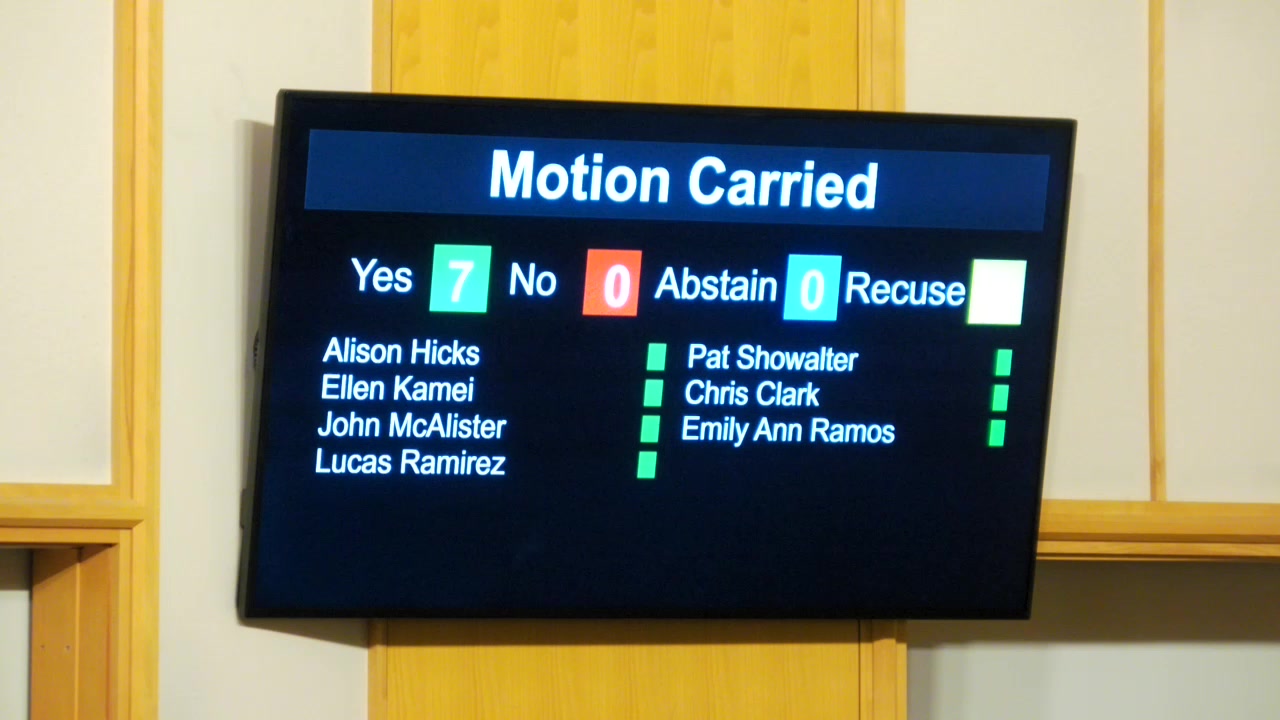
[02:10:16] Alexander Amoroso: Thank you, ma'am. Thank you, council. When you guys said you were gonna pull 4.3 I'm like I gotta get in there.
[02:10:21] Alexander Amoroso: So I did have a couple notes from 4.3 pertaining to what was discussed earlier about the EV situation. So this is actually a caveat from that a little bit. So in regards to an economic vitality plan strategy that the city could lead on is potentially, just suggestion, having our public transit lead in that sense where we have more EV, more hybrid based like you know buses or public transit in the city.
[02:10:50] Alexander Amoroso: Just an idea so in case like you know put the economic burden on folks trying to go more electric. That's one idea. Another thing is when it comes to the economic vitality, we could absolutely lead as a city when it comes to providing more expansion on support for job opportunities.
[02:11:07] Alexander Amoroso: And also especially since I live off El Camino Real, I did notice that a couple businesses are going out of business. So when we make a plan for inviting more businesses to come here to work in the city and to establish themselves in the city, consider El Camino Real cause there are some businesses that are gonna be coming due, gonna be closing out. So you can bring more industry based like you know businesses to that expressway.
[02:11:34] Alexander Amoroso: And that could be an idea. And that could also caveat with career based housing. So you better incentivize folks with specific roles and jobs that are going to be effectively important to this city. And you can just caveat like you know inviting those businesses and building that housing here so you bring in the workforce and you also bring in the businesses that are going to be needed in the future. Just a couple thoughts and suggestions. Thank you.
[02:12:01] Mayor Emily Ann Ramos: Thank you. That ends public comment. So I will bring it back to council. And so 4.3 has been pulled, so the balance of the consent calendar is available for a motion. Councilmember Showalter, would you like to speak on 4.4 and 4.5 in the meantime?
[02:12:23] Councilmember Pat Showalter: Sure. Yeah, I wanted to talk about 4.4 is the Stevens Creek Trail extension and I'm really glad to see this moving forward. It's just a couple of blocks. The end at the moment is just a couple of blocks from my house. It's only like across the street from John's house, but anyway. And I have to say, you know, one of my comments usually is that the Stevens Creek Trail is my gym. I mean I really use it frequently. And I'm not alone, many, many people do.
[02:12:58] Councilmember Pat Showalter: So it's very important for this to be moved forward. I wanted to ask staff a little bit about the timing and kind of what's the timing on the finish of design and the expected time for construction. I got the feeling by reading the staff report that we had a much better feel for how long the design would take than the construction because of funding. So I just thought you might give us a little update. Thank you.
[02:13:40] City Staff: Good evening. Ed Orrego, Assistant Public Works Director. Thank you for the question, Councilmember Showalter. So as far as timing, this phase of the project is really the preliminary design and the environmental review. So we're looking to identify alignment options for the new trail and then identify what the environmental certification process is going to look like.
[02:14:08] City Staff: Again, preliminary design, environmental review. We expect this to take about two and a half years just to get through this process. Stevens Creek, because of the creek and the sensitive habitat, it is going to be a longer process. And it's a complicated project. As simple as putting a trail in place may seem, over a creek next to a highway and looking at retaining walls with Caltrans, the bridge over 85 for access to Mountain View High School is complicated.
[02:14:42] City Staff: So once we get there, we'll have a better with the alignment, we'll have a better understanding of what the overall cost would be. And then we can go into the next phase of the project, identify a funding strategy and then get into the design. So I don't have a timing for when design would be completed, because that would be a component of the alignment and the complexity. I would expect it to be about two years though, after we get the preliminary design completed and the environmental certification through. And again, it's the funding strategy. We do expect that it probably will be a phased project considering the cost of the project.
[02:15:14] Councilmember Pat Showalter: So you think that the preliminary design and CEQA will take two years?
[02:15:20] City Staff: Approximately two and a half years, that's correct.
[02:15:22] Councilmember Pat Showalter: Two and a half years, okay. Thank you. Alright. And then the Lot 5. That's 4.5, Lot 5 parking structure. Actually that might be you as well, I'm not sure. I'm not sure what aspects of this project this appropriation is supposed to cover.
[02:15:42] Councilmember Pat Showalter: 10.5 million dollars seems like, I mean, it may be what it costs to design it, but it seemed like a high cost to me for design. So I'm just asking, is this money for only for design or what parts of the project does it cover? Does it cover some of the construction? It certainly wouldn't cover the whole construction. But what does this 10.5 million dollars cover?
[02:16:12] City Staff: Again, Ed Orrego, Assistant Public Works Director. So we anticipate that this component of the funding would cover at the minimum the design phase and could also provide some funding towards construction. You know, we expect construction to be... four level parking garage in the downtown... somewhere in the neighborhood of... I want to say about 40 million dollars.
[02:16:46] Councilmember Pat Showalter: Okay. So this will get a start... this may get it started.
[02:16:50] City Staff: This will absolutely get it started through design. That's correct. We'll be able to completely go through the design process, environmental review process with this funding. And again, the action tonight for council is appropriating the funding into the project.
[02:17:03] Councilmember Pat Showalter: And what kind of CEQA is required for this sort of a structure?
[02:17:06] City Staff: Um we haven't started this effort yet, so we're gonna put together the scope to identify what that CEQA scope is gonna look like.
[02:17:14] Councilmember Pat Showalter: Okay, but it's not necessarily one of the things that's been automatically exempted because it's not housing.
[02:17:21] City Staff: Correct. It's not housing and it is a new structure. We'll have to identify what that scope looks like.
[02:17:27] Councilmember Pat Showalter: But it's infill design too, so. Okay, you'll figure it out. Well, thank you very much. Keep us posted.
[02:17:34] Mayor Emily Ann Ramos: Thank you, Councilmember Showalter. So there... 4.3 has been pulled and I will note that a motion to approve the consent calendar should also include reading the title of the ordinance and resolution attached to consent calendar items 4.1 and 4.2.
[02:17:50] Mayor Emily Ann Ramos: I will also like to say I had a great adventure on the Stevens Creek Trail this weekend so that was really kind of exciting. I walked from the Moffett entrance to the Landels entrance and that was a nice little chunk of walking that I don't do usually. So we have a motion by Councilmember Clark as seconded by Councilmember Ramirez. Go ahead, Councilmember Clark.
[02:18:10] Vice Mayor Chris Clark: Excuse me. The motion is to approve the consent calendar which is all the items except for 4.3 and that includes item 4.1 adopt an ordinance of the city of Mountain View repealing and reenacting article 10 of chapter 19 of the Mountain View city code to establish a new transportation demand management program to be read in title only, further reading waived, and item 4.2...
9. COUNCIL, STAFF/COMMITTEE REPORTS / 10. ADJOURNMENT
[02:18:42] Vice Mayor Chris Clark: Adopt a resolution of the City Council of the City of Mountain View appointing, um, Junaid, uh, uh, Kurashi, sorry if I got that wrong, um, to the Downtown Committee and appointing Mary Yen to the Human Relations Committee to be read in title only, further reading waived.
[02:19:08] Mayor Emily Ann Ramos: And that item passes unanimously. Congratulations to our new appointees, too. Um, now we will take it to item 4.3, Councilmember Ramirez.
[02:19:19] Councilmember Lucas Ramirez: Thank you, Mayor. Uh, first I want to, uh, express my appreciation for staff for the work over the past year to, um, implement the action items in the strategy. I think we're making great progress.
[02:19:30] Councilmember Lucas Ramirez: Um, I'd, uh, also appreciated the response-- well, there were multiple questions submitted in advance, and I appreciate all of the responses, but I particularly appreciate the response to my question, uh, which has to do with, um, the, um, performance metrics or the measures of success.
[02:19:49] Councilmember Lucas Ramirez: Um, there is one that I was, uh, interested in, uh, modifying, but I wanted to make sure I understood it. Um, towards the end, um, of attachment one, the measure, uh, is listed as number of square feet.
Additional Content 1
[02:20:07] Councilmember Lucas Ramirez: Supporting commercial or industrial activities, target is 26 million square feet. Just to clarify, is that the amount of square feet of building available for industrial commercial uses?
[02:20:27] Community Development Director Christian Murdock: Good evening honorable Mayor, Vice Mayor, Council members, Christian Murdock, Community Development Director. Yes, the figure that you described is the building square footage of those land uses.
[02:20:38] Councilmember Lucas Ramirez: Okay, great. Thank you for the clarification. So then I think this might be useful. Councilmember McAlister and I have shared concern about the erosion of the industrial base. And I'm open to other ways of expressing this, but one way to express it is to monitor the percentage of land that is zoned for industrial uses in particular and maybe giving staff some flexibility. But I would like to move to approve the staff recommendations, but to include an additional measure of success, kind of like the one that we were just talking about, but explicitly incorporating the percentage of land in Mountain View that is zoned for industrial uses and equally important a target percentage. So we know as we approach that percentage we should start to be very mindful about industrial to residential conversions or any other land use change that continues to erode our industrial base. So that would be the motion I'd like my colleagues to consider.
[02:21:58] Mayor Emily Ann Ramos: All right, so we have a motion and a second. Councilmember Showalter.
[02:22:02] Councilmember Pat Showalter: I just had a question about this one as well. And I was wondering what actions the economic vitality staff thinks are the most effective? And also is there anything that council members can help you carry out?
[02:22:27] Economic Vitality Manager Amanda Rotella: Good evening again, Amanda Rotella, Economic Vitality Manager. So I'd say really when we're looking at the broad needs of our community when it relates to economic vitality, having lots of different strategies that can support different types of businesses, different types of different areas in the city are important. I'd say some of the work that we've done over the last couple years around zoning updates, making it easier for certain businesses to locate in different parts of our city have been really effective. I'd say all of our small business programs are really effective. The facade improvement grant program is providing financial support to our businesses. Some of the other programs that we have where we can provide one-on-one support to new and upcoming businesses. So I'd say we've done a really effective job at having a broad portfolio of programs and strategies. So I don't have a favorite or one that I would highlight. I would just say, you know, as you've seen with our economic vitality strategy, we have 164 items. So we heard very clearly from the community that there are a lot of priorities and important areas for us to focus and so we're trying to be really targeted in addressing all five of our goals and really spreading staff support and capacity across all five so that we can meet the needs. In terms of support from Council, I mean continuing to help us prioritize those 164 action items is really helpful. Continuing to support and provide feedback and direction on our zoning updates and refining our small business programs, that's all very valuable. You've seen what I've laid out as our year three priorities is really around continuing to keep the momentum going, continuing to resource our programs and looking at new ways that we can continue to spread the work to new areas of the community. So kind of a roundabout way of answering what you asked. Did I get it there?
[02:24:22] Councilmember Pat Showalter: Yeah. Yeah, thank you.
[02:24:24] Economic Vitality Manager Amanda Rotella: Yeah, thank you.
[02:24:27] Mayor Emily Ann Ramos: Councilmember McAlister.
[02:24:30] Councilmember John McAlister: Yeah, I have a question about there was a program or that we were potentially going to pave the streets so that the sidewalks are level across going one. Is that still in progress? I guess that's public works potentially. That downtown will have so we have this step down where the curb is instead we'll just have that going from one across the level.
[02:25:06] City Staff Ed Arango: Good evening, Ed Arango again. So there is a project in the plan for the interim Ped Mall project developed concept for what the Ped Mall was going to look like. As part of that effort was some interim improvements which we're working on now at the intersections. But the long range goal is to as you said bring up the street to the sidewalk level. So removing the step down to the street and bring lift everything up and bring it up for the three I believe the three blocks of the 100, 200, and 300 block of Castro.
[02:25:41] Councilmember John McAlister: Timing that that may come along?
[02:25:44] City Staff Ed Arango: Timing of when that would happen? I don't have the timing. We would be looking at sort of a next phase project within the next couple years to introduce in the CIP as far as a design effort for that. And then it is a very substantial project, which means that it's very expensive. So we would need to define a funding strategy to how we would be implementing it.
[02:26:12] Councilmember John McAlister: Four or five years or at least?
[02:26:15] City Staff Ed Arango: I would expect at least two years before we would identify a project to start this effort of design.
[02:26:22] Councilmember John McAlister: Okay, thank you.
[02:26:25] Mayor Emily Ann Ramos: Thank you Councilmember McAlister. I look forward to doing K-pop dances with you when that happens. So we will now take the vote. The motion was made by Councilmember Ramirez and seconded by Councilmember Hicks. Motion passes unanimously. We will now take item five, oral communications. This portion of the meeting is reserved for persons wishing to address the Council on any matter not on the agenda. Speakers are allowed to speak on any topic within the City Council's subject matter jurisdiction for up to three minutes during this section. State law prohibits the Council from acting on non-agendized items. If you would like to speak on this item or the next item in person, please submit a blue speaker card to the assistant city clerk now. Would any member of the public joining us virtually or in person like to provide comment on this item? If so, please click the raise hand button in Zoom or submit a blue speaker card to the assistant city clerk. We will take in-person speakers first. Each speaker will have 90 seconds. Our first speaker will be Ronnie, followed by Eric Poycon, followed by Monica Teicher, and then followed by John Scarborough. So Ronnie first. All right, thank you.
[02:27:48] Public Speaker Ronnie: Hello. Thank you so much. Good evening everyone. Thank you so much to the mayor, to council members. Really appreciate the opportunity to speak here. Mountain View resident and I want to, I'm here to bring up public safety. I grew up here, I love the city. My husband and I chose to move back here in 2020 specifically because of the amazing job that you guys have done with vitality of downtown and and just keeping up the development in the city and making it relevant. I have a young child and I spend hours, I've probably seen anyone who walks around downtown like I, I've spent hours and hours and hours walking by people smiling at people making friends. I go to the parks just walking around the streets and I've noticed over the course of the last five years that public safety has really degraded. Just in the last week, I just want to list an example of things I've personally experienced. Just in the last six days I walked by a man wielding a machete and whacking bushes. Another man on my street with a bat chasing another woman. Specifically on Castro Street, I was approached by a man who was screaming in my face as he passed by several other people screaming in their face. Walked by three people injecting heroin on Castro Street. There's someone who regularly defecates in Pioneer Park here and a woman who regularly urinates in Pioneer Park and at Eagle Park. As well there are a lot of people who don't have children who wander around the playground areas. I mostly spend my time in Eagle Park and at Mercy Bush. I'm asking for two things. I...
[02:29:25] Mayor Emily Ann Ramos: Thank you. You're at time unfortunately. If you want to complete you can send an email to us to complete those asks, that would probably be helpful. Thank you. Next is Eric Poycon followed by Monica Teicher followed by John Scarborough.
[02:29:46] Eric Poycon: Good evening Mayor, Vice Mayor and Council members. My name is Eric Poycon. I'm a resident here in Mountain View and a member of the Rapid Response Network. Thank you for the work that you do for Mountain View and for the commitment to protecting the wellbeing of our most vulnerable residents. I'm here tonight to ask that the Council adopt a strong policy prohibiting the use of city property for civil immigration enforcement. This matters because people in our community are scared right now. Families are making everyday decisions on whether to go to work, take their kids to school, attend our events, report a problem or access local services. Our city spaces should be places where people feel safe, not places where they feel where they have to worry about being targeted or separated from their families. And while the World Cup makes it urgent, this is a much bigger this is much bigger than one event. With the possibility of a new ICE facility in Dublin and Gilroy, our region could see increased immigration enforcement activity. Mountain View has already shown leadership on these matters and that is exactly why this moment calls for a clear proactive policy. This is not just about creating conflict, this is not about creating conflict or suggesting the city has has been absent. It's about building on the work the city has already done, setting clear expectations and making sure our community is prepared. The last thing any of us wants is to draw unnecessary attention or escalate tensions, but being prepared is not the same as inviting conflict. A clear policy would help establish boundaries, support public trust and make sure our community understands where Mountain View stands. Thank you.
[02:31:14] Mayor Emily Ann Ramos: Thank you. Monica followed by John Scarborough.
[02:31:20] Monica Teyscher: Hi Council members. As you can see I'm ready for the World Cup. My name is Monica Teicher and I'm a long time resident from Mountain View and I appreciate that you include the Rapid Response Network in all the city activities. But given that the World Cup is near I would like a guarantee like my friend said that the city is not going to cooperate with ICE enforcement since they play fast and loose with due process civil and human rights. I would like a policy that prohibits the use of city property for civil immigration enforcement to protect everyone's safety. We know that San Jose and other cities already have restricted the use of local government property and have safe site protocols. So please I would encourage you to look to their policies and craft one that is similar to theirs. And as we know ICE is looking to potentially open FCI Dublin as a detention center even though it has been decommissioned for over a year. We also know that they are actively working on an enforcement and removal operation center in Gilroy. We know and acknowledge that our county is fighting back. But as we as a city need to do our part in denying ICE a foothold in our area. We the citizens of Mountain View do not want them under our watch. The World Cup brings Latinos by the droves from local and abroad and we want to minimize the chances that ICE uses this opportunity for their enforcement. I would like also an update on the Flock cameras. Thank you.
[02:32:53] Mayor Emily Ann Ramos: Thank you. Next we have uh John Scarborough and that is the last of the in-person public comment before we go to our virtual public comment.
[02:33:01] John Scarborough: Hello Mayor and City Council. Um I agree with what they both just said and I would like to tell you a story about last week. I went to a park in San Jose and this park I've been to many times. It has a playground, has a nice bathroom, has a lot of green space, trees. It's a wonderful park like many of our parks. And at the opening of the park right on the light there was a sign maybe this big and it said this property is owned or controlled by the City of San Jose. It may be only used for city purposes and may not be used for civil immigration enforcement staging areas, processing locations or operational spaces. So I do encourage y'all to get a policy that would do that. And the feeling that I had going and seeing that sign was this is a community that cares about its people and takes care of its people. And I think that's our community too. So I think the signage would be really good as well as a policy. Thank you.
[02:34:02] Mayor Emily Ann Ramos: Thank you. Next we will move on to our virtual speakers. Zoe Chen.
[02:34:12] Zoe Chen: Good evening Mayor Ramos and fellow city council members. My name is Zoe Chen and I am a high schooler and resident of Mountain View. I am here to talk about the unofficial model policy proposal I have sent in regarding single staircase reform. Affordable housing has been a long standing challenge. Currently multiple multi-family residential buildings require two staircases under California state regulations. The single staircase reform proposes an alternative by removing one of these staircases and centralizing the other in the middle of the building. I argue that this design is not only more cost and space effective than the traditional two staircase design, but equally as safe if not safer. By condensing the building's footprint it minimizes the distance from each unit to the staircase while also reducing the number of families sharing any single staircase. This approach has already been modeled in California cities like Santa Monica which leveraged California Building Code section alternative material design and methods of construction to authorize local building officials including those here in Mountain View to approve alternative designs given the same level of safety is demonstrated. As an extension Santa Monica's interpretive brief 202501 provides a pre-approved path allowing developers to move forward without the need for separate local ordinance. I respectfully request that the city considers researching the adoption of this approach. Thank you for your time.
[02:35:46] Mayor Emily Ann Ramos: Thank you Zoe. Next we have John Schatter.
[02:35:56] John Schatter: Uh hello?
[02:35:59] Mayor Emily Ann Ramos: Hello.
[02:36:00] John Schatter: Hi, good evening. Thank you Mayor Ramos and city council members. Um I am talking again about requesting your vote to save the Shoreline Twilight Memberships. Mountain View Parks and Rec's stated goal is fostering community connection, promoting cultural diversity, and encouraging health and wellness. The Shoreline Golf Course Twilight Membership Program meets this goal, but Parks and Rec is canceling the program. Council members, did you read the Mountain View article published last week about the Shoreline Twilight Memberships? Please do in the Mountain View Voice if you haven't. Parks and Rec's goal and Council member McAlister's goal, who was gracious enough to meet with us, is for the golf course and it has nothing to do with community. The goals are simply to make more money. Let me share with you a number. Point zero three. That number is one-third of 1%. The city is canceling Twilight Golf Memberships to add one-third of 1% to its city's budget. Council members, please wake up. Uh council you know canceling these Twilight Memberships where so much community has been built over the last 12 years is utterly ridiculous. Please contact Kemper Sports. Do not approve their contract unless they continue the Twilight Memberships. Thank you for your time.
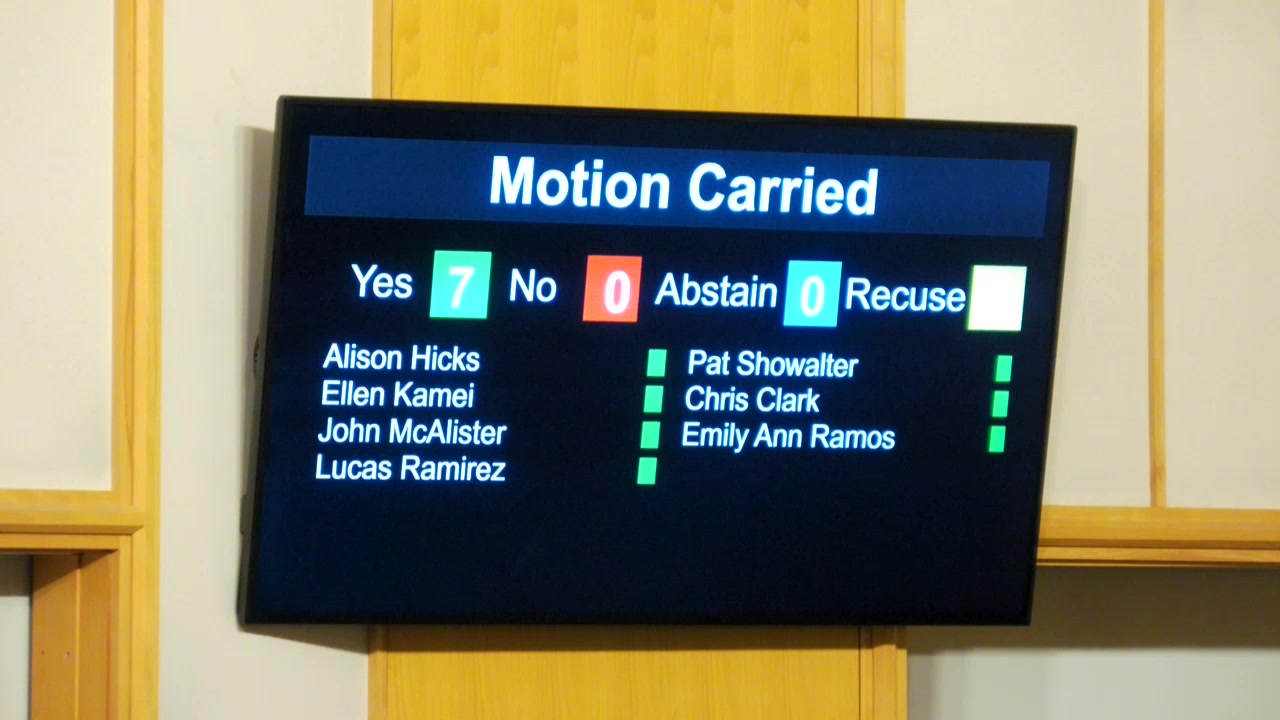
[02:37:33] Mayor Emily Ann Ramos: Thank you. Councilmember McAlister, did you have something to say?
[02:37:37] Councilmember John McAlister: Yeah, I'd like to uh correct the individual I did meet with the folks but I said yes I would like Shoreline to make to earn more revenue because there's quite a bit of deferred maintenance on the golf course that needs to be reinvested into the golf course to make it even better. So I just want to add clarity and context to what he was saying.
[02:37:57] Mayor Emily Ann Ramos: Thank you. And that closes our uh public oral communications for public comment. We will now move on to item six, 6.1. The five-year update to the urban water management plan and water shortage contingency plan. Water resources manager Elizabeth Flegal and assistant public works director Lisa Au will present the item. If you would like to speak on this item in person, please submit a blue speaker card to the assistant city clerk now. And you may proceed whenever you're ready.
[02:38:54] Water Resources Manager Elizabeth Flegal: Good evening, honorable Mayor, members of the Council. Tonight we will be presenting on the five-year update to Mountain View's Urban Water Management Plan which includes the City's Water Shortage Contingency Plan. The California Water Code requires Mountain View to update its Urban Water Management Plan every five years. The City's previous plan was adopted in June of 2021 and the current update is due July 1st. As part of this update, staff notified the County of Santa Clara, neighboring water agencies, and local resident and business groups. The public was given an opportunity to review the draft plan prior to this hearing. The Urban Water Management Plan links Mountain View's land use and water planning efforts and provides a long-term look at our ability to meet customer water needs. Also included is a description of our water conservation efforts and a plan for responding to water shortage emergencies, such as drought. The City's evaluation incorporates information from our wholesale water suppliers based on their own risk assessments conducted for their unique systems based on their unique experiences. The Urban Water Management Plan analysis is based on approved growth identified in the City's adopted land use plans and policies, which include up to a 76% increase in population. As a result of this potential development, the city must plan for a possible increase in water use over the next 25 years estimated at approximately 32%. This bar graph depicts Mountain View's actual water use between 1975 and 2025 and projected water use through 2050. The majority of our water comes from the San Francisco Regional Water System, shown in blue. Other supplies include Valley Water in orange, local groundwater in green, and non-potable recycled water from the Palo Alto Regional Water Quality Control Plant in purple. San Francisco has been the primary water supply for many years, though historically groundwater also made up a large percentage of use. Connection to Valley Water was completed in 91 and the current recycled water system installed in 09. Future demand increases are expected to be met mostly using San Francisco water. However, investments in recycled water are expected to increase its use considerably. Based on Mountain View's 2025 Urban Water Management Plan analysis, the city has sufficient water to meet customer needs during normal and dry years, including demands from future development that may occur pursuant to the city's adopted land use plans and policies. State actions related to the Bay Delta Plan have a potential to reduce San Francisco's dry year supply from the Tuolumne River, and staff continue to monitor the situation as it evolves. Mountain View's local groundwater is a critical backup supply during dry years and is part of the city's planned water shortage response, along with short-term and long-term conservation measures. Following this public hearing, adoption is scheduled for June 23rd to meet the July 1st deadline. Thank you. We are staff from the city's Public Works, Housing, and Community Services departments are available to answer any questions.
[02:41:02] Mayor Emily Ann Ramos: Okay. Does any member of thank you. Uh does any member of the council have any questions? Councilmember Hicks.
[02:41:14] Councilmember Alison Hicks: I have one hopefully simple question. Um the population estimates in the staff report I have not memorized the number but if I if I remember it correctly it was uh hunt by 2050 148,000. Um whereas when I look at Plan Bay Area 2050 it's 100,000 to 110,000. Is the number in the staff report the water report is it like the upper end of a range or where where does that number come from because it wasn't footnoted.
[02:41:48] Water Resources Manager Elizabeth Flegal: So this number is based on the city's adopted land use plans and policies which include the general plan and the housing element. And Eric Anderson is available if you have more specific questions but that is the short answer. It's based on our housing element.
[02:42:03] Councilmember Alison Hicks: So it's if we built out everything in the housing element.
[02:42:07] Water Resources Manager Elizabeth Flegal: Correct.
[02:42:08] Councilmember Alison Hicks: Now I get it. Thank you very much.
[02:42:16] Mayor Emily Ann Ramos: Thank you Councilmember Hicks. Councilmember McAlister.
[02:42:19] Councilmember John McAlister: Thank you. Before we made the revised agreement with San Francisco Public Utility, what was our minimum water that we had to buy?
[02:42:32] Water Resources Manager Elizabeth Flegal: Thank you for the question. Uh our previous minimum purchase requirement was 8.93 mgd million gallons per day of water.
[02:42:41] Councilmember John McAlister: And now they are are supplying us with 12.4. So it's high the higher number?
[02:42:46] Water Resources Manager Elizabeth Flegal: The 12.4 refers to our maximum our individual supply guarantee and the 8.9 was the minimum requirement which has now been revised to 6.047.
[02:43:01] Councilmember John McAlister: Okay. So um when we were when I was working with on the general plan back in 20 2020 2015 and so 2012 we were always concerned about as the population grew that there would be a always plenty of water and we were always assured by the staff that yeah there would always be plenty of water. But now that we have this revised minimum and we don't have an actual maximum and so our minimum is is lower than what we used to have. Um how is it going to be able to project again with the population growth that's going to go quite high and re still be able to go in there and you said based on the housing element in our general plan that we'll still have sufficient water from San Francisco if there's not a drought year to support all this maybe ten twenty thousand new residents or so?
[02:44:40] Water Resources Manager Elizabeth Flegal: Thank you for the question. Yes uh we do not project using all of our supply guarantee from San Francisco during normal years to support the housing element.
[02:44:51] Councilmember John McAlister: Okay. Thank you.
[02:44:54] Mayor Emily Ann Ramos: Thank you Councilmember McAlister. Does anyone uh else have any questions from the council? No other questions. All right. Uh would any member of the public on the line like to uh provide comment on this item? Uh if so, please turn in a blue speaker card or click the raise hand button in Zoom or press star 9 on your phone. A timer will be displayed on the screen. Each speaker will have 90 seconds. Um I see only one speaker for this item. Uh Alexander Amoroso. Um before you start doesn't look like okay there we go. Go ahead.
[02:45:33] Alexander Amoroso: I'll be brief and bold and gone. So uh this item is definitely something I have a lot of like you know work experience with on the uh the federal side uh both with the US Army Corps of Engineers, Department of the Interior and Department of Energy. Uh so I really appreciate the amount of time the staff has taken to account for the amount of water we have. One thing I would absolutely push forward is also the quality of that water. So pollution is a massive issue and I have been in places and spaces around the world where bad water leads to health issues among the populations. So not only should we be uh persistent in making sure that our waterways are clean from random pollution make sure that our local businesses and corporations are processing that pollution correctly because even with the deregulation processes with the EPA going on right now it is uh behooven to cities and localities to make sure that those waterways are clean and we have a healthy population. Thank you.
[02:46:38] Mayor Emily Ann Ramos: Thank you. Seeing no other in-person speakers, I'm looking at virtual speakers. Seeing no virtual speakers, I will bring the item back to Council for questions and deliberations. Councilmember Clark.
[02:46:50] Vice Mayor Chris Clark: Uh thank you. Um I'm just going to I'm not sure exactly what's needed here but I'll move the staff recommendation. Um and just note that this is one of my one of my uh favorite little fact factual nuggets is that if you look at the population and water use, um we hear all the time that you know as we grow we need to grow sustainably um and people worry a lot about growth and development um creating environmental impacts and um and because we have uh because of this council and prior councils and our goals to grow sustainably um we have dramatically our populations grown 20 plus thousand people and our water use has gone down not up. And if you look at the projections we can go from you know approximately 85,000 people today to um almost doubling that with very little increase in water use. And that is because of all of the sustainability measures that we're taking and that all of those new residents and businesses are much more uh have much more efficient use of water um than some of our legacy infrastructure. So a combination of of uh conservation that occurred during that drought year starting in 2014, if you look at that graph um it has really, really paid dividends. That combined with um the sustainable nature of of new um of of not just new structures but also um adaptation of of old structures. So um that and um we're very lucky in that we have a few different water sources. Our primary water source is SFPUC, as was pointed out. That is some of the the cleanest, most healthy water uh that you can get. And we are very lucky to to live in the Bay Area and have access to that. It requires very very little treatment. We have uh Valley Water that we can lean on for some of our other um areas. A little bit of ground water. And then you'll see the growth in recycled water. And that's thanks to the investments we've made uh in recycled water infrastructure that I think will pay dividends for generations to come. And if you look at the projected water use um the recycled water portion of that grows. Um and so a big chunk of the increase in water use that we have over the next few decades uh will actually be met by some of that recycled water. So enough of my lecture. Um I've moved uh the staff recommendation. It looks like we have a second so I'll stop talking.
[02:49:22] Mayor Emily Ann Ramos: Thank you Vice Mayor Clark. Um the the ref staff recommendation is hold the public hearing to accept and consider public comments on the draft 2025 Urban Water Management Plan and Water Shortage Contingency Plan as required by the California Water Code section 10642. So it's just opening it up kind of thing and listening. Um so that uh motion was made by Councilmember Clark seconded by John McAlister and uh next we have on our our queue is our resident water expert Councilmember Showalter.
[02:49:53] Councilmember Pat Showalter: Well I was going to give a little bit of the same lecture that uh Vice Mayor Clark did he did a really good job and um I just like to say we uh we kind of have stars in um in our uh water staff. Uh I I serve on BASCA, the Bay Area Water Supply Conservation Agency. That's kind of a mouthful and basically it's the um it's all the contractors outside of San Francisco who get Hetch Hetchy water. And um we're really uh kind of all around the Bay um in Alameda County, uh San Mateo County, uh and us in Santa Clara County. Anyway we are we we uh Elizabeth has um Miss Flegal sorry has made a uh an an incredible reputation um by uh her um her representation on our on their their board of staff members who works together on a monthly basis. So I'm really I just wanted to share that with you because we always you know we we always need to hear wonderful news about our staff. Um and uh the other thing I wanted to to mention as as um the Vice Mayor mentioned is that the range of of um sources we have is really a best practice. You don't want to have just one source of water. You want to have um some other sources so if something goes wrong with one you can um you can fill in with the other one. And um uh there was a while when we talked about kind of turning off our groundwater wells because we weren't really using them very much on a regular basis but after after studying that for a while we decided no that wasn't a good idea because if wells go on and go off and go on and go off for a long period of time they don't necessarily come on as well. You you know you have to they they work better if um if they're they're worked fairly regularly. So um so that mix of uh of sources we have is really a valuable asset to our community and um uh it's something that we should um we should be proud of and that's it.
[02:52:23] Mayor Emily Ann Ramos: All right. Thank you Councilmember Showalter. Let's take it to the vote.
[02:52:31] Mayor Emily Ann Ramos: All right. That motion passes unanimously. Yay. We will now move on to item 6.2, city code amendments to allow streamlined administrative approval for housing development projects utilizing assembly bill 130 and other minor updates. Principal planner Diana Pancholi and community development director Christian Murdock will present the item. If you would like to speak on this item in person, please submit a blue speaker card to the assistant city clerk now. And we are ready whenever you are.
[02:53:44] Principal Planner Diana Pancholi: Well good evening Mayor and council members. Diana Pancholi, principal planner with the city's planning division and I'm joined here tonight by community development director Christian Murdock. Tonight staff is presenting city code amendments to allow qualifying housing development projects utilizing assembly bill AB 130 and other minor code amendments.
[02:54:09] Principal Planner Diana Pancholi: Assembly bill AB 130 which became effective in June of 2025 creates a new statutory exemption from California Environmental Quality Act CEQA for qualifying housing projects and significantly changes the city's review timelines. In light of these stringent timelines and the limitation on the city's discretion, council at their January 27th study session earlier this year directed staff to prepare amendments to the city code to allow staff level approval of projects eligible for the AB 130 streamline CEQA review without requiring a public hearing. Such streamlined approval process also recognizes the city's obligations under the state law to comply with accelerated project approval timelines and ensures the city can meet its timing obligations in all cases. Under city's current review processes, several projects require multiple hearings including administrative zoning, environmental planning commission and council hearings. Reliance on any public hearing process especially an environmental planning commission and a city council hearing could jeopardize the city's ability to act on qualifying projects within the timelines required by the AB 130 statute.
[02:55:28] Principal Planner Diana Pancholi: The proposed code amendments tonight support implementation of the city's housing element specifically program 1.1 which ensures consistency with the state law and program 4.1b which streamlines housing development review processes.
[02:55:45] Principal Planner Diana Pancholi: To qualify for an AB 130 statutory exemption from CEQA, projects must satisfy certain criterias including maximum acreage, consistency with the applicable zoning and general plan standards and minimum density. Table 2 in the staff report presents a detailed list of these criterias.
[02:56:06] Principal Planner Diana Pancholi: In the past six months city has approved over 1400 housing units in four projects utilizing the statutory CEQA exemption and several projects are currently under review going through the CEQA process where the applicant has expressed interest in utilizing this exemption.
[02:56:26] Principal Planner Diana Pancholi: At the January 27th study session earlier this year, council directed staff to develop a ministerial approval process for projects subject to the statutory exemptions provided in AB 130. While staff continues to work on a ministerial approval process, at this time staff recommends an administrative approval process due to several challenges associated with adopting ministerial approval procedures within the time constraints of the current ordinance amendment process. An administrative approval process involves no public hearing unless requested in a timely manner, but still includes the exercise of discretion where objective standards are not in place to enable a ministerial approval process. As per the proposed amendments, the projects will also have to meet the noticing requirement as directed by council at the January 27th study session. Once the project is deemed complete, staff will send a notice to neighbors within the 750 foot radius informing them about the project under review and public will have 14 days to provide public input with an option to request a hearing for final decision on the project. If a timely request for hearing is received, another notice will be sent with details of the hearing at least 14 days before the decision hearing. Options to request a hearing and the right to appeal to the city council are changes that are proposed post the environmental planning commission review. Further amendments to allow administrative approval for non-residential housing impact fee alternatives are proposed as part of the current code updates. Additionally changes to the city's current affordable housing program for objective review of the BMR alternative mitigation plan were reviewed and approved by the city council earlier today and will be effective in June of 2026.
[02:58:45] Principal Planner Diana Pancholi: Other minor code amendments to chapter 36 are also proposed in response to the council input and questions associated with the February 24th council hearing earlier this year. These minor updates are specifically for the city code compliance with state laws such as AB 752, SB 234, AB 2162, and AB 101. These amendments include changes in land use provisions for child care centers, large and small family child care homes, supportive housing, and low barrier navigation centers. Details of these amendments are described in table 5 of the staff report.
[02:59:26] Principal Planner Diana Pancholi: At a public hearing in April earlier this year, the environmental planning commission reviewed the proposed changes to the chapter 36 zoning and recommended approval with a minor cleanup. Following the EPC recommendation, staff did further analysis and recommends additional amendments to chapter 36 including providing an opportunity to request a hearing, opportunity for appeal of administrative housing approvals to the city council, and an update duties and power of subdivision committee and the city engineer for consistency with the chapter 28 amendments being proposed.
[03:00:05] Principal Planner Diana Pancholi: In addition to chapter 36 zoning, associated amendments are proposed to chapter 28 subdivisions and chapter 41 parkland dedication or fees in lieu thereof. The amendments to chapter 28 establish a corresponding administrative review and approval process for preliminary parcel maps and tentative maps associated with qualifying housing developments. In addition, the amendments to chapter 41 establish an administrative review and approval process for privately owned publicly accessible POPA credit applicable to such projects, thereby ensuring a streamlined and coordinated review framework across related entitlement procedures.
[03:00:50] Principal Planner Diana Pancholi: Additional amendments to chapter 28 and chapter 41 are also being proposed to achieve greater consistency with the state laws and within the city code, improve usability and align the city code with current procedures and practices. These are summarized in table 6 of the staff report and details are included in attachment 2. Now this concludes the summary of all the proposed amendments being presented tonight.
[03:01:16] Principal Planner Diana Pancholi: What happens next? Following this hearing a second reading of the ordinance is scheduled on June 9th. If approved it is anticipated that the new updates would be effective in early July. Additionally these changes if adopted may precipitate text changes to the various precise plans to ensure consistency with the zoning code. Staff will undertake this effort as resources and workload allows.
[03:01:43] Principal Planner Diana Pancholi: In conclusion, staff recommends that the city council adopt the two ordinances amending city code chapter 28, chapter 36, and chapter 41 of the city code and find that these amendments are not subject to the California Environmental Quality Act. Thank you for your time. Staff including assistant community development director Blazensky and planning manager Anderson along with staff from city's public works, housing, and community services departments are available to answer any questions.
[03:02:14] Mayor Emily Ann Ramos: Thank you. Does any member of the council have questions? And I see Councilmember Ramirez has a question.
[03:02:21] Councilmember Lucas Ramirez: Thank you Mayor. First my great appreciation to staff and the city attorney's office for a significant amount of great work in my opinion. I'm looking forward to approving the staff recommendations. And I also really appreciated the amendments that were incorporated that were not explicitly related to AB 130. But the amendments to chapter 28 for instance and some of the reconciliation with state law were great to see. So thank you very much. I have a couple of clarifying questions about the hearing and appeals process. So just to clarify, for the public hearing, is that both the applicant and any member of the public could request a public hearing?
[03:03:15] Principal Planner Diana Pancholi: Thank you for the question. That's correct.
[03:03:17] Councilmember Lucas Ramirez: Okay. Um and then for uh an appeal, currently if there is an appeal, um there's a cost recovery fee. Who pays for that? So the Toyota appeal that we heard a little while ago, who who that was um I think a neighboring residential community that that filed. Did that community pay for the appeal?
[03:03:43] Principal Planner Diana Pancholi: Correct. The appellant pays for the appeal.
[03:03:46] Councilmember Lucas Ramirez: Okay. Um so I wanted to clarify from the staff responses to the council questions for the appeal, it looked like um staff time and noticing costs associated with processing an appeal would be charged to the project's cost recovery account. So in this case um...
Additional Content 2
[03:05:07] Councilmember Lucas Ramirez: if it's the applicant that's appealing, you know, very clearly would be the applicant paying, but just to clarify, does this mean if there's a member of the community that appeals, the applicant also would pay for that appeal?
[03:05:19] City Staff Christian Murdock: Good evening, Mayor, Vice Mayor, Council members. Christian Murdock, Community Development Director. So, a little bit of an explanation here in context related to the appeal fees. We have two sets of fees, we have one for our one-zoned projects and one for non-R1 zoned projects. Those fee amounts are different, the R1 zoned project fee is lower than the non-R1 single family residential zoned appeal fee. Those include assumptions on noticing work, hours of staff time by various staff. Those are intended to capture the City's costs related to preparing the appeals. There are instances where an appeal is particularly complex where those hours may exceed what the fee amount covers and we have an opportunity then to charge additional costs to reimbursable project deposits when it's for that type of project, which would be the case for these types of projects.
[03:06:12] Councilmember Lucas Ramirez: I think that went over my head. So I just want to clarify. So for instance, with the Toyota appeal, the applicant did not pay for the cost recovery, right? That was the appellant who paid.
[03:06:29] City Staff Christian Murdock: So there is an appeal fee that's required to file the fee and the appellant pays the fee in order to file an appeal. So that was under I think a prior fee that maybe didn't have the same cost assumptions as the current fee and so we've updated that in the course of updating many development-related fees over the last year. And so we have better assumptions now intended to capture the costs of appeals baked into the appeal fee. So we think in most instances the appellant alone is likely to be paying the costs of the appeal. I just point out the fact that where we have cost recovery projects as all of these would be, there may be an opportunity to charge any of those additional costs that exceed the fee to the cost recovery account to continue the cost recovery approach.
[03:07:14] Councilmember Lucas Ramirez: Okay. I still don't think I'm quite capturing it, but is it fair to say in this process the appellant would continue to pay the fee?
[03:07:24] City Staff Christian Murdock: That's correct.
[03:07:26] Councilmember Lucas Ramirez: Okay. That's probably good enough. And then for that the public hearing as well, right? If the applicant wishes to offer a public hearing, it makes sense for the applicant to pay, but is it fair and right to impose that cost on the applicant if there is a member of the public who wishes to pay the fee? Is that logic?
[03:07:49] City Staff Christian Murdock: So that aligns with our current cost recovery approach and applicants sign an acknowledgment when they submit their planning application that they will reimburse the City for all direct and indirect costs of processing those cost recovery applications. And that explicitly includes things like report preparation and attendance at required meetings. And so that would be the requested hearing, an appeal hearing, or whatever other meetings might be required to process the project.
[03:08:14] Councilmember Lucas Ramirez: So wait, the applicant would pay for that potential cost in advance?
[03:08:19] City Staff Christian Murdock: So applicants submit deposits, and then we charge against those deposits, and when the deposits are depleted, we request additional funds. We charge the actual staff costs accrued and associated with processing projects.
[03:08:33] Councilmember Lucas Ramirez: So, this is probably not likely to happen, but in the event that the deposit exceeds the cost, right? So for instance, we presume that there might be a public hearing, but there isn't one, and there's a cost savings, does the applicant get that money back?
[03:08:49] City Staff Christian Murdock: Yes, at the conclusion of processing we refund any surplus deposit that remains on account with the City.
[03:08:55] Councilmember Lucas Ramirez: Okay. But otherwise since that's not likely to happen, if there is a public hearing that a member of the community requests, the applicant would bear all of those costs, the member of the community who sought the public hearing would not pay anything.
[03:09:11] City Staff Christian Murdock: Correct. There's currently no fee associated with requesting a hearing under this proposed ordinance.
[03:09:17] Councilmember Lucas Ramirez: Okay. Thank you.
[03:09:20] Mayor Emily Ann Ramos: Thank you, Councilmember Ramirez. Any other council questions? Oh, Councilmember Kamei.
[03:09:28] Councilmember Ellen Kamei: Great, sorry. Thank you. So I just, I'm just trying to clarify. I was refreshing my memory. So for slide five, when we had the four projects that came to council, basically after council adopts this, should council adopt this tonight, after July 9th, projects like those four would not come to council. Correct? Okay. All right. Thank you.
[03:09:58] Mayor Emily Ann Ramos: Thank you. Seeing no other questions, we will now move on to public comment. Would any member of the public on the line like to provide public comment on this item? If so, please submit your blue speaker card now or click the raise hand button in Zoom, or press *9 on your phone. A timer will be displayed on the screen. Each speaker will have 90 seconds. We have one in-person comment, and that is Peter Katz.
[03:10:28] Assistant City Clerk: Mayor, how much time would you like?
[03:10:30] Mayor Emily Ann Ramos: 90 seconds.
[03:10:34] Peter Katz: Thank you, Mayor and esteemed members of the council. I'm Peter Katz, CEO of the Mountain View Chamber of Commerce. The Chamber is grateful to the council for your direction and to the city staff for the time and energy working on streamlining processes in light of AB 130. This is important work and will significantly help our economy and our ability to build newer housing. We do note that city council directed staff in January to create a ministerial process for qualifying projects under AB 130, and staff noted they needed more time to do so, which is understandable given the complexities. We note that the interim changes that are being proposed tonight to the zoning create an administrative process for AB 130, which is not as streamlined as a ministerial one. As noted in the staff reports, an administrative process still requires CEQA reviews, public hearings is requested, and the city adopting findings, all of which could delay or otherwise impact AB 130 projects. So while the chamber fully supports the changes being made now as an interim measure to comply with state law, we want to encourage the council to direct staff to make the changes in the code necessary to create a ministerial process for eligible AB 130 projects as quickly as possible and hopefully no later than by the end of 2026. Thank you.
[03:11:53] Mayor Emily Ann Ramos: Thank you, Mr. Katz. Next we will now take virtual speakers, Kevin Ma.
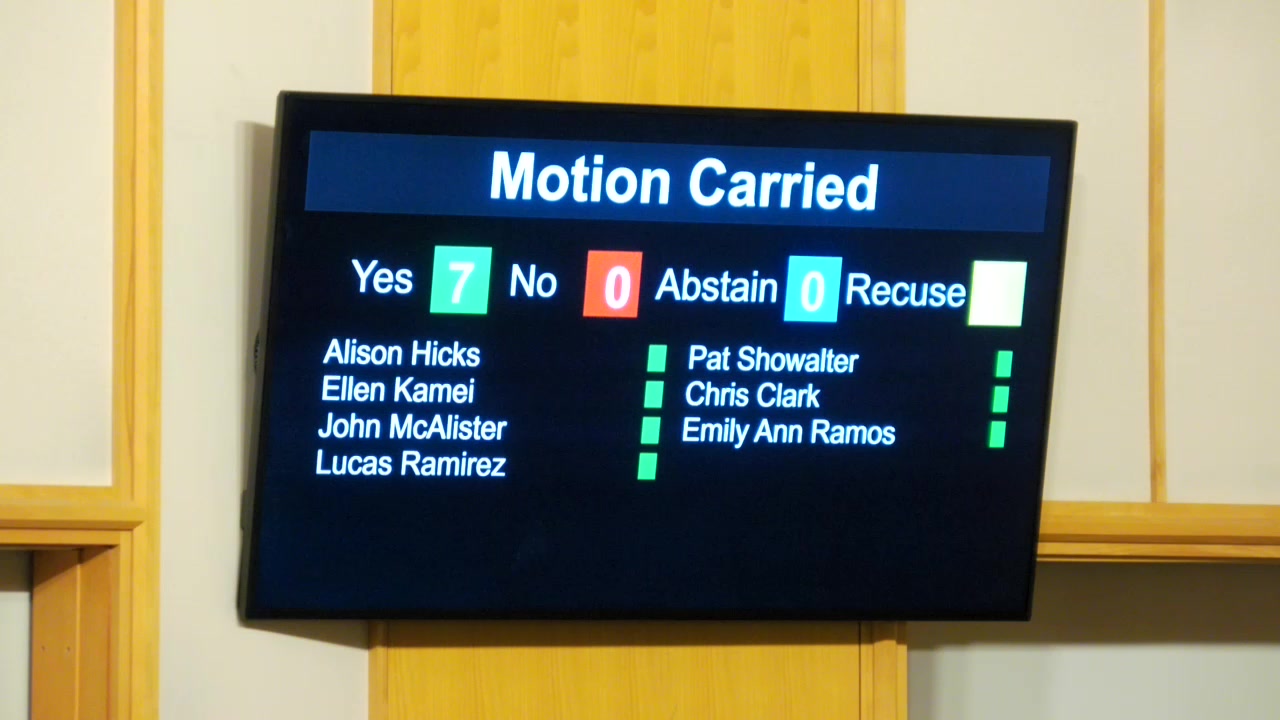
[03:12:01] Kevin Ma: Yeah, quiet crowd. Evening council, my name is Kevin Ma. I am going to echo some of the points made in the letter from Mountain View YIMBY, that we understand that staff has a lot of work on their plate, you know, various plans, various zoning efforts, various housing element programs, and recognize that there's a lot of work to be done to harmonize the zoning code, which has pretty much assumed the city has a heavy amount of discretion on any project with state law that focuses on objective standards and a timeline. We note that appeals was not brought up at EPC, so we're kind of surprised it was brought up later. And that we do caution on appeals as being potentially not something that actually assists anyone, because as mentioned before, we have had meetings involving state laws and local laws that boil down to nothing can be done at the meeting level. In which case it's in some cases it could be more harmful to have a meeting that doesn't really have a potential of any change, as well as the cost it has on the timelines, right? Appeals are not... do not have any set timelines except for subdivision projects. And there's, as mentioned, the applicant still pays for the hearing even if they didn't want it, which seems a little bit odd because the appeals, one does actually charge at this time. And we do hope that the council directs staff to work further on a ministerial project review, because it might just be required next year anyway. Thanks.
[03:13:33] Mayor Emily Ann Ramos: Thank you. I will now bring this item back to council for questions and deliberations. Councilmember Hicks.
[03:13:45] Councilmember Alison Hicks: Thank you. I was actually going to make a... I actually intend to make a motion and for the staff... the staff recommendation, but I wanted to say, so I guess I can do that now. So I wanted to say that I really, this is not, this was a rather dry staff report. It's not the most colorful staff report I've ever read, but that I really appreciated it. You know, I think we directly wanting streamlining and being pushed in that direction as well. We asked staff to do a ministerial approval, but I think as I read this, I really appreciated that for now an administrative approval would be a better choice. And I hope your reasoning is the same as mine as I read it. You know, thinking of myself as an urbanist, I want to create urban places that people like to live in and like to be in. And I could appreciate as I read this that you could not create objective... I mean, we're throwing a lot out, you know, but you could not create objective development standards that we would end up appreciating as quickly as our direction told you to. So I really as I read through the staff report and understood your reasoning, I really think, you know, if we don't start with the step of administrative approval at this time, that we'll be throwing out all sorts of precise plan things that the community has spent really a long time on, and that you need time to work through that thoughtfully. So that is why I am making a motion to do what you recommend in the staff report. And I also should say that when I talk to developers about the objective standards, they are very appreciative of the fact that you and we are doing this and want to be involved and want it to be done thoughtfully. And I appreciate that they'll be able to be a part of the appeals process if and hopefully we can develop good objective standards over time that we'll all be proud of.
[03:16:20] Mayor Emily Ann Ramos: So Councilmember Hicks, I should note that the motion to approve the recommendation should also include reading the title of the ordinance attached to the report.
[03:16:28] Councilmember Alison Hicks: Yes, I will do that if I can find it here. Here it is. I have it. Got it. So I am moving to introduce an ordinance of the City of Mountain View amending Chapter 36, Zoning, of the Mountain View City Code to authorize streamlined administrative approval of housing development projects that are statutorily exempt from the California Environmental Quality Act pursuant to Public Resources Code Section 21080.66, and to make other minor modifications to Chapter 36 to align land uses in the residential and commercial zones with state laws and finding that the amendments are exempt from review under the California Environmental Quality Act as recommended by the Environmental Planning Commission to be read in title only, further reading waived, and set a second reading for June 9, 2026. Also introduce an ordinance of the City of Mountain View amending Chapter 28, which is Subdivisions, and Chapter 41, which is Parkland Dedication or Fees in Lieu Thereof, of the Mountain View City Code to authorize streamlined administrative approval of housing development projects that are statutorily exempt from the California Environmental Quality Act pursuant to Public Resources Code Section 21080.66 and to make other minor modifications to Chapter 28 and Chapter 41 to achieve greater consistency with state laws for internal consistency within the City Code and to align the City Code with current permitting procedures and practices and finding that the amendments are exempt from review under the California Environmental Quality Act to be read in title only, further reading waived, and set a second reading for June 9th, 2026.
[03:18:19] Mayor Emily Ann Ramos: Um, before we get to the vote, there were some council members in the docket. I think Councilmember Ramirez was next to speak. Go ahead, Councilmember Ramirez. We'll just figure that out.
[03:18:35] Councilmember Lucas Ramirez: Thank you, Mayor. I'll be supporting the motion on the floor, and I appreciate Councilmember Hicks reading the requirements into the record. I did want to clarify with staff, you are going to continue to make the amendments needed for a ministerial approval, so we don't need to provide additional direction, right?
[03:18:55] City Staff Christian Murdock: Correct.
[03:18:57] Councilmember Lucas Ramirez: Okay, thank you for that clarification. I agree. I think this is a good interim step. I think there are occasions where some amount of discretion will continue to be necessary. It's not going to be easy to find truly objective standards for every circumstance. And we can talk about some recent examples where there was a discretionary element, right? This is going away, but we have in our BMR ordinance an alternative compliance option right now, where in recent history, we had an opportunity to work with an applicant who was proposing an alternative compliance pathway, and there were many different right answers, right? When you're talking about equivalence and whether you want for instance more, less deeply affordable units or fewer, more deeply affordable units, that's a policy call, right? There are some objective standards we can design around that, but it was helpful I think for the council to be able to weigh in on that decision. And so I don don't envy you for having to make those types of discretionary decisions on our behalf when sometimes there is no clear and obvious answer. But because of the very strict deadlines imposed by state law, this is a good approach. And I'm looking forward to the objective standards that will be introduced over the next several months and years. I do think also because there is an element of discretion, it's appropriate to have an appeals process. Sometimes the applicant may decide that the city didn't interpret a regulation quite the right way, or that the discretion applied wasn't what they were thinking or anticipating. So providing an opportunity for the applicant to go to council and say, I think there's a different approach that ought to be considered is totally appropriate. And similarly, because there's an element of discretion, it's also appropriate for members of the community to be able to file an appeal and say, I'm not sure that the city got it quite right and council, I think it's important for you to weigh in. The request for a public hearing, you know, I kind of go back and forth on. I think it would be great for applicants voluntarily to provide a public hearing if they wanted to, and we've seen some do that. They will provide a community meeting because I think they've heard from the council that it's important to us that they go to the community and solicit input. When it's a member of the public requesting, I can see some value in that, but I think the danger is kind of like that appeal, I think it was a tree removal appeal from a little while back where there was almost no discretion. It can be a very frustrating experience for members of the community to say, we don't like something, and then for city staff to say, well, we appreciate your input but state law overrides our ability to make any determination on whatever issue that the community is requesting some changes to. So I think we should go in eyes wide open that until we have a ministerial approval process that is based entirely on objective standards that there will continue to be, I think, some frustration or disappointment associated with public hearings where people I think in good faith approach and say, well, I thought this was an opportunity for us to make a change and they find out that it wasn't really, except for in those narrow areas where we do have some discretion. So, looking forward to supporting this. Thank you very much, staff, for your work on this item.
[03:21:06] Mayor Emily Ann Ramos: So I don't have my queue anymore, but I think Councilmember Showalter also wanted to speak.
[03:21:13] Councilmember Pat Showalter: Yeah, I wanted to make a couple comments. One of the things that is part of this is things that are exempt from CEQA. And I wanted to talk a little bit about the things that aren't exempt from CEQA, to kind of daylight them and maybe put some people's mind at ease, because there are certain things that really shouldn't be exempt from CEQA, because the public needs to be protected. And so, you have those listed in table two. And particularly environmental conditions, like if it's over a hazardous waste site or a toxic waste site, they still have to do CEQA, which is completely appropriate. Or if it's located in a coastal zone, or in a floodway, or in a wetland, or in a very high fire area, areas where there really are significant environmental conditions that need to be considered, they aren't exempted. So I just wanted to bring that up. I think that's a very important un-exception, and I'm really glad to see that these important protections for the public and the environment are still included. And I'm happy to support the staff recommendation.
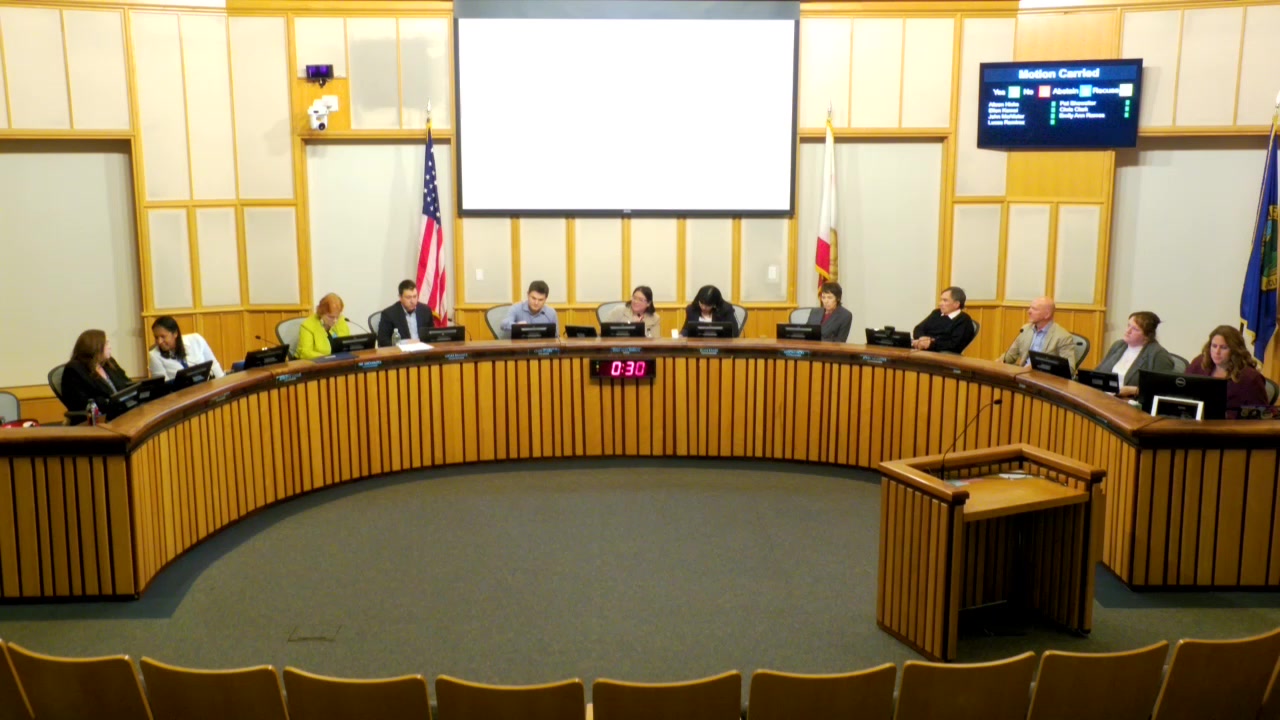
[03:24:39] Mayor Emily Ann Ramos: Thank you, Councilmember Showalter. Councilmember Kamei.
[03:24:42] Councilmember Ellen Kamei: Great, thank you. Um, so I just had a couple comments. So one, just really want to thank staff. I really appreciated the addition of the inclusion of the child care centers and everything associated with that. I'm very proud of our mayor for signing a letter supporting AB 1914, which is how we make, I think, three changes to your general plan, you need to include child care centers. And knowing that we are making these amendments, we're already doing it, so it's really great to see and have that included. I think we've been hearing that need from residents. And then I have a, I guess a comment slash question. I thought I appreciated the change in attachment 1 after the EPC hearing, it's on page 3. My understanding about the potential hearing would be that it could be a place for community members to speak. I think when I was looking at the slides of the four projects we saw, I want to say at least three of the four projects had no community meeting. Um, and they opted out of that and residents came forward wishing they could have at least weighed in. Um, and yes, we did share that it's important to us, but if there's nothing there and if they don't have to do it and they can opt out, I don't see an applicant having a community meeting, as we experienced with three of those four projects. And considering the size and the scale of the development and that it is going into existing communities and neighborhoods, I think there is value for people to be able to voice what they'd like to see. While I hear the concerns of Councilmember Ramirez, I think on the flip side of that, with the project that we were able to see from, I believe, City Ventures and Terabella, there was discussion and integration of where the path to the potential upcoming city park is, and I think there was some pavement that was chosen knowing that children and families may play in the driveway. So in aggregate I think it made it a better project versus not wanting to see that development go forward, which I understand the concern, but as we noted with that, the comment cards that they solicited for that City Venture project said, no notes, it was great, right? And that would be my hope as we're seeing development go forward, especially high density development, that residents can feel like they were part of the process instead of not. So I do appreciate that change that staff noted. And that's how I interpreted what staff was saying, kind of a threading of the needle. I'm hoping that I'm interpreting that correctly. Um, but I just wanted to to voice that because I think it's important. And then lastly, some of these developments, particular as was noted, moving from like commercial or industrial to residential, widening that radius so people know, um, or else the only people who would know for some of these projects are the other vacant commercial buildings. So I just want to make sure that as we're seeing that, especially like land conversion, that we're letting people know. So thank you.
[03:28:23] Mayor Emily Ann Ramos: Thank you, Councilmember Kamei. Um, with that we're ready for a vote. Yay.
[03:28:34] Mayor Emily Ann Ramos: And the motion passes unanimously. Yay! All right, Item 6.3, North Bayshore Area Plan Amendment. Assistant City Manager Arn Andrews and Principal Management Analyst Laurel James will present the item. If you would like to speak on this item in person, please submit a blue speaker card to the Assistant City Clerk now. And we are letting our staff settle in so they can present their beautiful presentation. And then we are ready whenever you are.
[03:29:32] City Staff Arn Andrews: Great. Good evening, Mayor, Vice Mayor, and City Council. The item before you is an update to the North Bayshore Area Plan amendment, which was last adopted and updated in 1993. As you might recall, the Shoreline Regional Park community was created by the state legislature in 1969 under what's referred to as the Shoreline Regional Park Community Act. That act embodied a lot of tenets of what the vision for the future of the shoreline area was, and one of the ways we go about trying to provide those benefits that were envisioned in the Act was through the adoption of what was the North Bayshore Area Plan, which was first adopted in December of 1977 to fulfill the requirements of the Regional Park Community Act. Those amendments back in 1993 updated some of the landfill closure activities, public transportation facilities including bicycle and pedestrian infrastructure, and incorporated the General Plan by reference at that time. Various plans advancing the goals and purposes of the SRPC, both specific to the North Bayshore area but relevant throughout the city, need to be formally incorporated into the North Bayshore Area Plan. Tonight's update incorporates all the current plans, policies, and goals that have been enacted since 1993. So there's two specific areas of update to tonight's amendments. It's incorporating additional public services and for that we are explicitly incorporating schools and school services into the plan. It also authorizes the use of tax allocation proceeds to fulfill the current Education Enhancement Reserve Joint Powers Agreement that we signed with the schools last year, the new 10-year agreement which we are currently one year into. And then the addition of affordable housing and homelessness services to the public services listed in the plan. The Shoreline Area Plan was envisioned to provide housing, and that provision or lack thereof also means that they have responsibility for some of the societal ills that go along with a lack of housing. Since 1993, there's been a lot of existing and new plans, and so those are being incorporated by reference, and here's a listing of those. The North Bayshore Circulation Feasibility Study, Shoreline Sea Level Rise Study, the Shoreline Landfill Master Plan, the North Bayshore Precise Plan, Gateway Master Plan, Google North Bayshore Master Plan, Shorelife Wildlife Management Plan, Biodiversity Strategy and Urban Forest Plan, and Parks and Recreation Strategic Plan. As you can see, it's prudent to be updating the plan at this time, given a lot of the progress and work that's been done over the last several decades. So the recommendation for you tonight as the Board of Directors of the SRPC is to adopt a resolution of the Board of Directors of the Shoreline Regional Park Community amending the Shoreline Plan to incorporate additional public services, including schools, incorporate existing precise plans to advance the goals and purposes of the Shoreline Regional Park Community Act, update the cost and revenue projections, and this is to be read by title only, further reading waived. That concludes our presentation, and staff is available to answer any questions.
[03:33:08] Mayor Emily Ann Ramos: Thank you. Does any member of the council have questions? Vice Mayor Clark.
[03:33:13] Vice Mayor Chris Clark: Just a very brief one. I just wanted to clarify that the... you listed everything, thank you. The Shoreline Wildlife Management Plan, that incorporates the Burrowing Owl Preservation Plan, right? That Burrowing Owl Preservation Plan is kind of part of the Wildlife Management Plan? Or no?
[03:33:34] City Staff Arn Andrews: I don't want to speak on behalf of our Parks Department. I don't know if it is explicitly referenced in that plan, but as you'll notice from the rest of the staff response, we feel that it's already incorporated just through the general maintenance and ongoing administration of the Shoreline Area Park. That being said, if the council would have greater comfort with it being referenced, we're happy to do so.
[03:33:56] Vice Mayor Chris Clark: Okay, thanks.
[03:33:59] Mayor Emily Ann Ramos: Thank you, Vice Mayor Clark. Councilmember Hicks.
[03:34:04] Councilmember Alison Hicks: I was going to ask a question about referencing it, but I think I'll switch that to comments to just to just say it should be referenced. And then a question, you know in the staff report it said it said you're definitely adding phraseology on schools, but the homeless services may be necessary? Is that as definite or is it less definite in the way you're you're adding it? I wasn't clear on that.
[03:34:36] City Staff Arn Andrews: No, it has been incorporated as an item that the SRPC should also share a proportional responsibility for.
[03:34:44] Councilmember Alison Hicks: Okay, great. Thank you.
[03:34:47] Mayor Emily Ann Ramos: Uh, I did have a quick question about the Burrowing Owl Preservation Plan. Um, would we need to change anything in the motion to do that, or like how would we do that if we wanted to have it explicitly referenced?
[03:35:03] City Attorney Jennifer Logue: Thank you. Jennifer Logue, City Attorney. Yes, when you make the motion, just um add a statement that's saying with the addition of a reference to the Burrowing Owl Plan.
[03:35:14] Mayor Emily Ann Ramos: Okay. Thank you. All right, seeing no other questions from my colleagues, we'll move on to public comment. Would any member of the public on the line like to provide comment on this item? If so, click the raise hand button in Zoom or press star 9 on your phone. A timer will be displayed on the screen. Each speaker will have 90 seconds. So we actually have one in-person comment, Dr. Tracy Ferria. Go right ahead.
[03:35:46] Tracy Ferea: Thank you. I just wanted to really support having the Burrowing Owl Preservation Plan added to this explicitly. And thank you.
[03:35:57] Mayor Emily Ann Ramos: Thank you. We will now take virtual public speakers, Mary Datio.
[03:36:10] Mary Dateo: Uh, good evening, and um, I'd also like to um, ask that you include the Burrowing Owl Plan explicitly. Thank you.
[03:36:20] Mayor Emily Ann Ramos: Thank you. Next we have Rashmi.
[03:36:25] Public Speaker Rashmi: Hi, yes, um, I am on board with all the other comments, so please explicitly include the Burrowing Owl Plan. We've had a lot of conversation about the Burrowing Owl and the threat that it's under, and um, I just think it's very appropriate to call it out explicitly um as a plan in its own right. Thank you very much.
[03:36:46] Mayor Emily Ann Ramos: All right. Thank you. And that looks like all our speakers. I will bring the item back for council questions and deliberations. Please note that a motion to approve the recommendation should also include reading the title of the resolution attached to the report. I am going to let our speakers on the dais on first before we talk about the motion. Councilmember Ramirez.
[03:37:09] Councilmember Lucas Ramirez: Thank you, Mayor. I have a suspicion I'll be supporting the motion once it's formally made. I did want to thank staff for the work on this amendment and share, I think it was in the staff report, I put it on a separate word document, so I don't remember exactly where this was listed, but the Shoreline Regional Park Community's purposes which are codified in state law were provided to the council and there are four separate items that reference housing. Provide one, provide needed additions to the general housing supply. Two, provide opportunities for innovation in housing and community development technology and land use planning. Three, enlarge housing, employment, and investment opportunities. Four, encourage and encourage a diversified local home building industry. And there are several other things that are referenced, but thinking about just that one purpose suggests strongly that there's a lot more work to do. So I'm grateful to staff for explicitly incorporating some of these purposes which are in the state law into the amendment that's proposed tonight, and I'm excited for the future of this portion of the city. Thank you.
[03:38:31] Mayor Emily Ann Ramos: See, you could be excited and optimistic about things! All right, Councilmember Hicks.
[03:38:38] Councilmember Alison Hicks: Yes, so I will I assume I'll be supporting the motion since I seconded it. Um, maybe I'll withdraw my second. Um, but I wanted to say I've been... some members of the community have asked these are relatively minor updates, important, I mean, housing and homelessness and burrowing owls and so forth are all important, um, but you know some members of the community thought that we would be seeing a much more holistic look at the shoreline community and I have to say because of, you know, because there was a lot of community input into the North Bayshore Precise Plan and so forth, I think since there have been changes, there may be some expectation that we would revisit it at some point. And I think that although it's appropriate now to do these minor updates at some point, and it probably won't be when I'm on council, but at some point I think we will have to take a second look at what the as things evolve and and things have been very very much in flux with, you know, all the the pandemic and all the virtual work and all the economic changes and changes in tech. I think at some point we will be making a more holistic look at what the shoreline community should be. Um, and with that, I think I will be supporting the motion.
[03:40:09] Mayor Emily Ann Ramos: Thank you. So Councilmember Kamei, please note that a motion to approve the recommendation should also include reading the title of the resolution attached to the report. Take it away.
[03:40:19] Councilmember Ellen Kamei: I move that we adopt a resolution of the Board of Directors of the Shoreline Regional Park Community amending the Shoreline Plan to incorporate additional public services, including schools, incorporate existing precise plans to advance the goals and purposes of the Shoreline Regional Park Community Act, and update costs and revenue projections, and an addition to reference the Burrowing Owl Plan, to be read in title only, further reading waived.
[03:40:51] Mayor Emily Ann Ramos: All right, let's vote.
[03:40:57] Mayor Emily Ann Ramos: And that motion passes unanimously. Yay, we're all getting along today! All right, now we will go to Item 7, Unfinished Business. Item 7.1, the Parks and Recreation Strategic Plan Adoption. Assistant Community Services Director Christine Crosby will present the item. If you would like to speak to on this item in person, please submit a blue speaker card to the Assistant City Clerk now. This is also the great time for you to figure out if anyone seating time. So get that settled. All right.
[03:41:55] City Staff Christine Crosby: All right. Good evening. Thank you for your patience as I get settled. My name is Christine Crosby, Assistant Community Services Director. Here with me tonight is Assistant City Manager Audrey Seymour, Community Services Director John Marchant, as well as Assistant Community Services Director Brenda Sylvia, Parks and Open Space Manager Tim Youngburg, and Recreation Manager Colin James. Also joining us virtually tonight is Neelay Bhatt from Next Practice Partners, our consultant assisting with this plan. Tonight I will highlight updates made to the Parks and Recreation Strategic Plan and recommend that the City Council adopt the plan. The Parks and Recreation Strategic Plan process has included multiple discussions with the Parks and Recreation Commission, beginning in September 2023, with continued updates and input provided throughout the planning process. The Commission first reviewed the draft strategic plan on November 17, 2025, where staff received helpful feedback that informed revisions to the document. An updated draft was then presented to the City Council on January 27, 2026, during a study session, where Council provided additional direction on several key elements of the plan. The plan was then updated again and presented back to the Parks and Recreation Commission on March 17, 2026, where they made a recommendation for the City Council to adopt the plan. At the January study session, City Council provided direction on key elements that are noted on the screen as well as in attachment 3 of the staff report. Council direction included establishing a dedicated goal focused on biodiversity and natural elements, refining the vision statement, and allocating trail corridor acreage by planning area to better align with the park access analysis. Direction also included adding an action item to expand learn-to-swim opportunities, exploring partnerships with Friends of Parks type volunteer groups, and including a review of the City's privately owned, publicly accessible POPA standards. Based on Council's feedback, the vision statement was refined to more clearly reflect the community values that emerged throughout the planning process. And the refined vision statement is displayed on the screen tonight. The updated vision emphasizes inclusion, resilience, and the role parks and recreation play in supporting physical and emotional wellbeing, while also highlighting stewardship of the natural environment. The updated draft includes a new goal focused on biodiversity, habitat protection, and natural elements within the parks and open space system. To support this goal, staff developed two strategies that focus on strengthening ecological function in parks and trail corridors and integrating biodiversity stewardship into park planning, design, and long-term asset management. Existing action items related to biodiversity, tree canopy, native planting, and habitat enhancements were reorganized under these strategies. In addition to the new goal, Council provided direction to staff to allocate trail corridor acres to planning areas. Historically, all approximately 52 acres of trail corridor land were assigned to the North Bayshore Planning Area, even though those corridors extend across multiple parts of the city. Based on Council's direction, the acreage was reallocated to the planning areas the trail corridors actually traverse, with about 34 acres now distributed across five planning areas: Rengstorff, Whisman, Stierlin, Central, and Grant, with the remaining 18 acres in the North Bayshore Planning Area. This change provides a more accurate picture of park access and shifts the focus of the plan from planning areas below 1.5 acres per 1,000 residents to those below 2 acres per 1,000 residents. The table on the screen is Table 18 within the plan. It shows the updated park and trail level of service by planning area, reflecting the reallocation of trail corridor acreage. I won't walk through the entire table, but the key takeaways are highlighted in the red box, which identifies the six planning areas that currently fall below 2 acres per 1,000 residents. That includes San Antonio, Central, Stierlin, Sylvan-Dale, Thompson, and Rengstorff. For additional context, the table also shows the citywide level of service with and without the North Bayshore Planning Area, which illustrates how that planning area influences the overall acreage per 1,000 residents. With the trail corridor acreage now allocated across planning areas, the parkland shortage calculation was updated in the plan. To reach three acres per 1,000 residents at today's population, and based on the updated planning area level of service, the plan now estimates a current shortfall of 53.5 acres when excluding the North Bayshore Planning Area. Using the planning level cost assumptions in the plan, this translates to an estimated shortfall of roughly $722 million for park acquisition, design, and construction at today's cost estimates. The updated plan also includes two new action items bringing the total actions to 52. The first focuses on continuing to expand learn-to-swim and recreation swim opportunities, building on the City's existing aquatic programs and identifying ways to increase access. The second adds an action item focused on incorporating inclusive access improvements in existing parks, guided by the City's Americans with Disabilities Act Self-Evaluation and Transition Plan, ensuring that upgrades and renovations continue to improve accessibility and usability for people of all abilities. Council also provided direction on refinements to existing action items. Milestones were added to two action items to explore opportunities to work with Friends of Parks type volunteer groups, helping clarify how that concept could be evaluated and implemented. In addition, the action item related to updating Chapter 41 of the City Code was expanded to include a review of the City's privately owned, publicly accessible POPA standards as part of that broader policy update. Following the City Council study session in January, staff refined the draft plan to incorporate Council direction and returned to the Parks and Recreation Commission on March 17th with an updated draft plan. The Commission expressed general support for the updated plan before recommending that City Council adopt the plan. The Commission emphasized the importance of prioritizing future park and open space expansion in underserved planning areas and evaluating those areas using multiple factors, including acres per 1,000 residents, reliance on school fields, and access within a 10-minute walk. In response, the final plan was refined to more clearly define what an underserved planning area is using this multi-factor approach and to emphasize prioritization of future park and open space investments in those areas where feasible. The Commission also emphasized the importance of near-term improvements across all parks and open spaces, particularly through expanding native canopy trees and native landscaping in alignment with the forthcoming Biodiversity and Urban Forest Plan. This plan defines native as California native, regionally native, and near native in alignment with the Biodiversity and Urban Forest Plan. The reference to near-native species recognizes that plant selection must consider a variety of factors, such as climate resilience, long-term tree health, drought tolerance, site constraints, urban growing conditions, maintenance needs, and overall ecosystem function. The intent is not to replace locally native planting, but to balance biodiversity goals with the range of considerations involved in creating a healthy, resilient, and sustainable urban landscape over time. All of these recommendations were incorporated throughout the final plan.
Additional Content 3
[03:50:07] City Staff: plan and include including updates to park design guidance, action items and prioritization criteria. In addition to the formal recommendation from the Commission, the Commission and community provided broader feedback themes. Attachment 4 of the council report provides a detailed summary of these themes and where refinements were made in the final plan. This included acknowledging that achieving the goal of 3 acres per 1,000 residents is not currently feasible in every planning area and emphasizing the need to prioritize future expansion opportunities. Feedback also emphasized prioritizing locally native species and elevating the role of trees and biodiversity within park design. The Commission and public also raised questions regarding funding availability and staff capacity to implement the plan, including an interest in understanding which action items may be fully funded, partially funded, or not currently funded. Staff acknowledged these concerns and committed to include an update on funding availability and progress towards securing and appropriating funds for action plan items as part of the plan's ongoing annual reporting process. Following adoption, implementation would begin with the plan's immediate action items while also initiating foundational work needed to support short, mid, and long-term actions. Staff would also establish baseline data for each of the plan's performance metrics to consistently track progress over time. And as outlined in the plan, staff would return with a public-facing dashboard and annual progress report approximately one year after adoption, followed by annual updates thereafter. With that, staff is recommending that the City Council adopt the Parks and Recreation Strategic Plan. This concludes my presentation and we are happy to answer any questions you may have.
[03:52:01] Mayor Emily Ann Ramos: Thank you. Now, would any member of the council have questions? Councilmember Hicks.
[03:52:13] Councilmember Alison Hicks: Thank you. So, does the Sylvan Dale area have access to the Stevens Creek Trail or can it be given access? It's not listed as having access or having an allocation from the Stevens Creek Trail in the table.
[03:52:45] City Staff Arn Andrews: There is currently not access from the Sylvan Dale area.
[03:52:50] Councilmember Alison Hicks: And there's no, you can't think of an easy way to give, it would be nice if they had access. Anyway.
[03:53:26] City Staff Arn Andrews: So there is the bridge over 85, that does give access to that neighborhood, but the actual trail itself is not part of Sylvan Dale, which is why it's not incorporated into that.
[03:53:42] Councilmember Alison Hicks: It wouldn't be fair to allocate to them, but they do have some amount of access.
[03:53:46] City Staff Arn Andrews: Correct.
[03:53:48] Councilmember Alison Hicks: Okay. I wish we could expand their access, but I won't assign that to you tonight. And let's see, so I don't know, you don't have to answer this next question, but you know there's been a lot of thought on council and a lot of comments from residents on making sure we have an equity focus in terms of underserved planning areas, and I know we're also looking at purchasing. Have you prioritized purchasing land? Is that prioritized at this point in the land purchases you're looking at, and I know when we're purchasing land we can't announce all the details, but is there anything you can share about, you know, how you've prioritized equity in recent possible purchases?
[03:54:50] City Staff: Yes, thank you for the question. This updated plan does include defining what an underserved planning area is and using that multi-factor approach. So not just looking at the 3 acres per 1,000 residents, but also looking at the 10-minute walk shed and reliance on school fields. That formula has allowed us to focus down on the six planning areas that fall below the 2 acres per 1,000. And so those are the planning areas that this plan would be prioritizing. The prioritization criteria that is within the plan was also updated to bring that criteria up to the very top, along with the near-term improvements for biodiversity within parks. Those two are the top two prioritization criteria. And so we will be actively looking for land in those planning areas.
[03:55:49] Councilmember Alison Hicks: And I think you have been actively looking, not just in the future. Okay. Thank you.
[03:55:56] Mayor Emily Ann Ramos: Thank you, Councilmember Hicks. Councilmember Showalter.
[03:56:00] Councilmember Pat Showalter: All right. It's so exciting to be at this point in the process. I do have a couple questions. I'm still a little confused about the use of near native landscaping. Have we just axed it from the plan or is it still included? I mean, it seems like it's something that we should get rid of, but I wasn't sure exactly where you had landed on it.
[03:56:29] City Staff Arn Andrews: Thank you, Councilmember Showalter. So we are in this dynamic of which we are working on multiple plans at one time, of which the biodiversity plan has not come before you for final adoption, and there were some questions that were just brought up today in relation to that terminology. And so it is up to council as to giving us direction in determining if that is a change you would like to suggest. Another way we can identify this, if council would like to do so, is just within the Parks and Recreation Strategic Plan, we can just state the use of natives as described in the biodiversity plan, in case there's some additional conversations that will happen before that gets adopted. So that's just another option that we can we can use to get through tonight, and then it would just be identifying what will be in as final language for the biodiversity and urban forest plan. So it's just pointing to that document rather than trying to define it within this document.
[03:57:18] Councilmember Pat Showalter: Just to settle it on the dais, yeah. Well, I know being involved in restoration work for several times that people argue endlessly about what native plants mean, and so we don't want to do that tonight, or I don't want to do it tonight. But at the same time, I did see some phraseology that said something like near native was anything on the North American continent. That's just way too broad. So I hope that, you know, when you're having that discussion, you'll take a little more focused look. Perhaps we could look at west of the Rockies or California or not necessarily a small area, but the whole continent is really, that's a lot. And then the other thing I think is that, you know, although we do talk about the importance of native plants particularly in these anchor areas, you don't have to have native plants everywhere. You just want to, you know, we just want to have a preponderance of them so that they provide some habitat. And I don't know that that was really discussed very much, but I think particularly, I mean, we have many, many plants in our tree palette that are not native, but that provide, you know, good shade and are beautiful, and we certainly do not want to get rid of all those trees by a long shot. So anyway.
[03:58:30] City Staff Arn Andrews: So we would like that language to be present in the biodiversity plan and not necessarily being defined within this plan.
[03:58:36] Councilmember Pat Showalter: Yeah, I think that is better. Okay. And then I wanted to also ask a little question. I got a comment from someone about routes to, bike routes to parks. I think it's on page 86 in the plan, and there was some concern that they had identified the area around Cooper Park as deficient or hard to get to, and they were kind of upset about that. So I just wanted to bring that up. Do you think that the Cooper Park is hard to get to?
[03:59:10] City Staff: Thank you for the question. So this question has been posed to staff in the past, and we have shared it with our colleagues in public works for verification that the language that's within the plan matches their perception of what's in the field, and was stated that what we have is accurate. We can certainly go back and look at it again, but that was something that we referred to to our public works colleagues for feedback.
[03:59:40] Councilmember Pat Showalter: Okay, living just a few houses from Cooper Park, I find that odd, but yeah, so please take a look at that again. And then I wanted to ask, there's been some talk about adding things. There have been public comments about adding things for implementation, and when I look at some of the reporting that you are planning, it seems like the first year's annual report kind of functions as an implementation plan. And in particular, on slide 13, you say initiate foundational steps for short, medium, and long, establish baseline data for each performance metric, and develop a public dashboard and annual report after year one. That seems to me like it's kind of the structure of an implementation plan. Is that what you have in mind?
[04:00:42] City Staff: Thank you for the question. Yeah, it's going to be an opportunity for us to report out where we are with each of the action items, showing what progress has been made over the last year, what our priorities will be for the next year, and being able to report out specifically on those short, mid, and long-term progress that we've made on those foundational steps. Additionally, we'll be able to report out for the performance metrics that are to be recorded on an annual basis, how they fare compared to the baseline data that we'll be doing following tonight's hopeful adoption. And then as also stated in the presentation, we'll also be including what is the latest on our funding for each of those action items. Do we have funding, partially funded or not funded, to help us be able to gauge where we need to focus funding efforts in the future.
[04:01:19] Councilmember Pat Showalter: Okay. Is part of the process also going to be a general reassessment of, or not reassessment, but maybe fine tuning of the priorities as you step into the plan and say, okay, you know, we found that this was the amount of work we could undertake this year, and so that's how we're going to do it. And then we'll have next steps for what you think will be the work for the subsequent year. Is that going to be part of the process?
[04:01:54] City Staff: Yes it is, thank you for sharing that. The plan is a living document, one that we can respond to as things change. And so if there is an emerging trend that is being requested, we can take a look at that and see if that needs to be added within a milestone of an existing action item or its own action item. If something is no longer relevant, we can bring that up and say, okay, this was a really great idea at the time, but based off of new information, we will not be pursuing. So it does allow us to be adaptive over the years. The plan also calls for a general update at the five-year mark, which does align following the 2030 census, so we'll be able to take a look at our population data and how that has changed with any parkland that we have brought online in the same period. And then at the 10-year mark, we'll do a comprehensive update to the plan.
[04:02:34] Councilmember Pat Showalter: Okay, that sounds good. I know in scientific work, you often describe it as adaptive management, and basically that's kind of you adapt your plan as you learn about how well it is working or isn't. And that sounds like exactly what you're talking about, so that's great. Thank you.
[04:02:56] Mayor Emily Ann Ramos: Thank you, Councilmember Showalter. Next we have Councilmember McAlister.
[04:03:01] Councilmember John McAlister: Thank you. Great plan. A lot of effort. I like when I see a true strategic plan. So a couple of questions. The one your criteria is for the underserved areas was you decided you wanted to get them up to at least 2 acres per thousand.
[04:03:18] City Staff: Yes, right now our citywide goal is to be at 3 acres per 1,000. Citywide, we're meeting that. However, when you drill down on the planning areas, there's a mix of them, so the majority that fall below 2 acres. The previous draft that you saw in January did say 1.5, but with adding the trails, it bumped up everybody just a little bit. And then San Antonio was the sixth one that was right below 2 acres, but not much different from the one below it, so we decided to change it to 2 acres per 1,000.
[04:03:51] Councilmember John McAlister: Okay. And I did see, I liked the citywide without North Bayshore. And you got that at 2.38. Hypothetically, if there was enough land in a certain part of the city that you could buy that would get us to 3.0, would that, would you take the opportunity to buy that land over the precisely all these other areas?
[04:04:14] City Staff: Yes, so although the plan does prioritize those six planning areas, if an opportunity allows itself in one of the four planning areas that already meets 3 acres per 1,000, we would like to be opportunistic and be able to add that to our park system.
[04:04:30] Councilmember John McAlister: Okay. And the other question, and this came up on administrative too, the POPA. So I'm always concerned about the inclusion of that on a lot of projects. So how did, give me an understanding of the background of what you're looking at and maybe tie that into what administrative's refinement was going to do.
[04:04:51] City Staff Arn Andrews: Thank you, Councilmember McAlister. Part of our nexus study related to park fees, part of that is going to be looking at the city code in relation to POPAs. And whether that, based on how the nexus study comes to fruition, whether we would be recommending a higher percentage compared to the 10% now or some other changes to encourage that use. That is an option that we can bring to City Council. So the chapter in which that looks at POPAs is going to be reviewed through that process.
[04:05:36] Councilmember John McAlister: Okay, at one time it was low, then it went up high for developers. Now you're saying we're trying to get it to make it a little more accessible, well, the percentages could be moving around because I know developers have a tendency to maximize it and it doesn't really do it. So are we still being able to revise the preliminary report and say no, that doesn't meet our criteria?
[04:06:03] City Staff Arn Andrews: So there is no preliminary report related to POPAs at the moment. We will be bringing in the fall the nexus study, and then subsequent to that we can utilize POPAs and look at that percentage if we are looking for other ways to reduce the cost for developers.
[04:06:25] Councilmember John McAlister: Okay, I'll save the rest for comments. Thank you.
[04:06:29] Mayor Emily Ann Ramos: Thank you, Councilmember McAlister. Councilmember Ramirez.
[04:06:33] Councilmember Lucas Ramirez: Thank you, Mayor. I have a few questions about the prioritization for the funding that we will work to accumulate for the implementation of this plan. And I can think of three near-term opportunities to articulate to the public how we will use that money. I'm going to get to this plan later, but I'm going to start with the hypothetical bond measure that we may place on the November ballot in June. By law, must include a capital improvement plan. Is that right?
[04:07:22] City Staff: That is correct.
[04:07:24] Councilmember Lucas Ramirez: Awesome. Okay, so that will be one opportunity for the public to provide input on if that bond measure were to pass, to provide input on how we would spend that funding. The second is the nexus study that we will adopt later this year also has to include a capital improvement plan, right? So the funding generated from new development must also have a capital improvement plan for us to show the public how we intend to spend that money. Is that right?
[04:07:57] City Manager Kimbra McCarthy: That is correct, and the Council Finance Committee reviewed the initial preliminary results of the nexus fee and we anticipate bringing that to council in September.
[04:08:09] Councilmember Lucas Ramirez: Great. So that's two opportunities for the public to provide input on capital improvement plans associated with revenue generated for the implementation of this plan. And then the third is the prioritization that you've described in this plan. And I'm hoping if you wouldn't mind if you can go over the response to the council question submitted in advance. It's very long, but I think it might be helpful for the public to hear at least preliminarily if you were to have near-term funding, how would you spend it?
[04:08:55] City Staff: Thank you for the question and acknowledging the length of the response, I appreciate that. So hypothetically, right, so this is all hypothetical. If I had a crystal ball. So as the plan states, we would prioritize the six planning areas that fall under 2 acres per 1,000, as well as looking at those near-term improvements related to biodiversity and tree canopy for all of our parks. So we would be focusing on those areas. And thank you for the question of providing us with three dollar amounts to work with. And this is not set in stone, this is just to provide an example of what potentially could be done. And this is based off of cost estimates of today. So using the cost estimates that are within the plan. So if this all comes to fruition in 10 years, costs could be different at that point. But for the first scenario was $25 million, and what could we do with that? Well, first we want to focus on acquiring land and focusing specifically on acquiring land the size of a neighborhood park, which is between one and five acres, because we can do a lot of different things with a property of that size. And the first area of focus would be maybe looking at the three lowest planning areas, so that's Rengstorff, Thompson, and Sylvan Dale, and seeing if there's an opportunity to acquire land in those areas. Secondly, as I just mentioned, the near-term biodiversity improvements that we could look at doing in all parks. Looking at completing update improvements to San Veron Park, which is within the Steirly planning area, again, one of the six underserved planning areas. And then also looking at designing and constructing the land that we call Calderon Park that we purchased a couple years back. That is within the Central planning area, an area of which we do not have funding for at the moment. So if the opportunity exists, we'd like to be able to develop land that we've already acquired. The next level of funding was $50 million, so take everything I just mentioned within 25 million and add to that acquiring additional land. Now maybe expanding our scope not just looking at the three lowest but maybe again looking at the bottom six. And looking for again a neighborhood size park between one and five acres. Designing and constructing the land mentioned in the $25 million scenario. Completing update improvements to Rex Manor, Thaddeus, and Varsity parks. These three parks fall within the Steirly and Thompson planning areas. Completing enhancements, sorry, enhancements improvements to Klein Park, which is in San Antonio planning area. And then again looking at property that will be dedicated to the city, which is maybe designing and constructing the property at 555 West Middlefield, which is in the Steirly planning area. The final funding scenario provided was $75 million. So take everything in 25, everything potentially in the 50, and adding to that again acquiring more land if it's possible in one of those six planning areas. Designing and constructing the land mentioned in the $50 million scenario. Looking at completing update improvements along the Stevens Creek Trail, which traverses multiple planning areas. And then incorporating inclusive design improvements in existing parks guided by the city's Americans with Disabilities Act self-evaluation and transition plan. So that's just a range of projects that are identified within the action plan currently that does not either have full funding or any funding tied to it right now. So that just kind of I hope paints a picture of what could potentially be done with the different levels of funding.
[04:12:57] Councilmember Lucas Ramirez: Thank you. And then is it staff's intent to use that preliminary prioritization to inform the bond measure capital improvement plan and the nexus study capital improvement plan?
[04:13:16] City Staff: Yeah, so the projects that I just spoke about are all projects that are on our capital improvement plan, I guess you could say list that we've created for both of those opportunities. And so if those move forward, those are things that we'd be able to fund.
[04:13:34] Councilmember Lucas Ramirez: Okay. And then.
[04:13:35] City Manager Kimbra McCarthy: Yeah, Councilmember Ramirez, so more specifically, yes, it would be on the plan that the council and the public would see as part of the recommendation for council to consider on the agenda item.
[04:13:49] Councilmember Lucas Ramirez: Okay. Um, that's helpful. So this is, there's a meaningful opportunity now for the council to provide input on that list of priorities, and then also the list of priorities will inform how staff will provide the council recommendations for the bond measure and the nexus study. Um, and then the last question is to provide the community the assurance that this is going to happen, we have a legal obligation to use hypothetical bond measure revenue on the things that are on that capital improvement plan.
[04:14:28] City Staff: Correct.
[04:14:29] Councilmember Lucas Ramirez: And then that's also true for revenue generated based on the nexus study, right? We have a legal obligation to use the funding for the capital improvement plan that we adopt with the nexus study.
[04:14:41] City Staff: Correct.
[04:14:41] Councilmember Lucas Ramirez: Awesome. Thank you.
[04:14:44] Mayor Emily Ann Ramos: Thank you, Councilmember Ramirez. Councilmember Hicks.
[04:14:48] Councilmember Alison Hicks: I'm sorry, I'm back for a second round of questions. I never know whether to put what I have to say into questions or comments. And I've come to think maybe this would be better phrased as a question. So, um, these questions are around the subject of, uh, of nature-based parks. And, uh, when I read through the plan, and I have to say, it's a lot of reading, I've done a lot of reading for this meeting, and so I hope that you know this plan better than I do, maybe you can, um, maybe you can tell me more specifically. But I think there were three kinds of model parks, um, in three different sizes. And they, they all seem to be a little bit of, kind of throw a little bit, a little bit of recreation, a little bit of, tree, a little bit of, you know, etc. I'm, I'm, uh, I would like to be able to give people an example, a wider variety of things that they might be able to choose from, not just, you know, a large little bit of everything, a medium little bit of everything, and a very small little bit of everything. Do you think, what suggestions might you have for doing that? For, um, because I feel that people do better, at least I do better if I'm presented with something and I'm given a wider variety of examples. Um, so it looks like you have an answer to that question.
[04:16:49] City Staff: Yes, thank you for the question. And acknowledging that chapter 6, um, which goes over different design guidelines. Um, there is a section that focuses on what could be done in a community park, which is over five acres, what could be done in a neighborhood park, that one to five acre range, and then what could be done in a mini park, which is less than one acre. Um, and it, what I like about this is it kind of provides options. It gives us a starting point, um, of what we may be able to suggest as we look at a new property that we look to design. Each new property would be going through our community park design process, where we might provide some thoughts of what could go in that space based off of what we have here in the plan, as well as our experience with designing parks, and then we will see how the community responds to that. A really good example was as we went through the design process for Pyramid Park. Um, we had a thought of what could go there, um, such as putting a soccer field, and um, we heard very strongly from the residents that um, they would like to see just open grass, nothing programmed, um, and then look at other variety of amenities. Um, and we were able to respond to that and adapt and it's I think such a beautiful park that the city has designed. Um, and so that's how this um chapter helps us function with the design process. It does give a variety of active and passive recreation opportunities to look at, um, and ways to enjoy nature, um, and not necessarily in a active play area or sports field, but maybe in areas for self-reflection or meditation or um, to be able to to look at birds. Um, so those quiet activities that help center somebody. Um, so that's how this plan would help us function, um, and be able for us to have starting points when going through the design process and then be able to respond how the community would like to see their neighborhood park.
[04:18:07] Councilmember Alison Hicks: So I may end up asking for, would you, do you think you would be able to add one example of a purely nature-based park? So that people could, because we do have those in the city, but so it could be even a picture of a current park, but just so that people could see the variety of kinds of things that they, that they can ask for. You could also include an example of a park that's purely recreation, you know, all pickleball courts, for example. You know, I just would like people to know that they don't have to pick particularly for mini parks, to be honest with you, that they don't have to pick one of every, one of each of the above. And I feel like we're not giving that example very well. And that we're relegating nature-based parks, or nature, to maybe a small corner of every park, and that it's seen mostly in terms of biodiversity, but not people being, that people thrive in nature sometimes too.
[04:19:19] City Staff: Yes, thank you for that. Um, one thing that we did add in this version of the plan since it was last brought to City Council is this idea of a biodiversity anchor. Um, and so for example, um, on a community park which again is much larger, um, we have four different anchors that we would look to have in that park: a recreation anchor, a community anchor, active recreation, and then biodiversity. But then when you look at a neighborhood park, um, we drop down to a recreation anchor and a biodiversity anchor. Then we go to a mini park and the only anchor is biodiversity. Um, so biodiversity does still remain consistent throughout each of them. Um, and we are looking for opportunities as we design our future parks of what nature-based amenities that we can incorporate, um, much more than just putting it in this corner, but how can it be fully integrated in the full design.
[04:20:12] Councilmember Alison Hicks: Okay. That is my concern. So thank you.
[04:20:18] Mayor Emily Ann Ramos: Thank you, Councilmember Hicks. Seeing no other questions from council, uh, we're going to move on to public comment. Would any member of the public on the line like to provide comment on this item? If so, please click the raise hand button in Zoom or press star 9 on your phone. A timer will be displayed on the screen. Each speaker will have 90 seconds. So our first speaker is Alexander Amoroso. That will be followed by Zoe Zeroski, followed by Dr. Tracy Ferria, um, and then followed by Jim Zeroski.
[04:20:53] Alexander Amoroso: Thank you, Madam Mayor, thank you Council. Um, lots of really great items today, and this is why, uh, I like to speak today. But, um, the staff has left me not a whole lot to say because you've kind of hit all the targets that I like to see, especially when it comes to the urban forestry program and the biodiversity plan you guys are talking about. I just wanted to bring up a couple of notes to just kind of like, you know, bear in mind for this project. Uh, one of them being just kind of like a general idea about, um, building not just for this project for parks and recreation, but just in general, like, you know, maintaining a balanced budget that is going to integrate between new housing, new buildings, and new parks. To making sure that everything that's being built is ecologically sound and using environmentally friendly materials. Also as a quick note, something that was said about the, uh, what Councilmember Hicks and Councilmember Showalter said about native plants as well as like, you know, a wider green spaces for like, you know, nature-based parks. I would love to see more of that as well. Especially when it comes to even the addressing of invasive species and native species. We could cover that with this program as well. If, so maybe more of a collaboration with US Fish and Wildlife on a more general cross-reference list of how to manage invasive and endangered species. I, cause I work with the Friends of Stevens Creek and uh, we've got that, uh, Italian thistle, we gotta take care of that. Thank you very much.
[04:22:23] Mayor Emily Ann Ramos: Thank you. Next is Zoe Zeroski.
[04:22:33] Zoe Zeroski: Okay. All right, thank you. Good evening. My name is Zoe, and I live in Mountain View. And, uh, Monta Loma Park has been my park that I grew up with. It's now a Monta Loma, uh, school field. And, uh, it is a restricted field now. It doesn't stop me from finding a good park. I'll go to Sunnyvale, Palo Alto, San Francisco, uh, anytime. I have the time and the, uh, car. Um, and, but the word 'go' shows a privilege that I have, uh, in finding a good park. Um, many of my neighbors don't have this privilege. And, uh, not everyone has a car, not every family can afford gas or transit there or simple afternoon outdoors, um, to go that far. Uh, parents juggle work, uh, can't load their kids into, onto a bus across town. Uh, senior and people with disabilities can't always travel far from home. And a child shouldn't have to leave their own neighborhood just to find a safe place to run and play. Uh, it's getting harder, even those free, who use our existing fields to enjoy them. Our parks and fields are more crowded every year, and much of the field space is rented out to organized leagues. Uh, when that happens, a neighbor who just wants to use their own park is locked out. The field is taken, and there is nowhere else nearby to go. A park you can't reach by car isn't really your park. Uh, a field you can't get onto isn't either. Thank you.
[04:24:03] Mayor Emily Ann Ramos: Thank you. Dr. Tracy Ferria, followed by Jim Zeroski.
[04:24:15] Tracy Ferea: Um, I'd like to encourage the city to prioritize locally native plants wherever feasible as these plants and trees provide habitat for our local birds, bees, and butterflies, and that's what we want for our kids and our grandchildren. Um, locally native is not defined appropriately, uh, in the plan. It infers local to Mountain View or its surroundings. However, the strategic plan report defines locally native to include all North American plants. This definition should be changed. In the same spirit, the use of 'near native', which includes all North America, is overly broad and misleading. We ask that 'near native plants' be struck from the documents. And as it blurs the distinction between locally adapted native vegetation and non-native species which provide lower ecological value. Um, the use of these terms also creates an unfortunate precedent for other jurisdictions and plans by implying that broad categories of non-local species are ecologically equivalent to locally native vegetation. So thank you.
[04:25:35] Mayor Emily Ann Ramos: Thank you. Jim Zeroski.
[04:27:35] Jim Zeroski: And you have my, my slide deck? You don't have a slide deck? Holy sh*t. Okay. No slide deck? Okay, here we go. Okay, ready? Yeah, he's got it on his phone. Here, look at, give me it on his phone, thank you Robert. I could start, Robert, I, I'll do the best I can. Hi, I'm speaking, I'm Jim. I'm speaking on behalf today of Robert, Eric, Ida Rose, Celia, and Paul. As well as online, I'm very honored to have both Alisa Medichuk and Sally Lieber. These are all people who are citizens that are care, they have nothing in common with a lot of things, many people have served on council with some of these people, and you notice they've had their disagreements over the years, but they all agree that parks are important to our community, and that having good parks are items that are of importance to maintaining a healthy community. Thank you, thank you Robert. Pat has often spoken about the importance of mental health to the community, about having good parks. Um, Ellen was very, very involved in helping us get a second park from Monta Loma at the end of Thompson. Allison was there when we tried when we worked with Measure G as was Lisa to make sure that not with Measure G, with the school board, with MVWSD, and she went to every meeting to see why that should not be fenced. John has been very much active in making sure that organized sports and the people who are using organized sports have enough places to play and enough fields so that our kids are not, like my daughter who have to drive around to find a place to to run and play. Emily came late to this game but I've seen her many times at the, at the pollinator garden helping with pollination. So I think not only did the candidates for council, the prior members of council, but our current council very much understands the importance of parks to the community. One of the things we've, we have very much, a lot of people said this was not a good plan and maybe I'm one of them. I think it was a great plan. I don't think it was a good plan. I think it was a great plan. But it needs to, a great report, but I think it needs some work to be a good strategic plan. And what it needs to be a strategic plan, we have a much unfunded lots of things we want to do but no clear mechanism for funding it. And one of the things I would point out, and this is scary. We're anticipating, and this is from the report, our population is going to go from 100, from 87,000 to 140,000 between now and 2040. This is going to create a need for 160 acres of land. Frankly, I don't think we have it. But even if we did, we don't really know where we're going to put it, how we're going to get there. And that 160 acres of land is going to cost somewhere around 2 billion dollars. So when we give it a estimate that says top end Lucas, 75 million. That's 4%. We're not going to get there by 4%. Granted, we're not going to get there in this planning cycle. We're not going to find the uh the endpoint of this whole cycle, but we need to show the community progress. Paul was involved in the 2007, 2013, PRC from 2007 to 2013. Ida Rose is there now. These, oh you got it! Who found that? Wow, okay, where'd we go? Okay, good, yeah. Okay. What we, what the plan has done well, has done a planning area analysis of showing where we're short. It's quantified our deficit at 720 million. It's done a decent biodiversity framework. Next slide please. But at the same time we need some key actions in order to convince the community that this is just not another can kick. 75 million is only 4% of the 2 billion dollars we're going to be short. That's not much. If other priorities, and there are a lot of them, there's priorities for roads, there's priorities for administrative infrastructure, there's priorities for downtown. If they're getting 80 to 90% of the money they need and the community is only seeing 4%, the community is not going to be impressed. We need to see that this council, the next council, and the previous council holds our parks as something that they put as a priority for our community. And they can. Arn did a great job of capitalizing the police station. We could do the same thing with Measure G. Audrey understands completely how good management and goal setting involves real goals that are time based, labor based, they're actualized and that they're, they're something that can be measured and evaluated. We don't have that now. We have aspirations. Aspirations aren't going to work. Aspirations aren't going to get bonds passed. What I'm recommending is that we look at the plan and we say what do we need to do to, number one, look at the elephant in the room. There's nothing right now except the fact that we're growing from 87,000 to 140,000 people. That's going to create a two billion dollar deficit. There's nothing that says we're going to do anything to meet it other than have a report every year. We've tried that. We're skeptical. We haven't seen it work. It's not likely to work again.
Additional Content 4
[04:35:07] Peter Katz: from council and from things from staff to say, okay, we can meet 10% of it. We can meet 20% of it. But how are we going to meet this in a way that's going to make a dent and what are we going to do with it? Otherwise it just looks like another can kick to the community and the community's not going to go for it.
[04:35:31] Peter Katz: The other thing we want to do is that we want to look to see where this growth is going to happen. Most of the growth is going right now into the areas that don't have any parks. My daughter talks about, she goes to Palo Alto, she goes to San Francisco, well she has a car. I know a lot of people in the California Street area that we used to drive to soccer that don't have cars. They don't have the ability to go somewhere. They can't. They need a park. And we need to provide them that.
[04:36:04] Peter Katz: And if council can't provide them with that, the community's going to continue to be frustrated. So what I'm saying is the staff has the skills to address this. We need to look at the shortages that we're seeing. It's two billion dollars. It's a lot of money. We're not going to make that.
[04:37:01] Peter Katz: We made a good start in prioritizing it, but it needs more teeth. It needs more substance and it needs the ability to go forward in a way that is actually going to give the community confidence that that's where we're going to go. And I thank you all for your time, I thank you all for your efforts. I thank the people online, Sally for her work with the park on Bush for making sure that it was biodiverse, and everybody in this room who has worked with me because we all want the best Mountain View we can have going forward. Thank you very much.
[04:37:01] Mayor Emily Ann Ramos: Thank you. We will now move on to our virtual speakers. So we will start with Dashleitz.
[04:37:26] Public Speaker Dashleitz: Hello, my name is Dashleitz. I'm the conservation coordinator for the Sierra Club Loma Prieta Chapter. We strongly support the recognition that biodiversity should be integrated into parks large and small. In particular, we support the concept of biodiversity anchors throughout the park system, that was a great inclusion. Thank you so much to staff for your work on this plan.
[04:37:46] Public Speaker Dashleitz: My comments tonight reflect our concerns we expressed to council in our joint letter, and that have been discussed tonight regarding the use of near-native plant species throughout the document. This term is, as discussed, is defined on the draft biodiversity and urban forest plan with an overly broad definition that could allow for any North American plant to be considered near-native, and that term pops up in a lot of places in this document.
[04:38:11] Public Speaker Dashleitz: Native plants alternatively co-evolve with local species and provide superior biodiversity and habitat value. We ask that near-native plants should not be listed, especially in the criteria for biodiversity anchors, as is listed for mini parks on page 163 of the plan. And we ask that you remove the term near-native from the parks and recreation strategic plan entirely and consider revising the draft biodiversity and urban forest plan to not include that definition as well.
[04:38:43] Public Speaker Dashleitz: The plan can still use the California native and regionally native species as defined in the current draft biodiversity and urban forest plan. We also ask you to please strengthen your native language to clarify that locally native species are not only prioritized but clearly established as the default...
[04:39:01] Mayor Emily Ann Ramos: Thank you. Next is Albert Jins.
[04:39:08] Albert Jeans: Good evening. Can you hear me?
[04:39:10] Mayor Emily Ann Ramos: We can hear you.
[04:39:11] Albert Jeans: Great. Yeah, this is Albert Jins in the Sterlin Planning Area. I agree with everything that Jim Zeroski said, so I'm not going to repeat that. I'd just like to once again emphasize that school fields are a poor excuse for a park and should not be given as much credit as they are. They're currently allocated based on access time, but the majority of the daylight hours from four to from 8 o'clock in the morning to 4 in the afternoon are occupied by the schools on weekdays.
[04:39:39] Albert Jeans: And on evenings, especially for Crittenden Field, which is near my area, they're often organized sports playing there in the evenings or on weekends. So for a resident in our area who just wants a park to go to, there's not much choice, you know, for a majority of the time. And so giving us a score of two acres per thousand, I think is way, way too generous.
[04:40:01] Albert Jeans: If you exclude school fields, we're only at about half an acre per thousand people. And yet our area is going to see a population growth of about, you know, a good 3,000 people in the near future. So I know you're not going to change much in this. I'm glad that our area is prioritized, but I think the situation is a lot worse than it appears in the report. Thank you very much.
[04:40:26] Mayor Emily Ann Ramos: Thank you. Next we have Rashmi.
[04:40:33] Public Speaker Rashmi: Hi everyone. So, thank you. Yes, I've been following the plan very closely since the first draft was released, and I would say that first of all, I want to thank city staff for their hard work throughout this process. They've done a good job of including a lot of feedback, especially related to the importance of green and natural spaces. There's been a lot of great improvements there.
[04:41:02] Public Speaker Rashmi: But I want to echo what other speakers have said today about removing the term near-native from the definition of native plants. There certainly is, like Councilmember Showalter said, a time and a place where non-native plants might need to be used and certainly don't need want to remove non-native trees that provide canopy.
[04:41:26] Public Speaker Rashmi: But in new plantings, it's important to establish locally native species as the default planting whenever possible and only use non-native species when there's a really good reason to do so. And then when we do so, let's not call it near-native, but let's call it out for what it is and that it's serving a specific role. So yeah, that's all I wanted to say. And thank you so much. I'm excited about the adoption and implementation of the plan.
[04:41:57] Mayor Emily Ann Ramos: Thank you. Next is April Webster.
[04:42:01] April Webster: Thank you. I also appreciate the improvements staff made in the current version, especially around biodiversity and underserved areas. The plan has the right values, but those values need to carry through more clearly into implementation and outcomes through the actions and performance metrics.
[04:42:18] April Webster: I'm asking council to direct staff to incorporate the three action and two performance metric updates I included in a letter I sent in. The intent of those is to make equity measurable, as well as natural shaded biodiverse and climate resilient parks, and then improve connections to parks through shaded green complete streets and nature-based traffic calming.
[04:42:41] April Webster: The current underserved planning area analysis is useful, but underserved isn't the same as equity. A park acre to ten-minute walk and reliance on school fields show service gaps. They don't show, however, who faces the greatest barriers.
[04:42:57] April Webster: We also should consider income, vehicle access, transit dependence, as a few speakers already mentioned, and environmental burden. San Francisco does this through its equity zones. We have something similar in our active transportation plan. Once those areas have been identified, the city should report data not just by planning area, but also by those equity areas. So we can see whether new parks, investments, ecological quality, etc., are being prioritized where the need is greatest.
[04:43:26] April Webster: Finally, park quality should not be understood only as built amenities or open grass. Those matter, but so do trees, shade, naturalized parks, linear parks, etc. Thank you.
[04:43:36] Mayor Emily Ann Ramos: Thank you. Next is Mary Datio.
[04:43:40] Mary Dateo: Good evening. I also find the term near-native confusing. The whole point of native plants as far as biodiversity is concerned is that many native insects such as native bees, butterflies and moths co-evolved over centuries with native plants. So without the native plants, many native insects will become extinct. And without native insects, native birds become extinct. It seems unlikely that any biodiversity benefits would be offered by plants from other areas of North America.
[04:44:20] Mary Dateo: The second thing, I want to thank staff for the many native plants they included in the planting around the Magical Bridge. I was excited to see those. And finally, recently the list of 10 most used tree species in Mountain View contained only one native species, and that was Redwood.
[04:44:44] Mary Dateo: So as far as trees are concerned, many trees in Mountain View are chosen by private property owners, so it's outside the city's influence. I propose the city set a policy for itself when choosing a tree species on city property to always consider first using a native species, and if no native species meets the guiding principle of right plant, right place, then consider using non-natives. Thank you.
[04:45:09] Mayor Emily Ann Ramos: Thank you. And our final speaker virtually is Ronit Bryant.
[04:45:15] Ronit Bryant: Yes, thank you very much. This plan before you is innovative and informative. I thank council, the community, staff, the PRC for having worked really hard on this. It's much better than the first draft we had.
[04:45:37] Ronit Bryant: I have a major problem with having seen on the staff report that staff defines locally native plants as including any plant that grows on the North American continent. And frankly, that's ridiculous. Imagine if you asked me for a recommendation for a local coffee shop and I gave you an address in New York. You wouldn't be happy with that.
[04:46:07] Ronit Bryant: Similarly, when the community speaks of locally native plants, we mean just that: plants that grow in our area, are adapted to our climate, provide food and shelter for our birds and butterflies and the creepy crawlies that live in our soil and support our ecosystem.
[04:46:17] Ronit Bryant: So please make clear to staff that locally native means locally native, native to our area. And that that is what the community wants. And get rid of the near-native. And in the biodiversity plan, there is a category called regionally native that's very close to locally native, which is what the community speaks of. Thank you so much.
[04:46:46] Mayor Emily Ann Ramos: Thank you. That completes our public comment. I will now bring the item back to council for questions and deliberations. Please note that the motion to approve... oh wait, that's the wrong one. Yeah, I'll bring it back for council questions and deliberations. There's no language that you have to do to apply the motion. So who wants to go first?
[04:47:11] Vice Mayor Chris Clark: I'll jump in. I think overall, this is a huge milestone tonight. Like we've been working on this for a long time. It's gone through many iterations. It's gone through I don't know how much community input, probably through multiple macroeconomic and other events. And we've landed at what I think is a really, really good place.
[04:47:37] Vice Mayor Chris Clark: I think folks have brought up a couple of things. I will let my other colleagues chime in on all different definitions of native plants. And wherever you all land, I'm happy to land. I will just say that what I care about is that we prioritize plantings that will thrive in our environment.
[04:48:07] Vice Mayor Chris Clark: And I think we have to recognize the fact that while I wish it wasn't true, our climate has already changed. And whatever was native 50 years ago is still somewhat native today, but there are probably now other things that would thrive better in a slightly warmer climate here than would have thrived that would have been on that list 50 years ago.
[04:48:31] Vice Mayor Chris Clark: So I'm not trying to, I don't want to discount any of that, but what I care about is that from a from a majority of the planting, like we should be, our focus should be to plant things that are locally native or regionally native, that they're drought tolerant, and if and when there are times when that isn't feasible, then you should be able to, I trust your judgment to figure out what should go there.
[04:49:01] Vice Mayor Chris Clark: So I'm not trying to, I don't want to be too prescriptive. I understand the intent of the folks who've spoken, and I think they have spent a lot of time and effort on this, and I don't think that their opinions should be discounted. But I also want to recognize that this is a long-term strategic plan, and we should give ourselves the flexibility that we need to create the spaces that will work best for our community.
[04:49:25] Vice Mayor Chris Clark: So overall, I'm going to vote to move this forward. The only other thing that's just really been bothering me, and I just want to express my own personal opinion, and I mean this with all due respect, I think everyone in this room can respectfully disagree, and I think we all come from a place of wanting to achieve the same goal.
[04:49:47] Vice Mayor Chris Clark: I just think it's been intimated that we haven't been working hard enough on this, or that we've dropped the ball somehow on parks and things, and I just want to point out that just in the last 10 years, since mid-2016, we have opened one, two, three, four, five, six, seven... we've opened at least eight parks. A total of eight acres in a community of 12 square miles.
[04:50:19] Vice Mayor Chris Clark: And that is not to say there isn't a lot more work to do, and I'm not going to sit here and say that all eight of those parks and all eight of those acres were in the most underserved communities or in the places where we would most like them to be. But acquiring parkland is one of those things that it's a process, and it's something you have to do opportunistically.
[04:50:41] Vice Mayor Chris Clark: And so when a site becomes available, even if it happens to be in a part of the community that is currently over-served by parks, we have to think about the long-term, and we might acquire that when the timing is right. And hopefully we still have funds and resources for when opportunities present themselves in underserved areas too.
[04:51:03] Vice Mayor Chris Clark: And so I just want to recognize the work that staff and prior councils have done, and this council, to get us to the point where we've opened eight acres worth of new parks just in the last 10 years in a city of 12 square miles. I grew up in a place where if I wanted to go to a real, like actual park, I had to drive at least 12 miles.
[04:51:26] Vice Mayor Chris Clark: And so I think, but that's in a rural community. We're in a different community here, we're in a more urban or suburban area, and we expect more, we pay more, and we expect more. And we should. But I sometimes I feel like we have an embarrassment of riches as we are, and we should always be striving to raise the bar. But we shouldn't lose sight of the fact that we've come a heck of a long way from where we were even just 10 years ago, and it's important to recognize that.
[04:52:00] Vice Mayor Chris Clark: And the final thing that I'll say is, one of the key pieces of this plan is that it identifies our needs and our strategy to get there. It also keeps us humble. It reminds us that we are a city that is mostly built out, that is 12 square miles, and if we want to meet these goals of two or three acres per thousand, it's going to cost money.
[04:52:28] Vice Mayor Chris Clark: And if the community really, really wants these parks, and I think they do, then I hope they are prepared to help us figure out how we're going to pay for them, and how we're going to acquire that land. I think you will see some movement toward that in the next few months, at least a proposal for that. We would certainly welcome input on that.
[04:52:50] Vice Mayor Chris Clark: But I think just saying things like, the partnership with the schools doesn't really count as much as the other parks because they're only usable certain hours, and that's true, like you can't use them as much. But in a built-out city of 12 square miles, any usable space that we can use for recreation or just nature and enjoying, escaping from urbanism for a little bit, I think is a value-add.
[04:53:21] Vice Mayor Chris Clark: And so I think we just have to recognize, one, we're actually in a really good spot, we can do better, and we will continue to do better. But that is going to take a lot of time and energy and resources, and we should recognize how far we've come and how far we still have to go, and all work together in order to get from here from point A to point B. Thank you.
[04:53:48] Mayor Emily Ann Ramos: Thank you, Vice Mayor Clark. Councilmember McAlister.
[04:53:52] Councilmember John McAlister: Thanks. I just agree and want to point out from the last time it came in that I really, truly appreciate a true Mountain View strategic plan. I haven't seen one in the years I've been here, and it's refreshing to see the depth and comprehensive that you put into this plan.
[04:54:12] Councilmember John McAlister: At the same time that night I mentioned it, I said it's a great plan, but where's the funding? Where's the implementation? And other people have mentioned that, and I've said that across multiple times on different projects. Just alone tonight, we had a carbon plan. Let's say, oh, that's important to us. The climate. We got to do everything for the climate.
[04:54:33] Councilmember John McAlister: But now, we got parks, and everyone's saying, we got to do everything for the parks. Well, somebody asked staff what they could do, and I said council needs to look at really what their priorities are. And we've already identified that we don't have the funds to do everything that everybody wants to get done.
[04:54:51] Councilmember John McAlister: But it's up to council, if you want to do something, let's look at the priorities. Shenandoah, do we want a park there or housing? There's an opportunity to go, where is it's what's important to us. And so when we come up to the decisions, we need to say, okay, we gotta do it.
[04:55:08] Councilmember John McAlister: Now, parks, it's an opportunity, we gotta take it when the money, when the land's there, we gotta take an opportunity and jump on it. But that means we gotta relocate resources from one project to another plan to another plan. We still got the biodiversity plan that there in. So, we're taking all of our energy and just dissipating it so that it's not critical to really get things done.
[04:55:33] Councilmember John McAlister: And I appreciate the enthusiasm and aspiration of this council. But here's again another opportunity that we have to say, this is important to us, let's get the money. And yeah, we re- they're looking at options of bonds or whatever. But we can't rely on that.
[04:55:49] Councilmember John McAlister: Just like transportation, they can't rely on improving our transportation by going out and asking for things, and we have to do those things locally. So, you're the first ones to identify the resources, and if you identify them and something comes up, then we need to be able to say, we're going to, we don't have that, but we can bring in resources and buy things and get it done.
[04:56:13] Councilmember John McAlister: Just looking at your slide of level of service by plan area, and looking at the population of 2020. And we're already 6,000 above that. And so we're already looking at a plan that's sort of outdated. And then it's going to be changing critically depending on how North Bayshore decides what it's what it wants to do.
[04:56:33] Councilmember John McAlister: I appreciate everything in the plan. I look forward, I think parks... here it comes, get jumping on McKelvey... but you know, it is important that as this community grows, they need areas to you know, relax and relieve the tension and run and play. And that's why sometimes we need the bigger parks.
[04:56:58] Councilmember John McAlister: And I don't think everybody always realizes that if you want all this and we want the parks, we gotta make sure that they work together. Otherwise, you're gonna build all these towers and people have nowhere to release their energy. And so you're not improving the quality of life, you're just making it worse.
[04:57:15] Councilmember John McAlister: And parks, to me, is one of the biggest things we can do to improve the quality of life and put them in that nature center and letting them just relax and throw on some music down the road. But thank you for this, and those are my comments. And hopefully, we can do everything that you asked for and put a little money into the golf course.
[04:57:37] Mayor Emily Ann Ramos: Thank you, Councilmember McAlister. Councilmember Showalter.
[04:57:41] Councilmember Pat Showalter: Yes, I was lucky to be the first person to push the button for the motion. Do I have to read anything?
[04:57:49] Councilmember Pat Showalter: Oh good. Okay. Phew. Off the hook. Anyway, I wanted to add my thanks to the staff and all the people that have been involved in this. We've been hearing about this plan for three years from people who filled out surveys and gone to public meetings and we've all had to kind of stand back and let the public get involved.
[04:58:15] Councilmember Pat Showalter: So I just wanted to say that I am very delighted that you took the suggestions that we made at the last meeting very seriously and you incorporated them. I mean, my personal one that I've been talking about for years is I wanted that, you know, swimming to be something that we explicitly talked about, because I just see it as, you know, not only a safety issue but just a fun issue.
[04:58:45] Councilmember Pat Showalter: And so you added it. Thank you. But so I want to say I really appreciate that flexibility and that makes me think that this is going to be a living document, and I do think that the annual reporting process and then the, you know, the periodic, every five years, every ten years, a more serious look, will function as adaptive management. And the first year, I think we'll be able to put together what is functionally a good implementation plan.
[04:59:21] Councilmember Pat Showalter: So thank you for that. I also am really pleased that this plan is aligning our interests, our community interests in biodiversity where we're, you know, working on the biodiversity and urban forestry plan. These plans are very closely aligned. You recognized that, they're kind of working back and forth.
[04:59:48] Councilmember Pat Showalter: As part of the motion, I hope that you will, I want to include that the native term be cited from the biodiversity plan so there is time to work out the kinks that have been mentioned numerous times this evening with the near-native terminology.
[05:00:14] Councilmember Pat Showalter: And then the other thing I want to talk about, I want to mention for parks that I have observed since COVID, is that parks are also a place where people work. And what I mean by that is there's a lot of people who work from home and they take walking meetings.
[05:00:36] Councilmember Pat Showalter: And I think, you know, I mean, that wasn't common 10 years ago. But now it's very, very common. And so having those parts of parks that are quiet so people can sort of sit and listen to their meeting is also kind of an added feature that's part of the urban setting that we live in and a way to kind of escape from it and still, you know, conduct the parts of our lives that we need to conduct. And it's been interesting to watch that.
[05:01:15] Councilmember Pat Showalter: So, I also thought that it was very good to align the parts of the Stevens Creek Trail to the park regions that they're in. Because we, they are, the Stevens Creek Trail is a linear park. And the part that is in, you know, a specific service area does serve as a, as a regular park. People walk up and down, they bike up and down, they do exercise along that corridor. It really is a park. So that's very appropriate and I think it makes the numbers more realistic. And that's, you know, that's good. So I wanted to thank you for all those things and I'm very proud to to move that we accept this this plan.
[05:02:18] Mayor Emily Ann Ramos: Thank you, Councilmember Showalter. Councilmember Ramirez.
[05:02:22] Councilmember Lucas Ramirez: Thank you, Mayor. Can I clarify, Councilmember Showalter, if your motion simply adopts the plan or if you've also made any adjustments related to near-native?
[05:02:33] Councilmember Pat Showalter: It adopts the plan with the addition of the native terminology will be referred to the urban forestry plan. Is that what you suggested? That's what you suggested, isn't it?
[05:02:52] Councilmember Lucas Ramirez: The suggestion was to use the native as defined in the biodiversity plan.
[05:02:56] Councilmember Pat Showalter: Yes. Yes. That's a much better way of saying it, please.
[05:03:01] Councilmember Lucas Ramirez: Okay, thank you for the clarification. I have a lot to say, too. I'll start with appreciation for staff and the members of the community and the PRC for the work over several years to prepare the plan.
[05:03:18] Councilmember Lucas Ramirez: I attended several of the PRC meetings, and many of them were many hours long because we have a very activated community who cares deeply about the work that we're doing to provide sufficient parks and open space and recreational activities for the community, especially in light of potentially significant growth over the next 10 years.
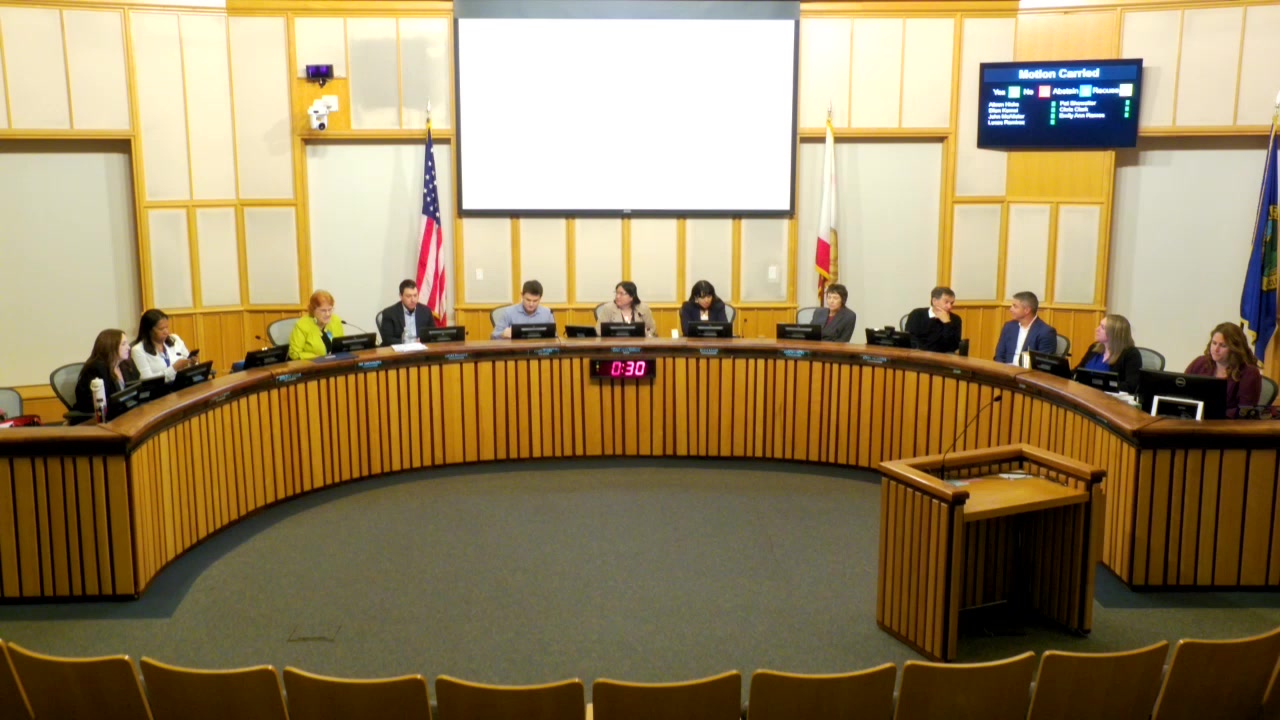
[05:03:45] Councilmember Lucas Ramirez: And I think it is, as Councilmember McAlister said, a remarkable plan. It's not to say that work that we've done in the past is not good, but I think this is exceptional work. And I had shared in a previous meeting, I think this is the kind of plan that should inspire the types of work that we do in the future on strategic planning generally.
[05:04:14] Councilmember Lucas Ramirez: And as Vice Mayor Clark shared, it doesn't mean that it's perfect. There's always room for improvement. But I think it is a great start. And I think it's also important to keep in mind, the plan itself can't achieve all goals. In contrast to the first item, and some members of the public weren't in attendance at that time, it's our approach to decarbonization and climate change.
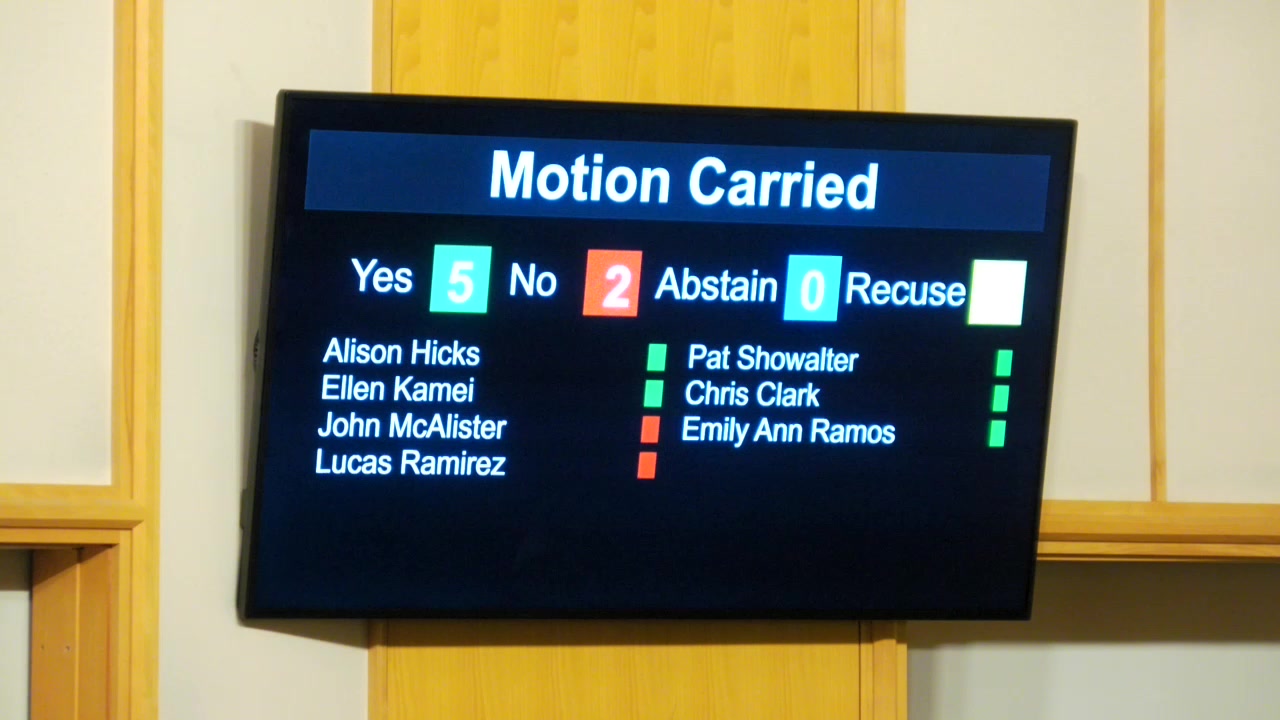
[05:04:45] Councilmember Lucas Ramirez: That plan, or the beginnings of a plan, included very little exploration of funding opportunities. I feel less good about that work because funding is harder. I feel really good about this work because in contrast, we've already made a sizable down payment. Can you think of other cities that have the Shoreline Regional Park community, right?
[05:05:15] Councilmember Lucas Ramirez: How many cities have a robust real property transfer tax that sets aside one-third of the revenue for parks? That's an incredible start. And on top of that, we have a potential bond measure that I think will likely include, again, another significant down payment on the beginning of this work.
[05:05:40] Councilmember Lucas Ramirez: It's a 10-year plan, it's not a plan for the entirety of the future of the city. There will continue to be updates, right, as we continue to make progress and implement the plan, and as circumstances change, we will continuously update the plan. As the city grows, we will continuously update the plan. But it is a plan for 10 years.
[05:06:05] Councilmember Lucas Ramirez: And if you put together the sources of funding that we have or are contemplating, right, the real property transfer tax, Measure G, Shoreline, I think is an important component of this. The bond measure, the revenue generated from the nexus study. We've also used general fund revenue from the strategic property acquisition reserve to acquire or work to acquire land that could serve park needs.
[05:06:35] Councilmember Lucas Ramirez: Like, there's a lot that we're doing or will likely do in the near future to help make this not just an aspirational document, but something that will actually yield, you know, near to medium-term progress on this high priority community need.
[05:06:55] Councilmember Lucas Ramirez: And I wish we could do it all now immediately, but there's a little bit of trust that the community has to have in the council and in the city to demonstrate our sincerity in implementing this plan and achieving the goals that the community has shared for us.
[05:07:13] Councilmember Lucas Ramirez: And I appreciated the response earlier to the question about if we had some amount of money, how would we spend it. Those are arbitrarily selected numbers, right? We can keep that exercise up, right? If we had an additional 25 million, how would you spend it? And it doesn't end at 75, right?
[05:07:36] Councilmember Lucas Ramirez: I think it was just to demonstrate that you've thought methodically about the needs of the community and have a plan for prioritization based on like near-term revenue. That's noteworthy. That's important. So I'm, I'll be supporting the motion on the floor.
[05:07:58] Councilmember Lucas Ramirez: I did want to say one last thing, and that was in response to something that Councilmember McAlister shared. Land use is important, too. You were talking about the impact of towers, we don't really build towers in Mountain View. But if we did, more often than not, I think we would actually have a higher probability of getting parkland from a tower.
[05:08:18] Councilmember Lucas Ramirez: I wrote down as you were speaking addresses that will haunt me until the day I die. 570 South Rengstorff, 1555 West Middlefield, now 515 Whisman. These are, that's three properties that total nearly 20 acres where we got zero park space. And they're not towers. They're rowhomes. My least favorite housing type.
[05:08:43] Councilmember Lucas Ramirez: Um, and so I think that's that's something we should be mindful of too, right? There's there's a lot of work that we're doing on parkland acquisition, construction of parks, but there's still a big gap with land use. And if we keep seeing, you know, this particular type of housing, where basically 100% of the property is built out without parks, then we will keep getting that, and we will not be able to deliver on the goals of our community.
[05:09:13] Councilmember Lucas Ramirez: Um, so something to keep in mind for anyone hypothetically wishing to run for city council. Um, I think that's probably enough. Thank you.
[05:09:23] Mayor Emily Ann Ramos: Thank you, Councilmember Ramirez. Councilmember Hicks. Oh wait, Councilmember Kamei. Go ahead. I thought you were gonna call it. This is we're gonna do this all night.
[05:09:33] Councilmember Ellen Kamei: Okay. Um, thanks, Mayor. So I was gonna be very excited to speak after Councilmember Ramirez because you were so positive and then it and then it and then it turned. But that's okay. That's okay. Um, because I, I wanna be positive. I wanna be very excited that we're here tonight.
[05:09:51] Councilmember Ellen Kamei: Um, thanks to staff, thanks thanks, uh to our community, um, our community groups, um that we're finally here at this moment where hopefully very soon, uh, we'll be able to adopt uh, our Parks and Recreation strategic plan.
[05:10:06] Councilmember Ellen Kamei: I think what um I just want to reflect on is I feel that the evolution of our strategic plan kind of shows how the city views parks and it's not just recreation spaces anymore, um, but essential community infrastructure and how we're able to support our various goals, right?
[05:10:29] Councilmember Ellen Kamei: Climate resilience, biodiversity, accessibility, public health, and neighborhood equity. And it's um very exciting to be able to move forward um in this direction.
[05:10:45] Councilmember Ellen Kamei: And uh, what I think is uh really reflective of this evolution as well is how city staff took all of our comments, made an attachment, put it into a chart, and then tracked and showed us all. Um, it made it made my OCD heart very happy.
[05:11:03] Councilmember Ellen Kamei: Um, but I think it it also is the feedback over the years from our residents that have been asking for honestly more information, more clarity, more accountability from the city. And I feel like attachment three helps embody embody that.
[05:11:20] Councilmember Ellen Kamei: Um, so I think what's really the final step in the process is trust, and knowing that this, um, we may want a few other tweaks and a few other things, um, included in this Parks and Rec strategic plan, but that we need to have the fundamental element of trust, um, to be able to know that all of you, all of our residents, our community members, are going to keep the city accountable, will be keeping us moving in the right direction.
[05:11:51] Councilmember Ellen Kamei: And that this strategic plan is not something that the council adopts, but that the city is adopting, that we did this truly um all together. So because of that, I think most of you know I worked for County Supervisor Joe Simitian for almost four years, and he talks about cautious optimism.
[05:12:07] Councilmember Ellen Kamei: So tonight, uh that is what's driving me and my support of this plan is the cautious optimism with which that we have a lot of foundational blocks that we've done in, you know, hand in hand with other um plans that we are moving forward like our biodiversity plan, we're going to have um, my brain is like blinking out, but the uh our bird safety plan, right, um the active transportation plan, all of those will help us move in in the right direction.
[05:12:44] Councilmember Ellen Kamei: And if we're not, you all let us know and we will make the necessary changes to make that happen. Thanks, Mayor.
[05:12:51] Mayor Emily Ann Ramos: Thank you, Councilmember Kamei. Councilmember Hicks.
[05:12:54] Councilmember Alison Hicks: Well, as we get to the end of the line of council members, a lot has already been said, so I can keep it fairly short. Um, I do want to uh, thank staff for for this plan. I really do see it it has evolved tremendously, and I see comments from, you know, comments that I've made, comments other council members have made, and comments that community members have have made. I really see a change.
[05:13:23] Councilmember Alison Hicks: Um, in particular, I liked that uh, that the um, personally I liked that the uh vision statement was refined to emphasize nature as one of the primary purposes of parks. Um, and I also uh, you know there are a number of other things uh, that uh, nature-based and restorative experiences, and I would say that biodiversity is for people too.
[05:13:53] Councilmember Alison Hicks: You know, I I hope that we're not just focusing on biodiversity for all those small creatures, but I think it it's uh, something that as we as we densify we need for people as well.
[05:14:05] Councilmember Alison Hicks: I liked that uh, Councilmember Showalter mentioned quiet. I don't know whether that's in the plan. I'm not going to demand that you add the word, but um, but I do think that that's a takeaway that I got from the um, from the sort of pickleball conversation we've had, that recreation is very important but also that peace and quiet is is important as well.
[05:14:33] Councilmember Alison Hicks: Um, so in addition to all those content changes of of that nature that I've seen uh over time. Um, I uh, I did like uh, Councilmember Ramirez's list of ways that we might fund these plans. But I also want to acknowledge the kind of the tension that I sometimes hear coming from the community. I think some of the difficulties we've had with parks and we have had difficulties over the past several years, have been from some kind of outside structural changes.
[05:15:07] Councilmember Alison Hicks: You know, the fencing of the schools, which I was unhappy with at first but frankly went around around all the schools in our region and due to active shooters, frankly, they're all getting fenced in.
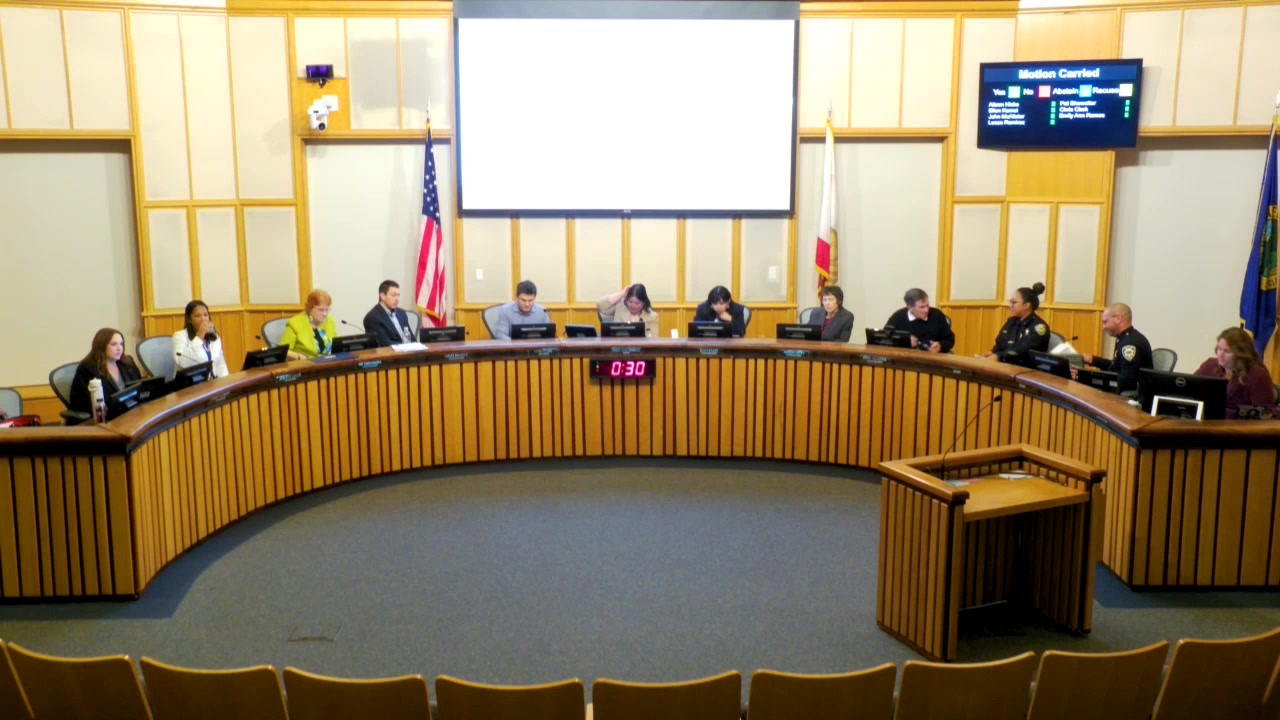
[05:15:21] Councilmember Alison Hicks: Um, and also the uh, sort of the uh, reduction in our ability to collect impact fees. And this is something that is not just a Mountain View thing, it's it's um, you know, all over uh our region or the state. And so I think we're taking big, I think you've taken big steps here, and councils taken big steps to address those things, but I think it's the next council as well. I think it's something we're going to have to continue looking at. It's going to be an ongoing project.
[05:15:55] Councilmember Alison Hicks: Um, so uh, that said, I will be um of course supporting the motion, and and thank you for all your work.
[05:16:08] Mayor Emily Ann Ramos: Thank you, Councilmember Hicks. Councilmember McAlister.
[05:16:11] Councilmember John McAlister: Uh, Councilmember Ramirez. Is there a rumor that you may be running a program to find funding for this?
[05:16:27] Councilmember Lucas Ramirez: We'll find out in June.
[05:16:28] Councilmember John McAlister: Okay, well the reason I ask is because there are people out there that we're gonna reach out to to help us pass this because they're so passionate that they can't say no. That they have to come and help us campaign and convince others and endorse this program. Do you don't you think that's fair?
[05:16:52] Councilmember Lucas Ramirez: I meet with Jim Zeroski regularly.
[05:16:54] Councilmember John McAlister: Oh, good. So his 10 people that he had on his list is already a subcommittee for you, right? Okay, I just wanted to make sure that we can't do it all, we have to rely on our constituents to help us. That's all I'm just thinking. Thank you for volunteering to lead such a distinguished group of residents to forget our goals. Thank you.
[05:17:20] Mayor Emily Ann Ramos: Thank you, Councilmember McAlister. So, thank you to staff. This has been a really long and windy road. Um, thank you to our community for providing so much feedback and it was very important feedback because I I I rarely go outdoors um willingly. Um, and so uh, to have the community drag me out doors to to uh, appreciate what what our parks and and and recreation activities and availabilities in Mountain View was was great.
[05:17:54] Mayor Emily Ann Ramos: Um, only only played pickleball once, but it seems like fun, probably won't do it again, but um, I'm glad that the community managed to get the feedback and input that they wanted into a really important part of our city.
[05:18:10] Mayor Emily Ann Ramos: The these parks are are our way of staying fit, it's our way of being connected with nature if you want to do that. Um, it's our way to connect with each other in our communities. Councilmember Showalter mentioned how like there's this growing trend of walking meetings as I cannot eat as much food as I used to anymore, I'm doing those now.
[05:18:31] Mayor Emily Ann Ramos: Um, so like they they're providing really important resources to our community and to have our community weigh in on how we want to shape that, and I know that as resources are getting tighter, um, funding that we used to be able to rely on and and land that we used to be able to rely on is getting rarer and rarer and more stressed, that we are being um, thoughtful and and purposeful with how we want that land to to be.
[05:19:00] Mayor Emily Ann Ramos: We don't want every single pe- as as Councilmember Hicks mentioned we don't want every single parks to just have a little bit of this, a little bit of that, a little bit of this, a mishmash like our our pocket parks like having like every little bit is it's so tiny of things that it's not enjoyable as a whole thing.
[05:19:17] Mayor Emily Ann Ramos: So we can think about all our parks on a on a whole city wide level. Um, and man if I could get away with getting a parkland uh by having a giant pickleball tower I totally would. Um, but that that probably won't fly with anyone because that's not the only thing that people want out of their parks. But it is some things that people want out of their parks.
[05:19:40] Mayor Emily Ann Ramos: Um, so thank you to Councilmember Showalter for also adding in the uh language of improving the uh native uh plantings. Um, I I I it it is kind of beyond me of understanding but I understand what the community was was upset about in terms of the scale of what uh was considered native. Um, I'm glad staff is looking into that. Um, and with that, I think we are ready to do one of the biggest votes I've had in my time on Council...
Additional Content 5
[05:20:07] Mayor Emily Ann Ramos: council so I'm quite excited.
[05:20:15] Mayor Emily Ann Ramos: And that passes unanimously. Yay! So before we go on to item 8 new business, um, we have I need a motion to continue past 10 o'clock.
[05:20:25] Vice Mayor Chris Clark: So moved.
[05:20:26] Mayor Emily Ann Ramos: Uh we have a motion by council member Clark, seconded by uh council member Hicks. Um let's go to a vote.
[05:20:51] Mayor Emily Ann Ramos: Oh, and our born and raised Mountain View council members are uh um we have a 5-2 vote which apparently is our only non-unanimous vote so far. So we will now move on to item 8, 8.1 AB 481 military equipment annual report and policy adoption.
[05:21:13] Mayor Emily Ann Ramos: Captain Matthew Atkins and Lieutenant Lorena Holt will present the item. If you would like to speak on this item in person, please submit a blue speaker card to the assistant city clerk now.
[05:21:29] Mayor Emily Ann Ramos: Thank you for everyone your patience. This is the final item of the night. Um and and uh when you when staff is ready, we will begin the presentation.
[05:22:44] Lieutenant Lorena Holt: Thank you Mayor Ramos. Good evening council. Thank you for having us. We made it to item 8.1. Congratulations everyone.
[05:22:53] Lieutenant Lorena Holt: My name is Lorena Holt and I'm a police lieutenant with the police department. And joining me tonight is Captain Matt Atkins. And this evening we'll be sharing with you information directly from our annual AB 481 report regarding military equipment funding, acquisition, and use.
[05:23:20] Lieutenant Lorena Holt: AB 481 created government codes 7070 to 7075, which regulate how local law enforcement agencies fund, obtain, and use military equipment. Its intended purpose is to ensure oversight and transparency regarding military equipment.
[05:23:44] Lieutenant Lorena Holt: The following are requirements for funding, acquisition, and use: The first bullet point is governing authority by governing bodies, an annual report, a well-publicized community meeting, and governing body annual review and vote to renew the ordinance.
[05:24:09] Lieutenant Lorena Holt: To maintain compliance with the requirements listed on the previous slide, the Mountain View Police Department have done the following: Last year, on May 27th, 2025, City Council adopted ordinance number 3.2025 which approved our current policy 709, which governs funding, acquisition, and use of military equipment.
[05:24:35] Lieutenant Lorena Holt: Over the last several months, our team has worked closely with the City Attorney's office as well as Assistant City Manager Seymour in compiling information regarding our current use of military equipment. And on April 26th, we published that report on our city website.
[05:24:53] Lieutenant Lorena Holt: Starting on April 27th, we publicized our community meeting which was scheduled for May 6th on our social media channels and Chief Canfield directly reached out to community stakeholders and uh community groups.
[05:25:09] Lieutenant Lorena Holt: We held that meeting right next door in our Plaza conference room on May 6th uh which also had a virtual option and Spanish translation was offered but not accepted. This evening, as well as uh two weeks from now on June 9th, City Council will review and vote to renew the ordinance.
[05:25:33] Lieutenant Lorena Holt: And now I will pass it off to Captain Atkins who will provide us with a summary of the military items currently in our possession.
[05:25:39] Captain Matthew Atkins: Thank you Lieutenant Holt. Council has received the staff report and AB 481 militarized equipment report. But I wanted to give a high-level summary of the items MVPD has in our inventory. MVPD, like most law enforcement agencies, has numerous items that qualify as military equipment under AB 481.
[05:26:01] Captain Matthew Atkins: This includes a drone, a mobile command vehicle, a robot, explosive breaching equipment, chemical munitions such as tear gas, noise flash diversionary devices, some non-standard issue firearms and the related ammunition, as well as our kinetic energy less lethal munitions which are sponge rounds and launchers. Those all qualify as AB 481 equipment.
[05:26:28] Captain Matthew Atkins: As you look at the two columns on the slide, you can see that the items on the left are the items that were used in 2025. And the items on the right are proposed for 2026. It's important to note that when I say used for the first six items on the left, it means that they were either used in training or they were equipped on our officers when they are working in the field.
[05:26:51] Captain Matthew Atkins: But for those items, it doesn't mean that they were fired, launched, or detonated except at some of our training facilities. For the last item on the bottom left, which is two noise flash diversionary devices, those were deployed and detonated during a criminal barricaded situation.
[05:27:11] Captain Matthew Atkins: For those noise flash diversionary devices, they were used at the exterior of a residence to gain compliance, and this was successful and ultimately led with for a peaceful resolution.
[05:27:24] Captain Matthew Atkins: All of the equipment however was used for training. It requires supervised training to deploy this equipment and it was used for this purpose. As such, the bottom four bullet items on the right column highlight the items that we believe we either need to replace now or we anticipate needing to replace to accommodate future training.
[05:27:46] Captain Matthew Atkins: For those bottom four bullet points on the right, they total about $12,000, and that's what we anticipate needing to replace for the expired or used equipment.
[05:27:57] Captain Matthew Atkins: That top bullet point represents our current research as we evaluate what's now improved UAS technologies and other potential funding streams as we look to replace our our aging platforms.
[05:28:10] Captain Matthew Atkins: It's important to note that there were no complaints associated with any of our AB 481 equipment in 2025. And if there were, that would be noted um in our AB 481 report.
[05:28:24] Captain Matthew Atkins: With that, I will move to staff recommendations. I'll go ahead and read this verbatim. Introduce an ordinance of the City of Mountain View renewing approval of Mountain View Police Department military equipment use policy, adopting updated military equipment use policy, and finding that this action is not subject to the California Environmental Quality Act, to be read in title only, further reading waived, and set a second reading for June 9th, 2026.
[05:29:02] Captain Matthew Atkins: And with that, I'll turn it over to you Madam Mayor for any questions.
[05:29:04] Mayor Emily Ann Ramos: Thank you. Does any member of the council have any questions? Councilmember McAlister.
[05:29:11] Councilmember John McAlister: Yeah, I have one. Um, is there a cooperation between the fire department on using drones? Do they have drones, right? Or do they?
[05:29:26] Captain Matthew Atkins: So so right now we haven't been working with Fire yet on drones. But that is something that we are working together with them now to to look at being able to employ it. But we have deployed it um for some fire-related incidents.
[05:29:38] Councilmember John McAlister: So the police department has the drones. Okay.
[05:29:41] Captain Matthew Atkins: Correct, yes.
[05:29:43] Councilmember John McAlister: Okay. Is there any plans to increase because that was under your to-review process to look at more?
[05:29:50] Captain Matthew Atkins: Correct. We're we're looking at different funding mechanisms whether that's grants. um but also different ways of improving some of the platforms that are starting to age um and looking at you know new platforms where we may be able to to update our our current inventory.
[05:30:04] Councilmember John McAlister: Okay, thank you.
[05:30:06] Mayor Emily Ann Ramos: Now, Lucas.
[05:30:08] Mayor Emily Ann Ramos: No, not now. So, looking to see there are no other questions from council. Now would any member of the public on the line like to provide comment on this item?
[05:30:19] Mayor Emily Ann Ramos: If so, please click the raise hand button on Zoom or press star 9 on your phone. A timer will be displayed on the screen. Each speaker will have 90 seconds.
[05:30:28] Mayor Emily Ann Ramos: Do we have any speakers? Great. Um, I didn't mean great. We love your speakers. Okay, um, we will now take virtual speakers. Seeing none, um I will now bring the item back for council questions and deliberation.
[05:30:45] Mayor Emily Ann Ramos: Please note that a motion to approve the recommendation should include reading the title of the ordinance attached to the report. Um, I see a motion by councilmember McAlister. Go right ahead.
[05:30:57] Councilmember John McAlister: This one? Yes. Okay. Introduce an ordinance of the City of Mountain View renewing approval of Mountain View Police Department's military equipment use policy, adopting an updated military equipment use policy and finding that this action is not subject to the California Environmental Quality Act to be read in title only, further reading waived and set a second reading for June 9th, 2026.
[05:31:22] Mayor Emily Ann Ramos: Thank you. And that was seconded by councilmember Ramirez. Oh my god. Why are the people that made the motion seconding the ones that who didn't vote for the 10, 8, 10 p.m. thing? All right, get ready to vote.
[05:31:39] Mayor Emily Ann Ramos: Motion passes unanimously. Um, we will now move on uh that closes out this item. We will now move on to item 9 council staff and committee reports. Do we have any reports from my colleagues on council? Councilmember Hicks.
[05:32:00] Councilmember Alison Hicks: So from time to time I go to meetings of the organization Avenidas, which serves senior citizens. Um, and I thought I would report back at this time. Um, they have been growing, uh, I think largely due to the silver tsunami that many of you may have heard of.
[05:32:19] Councilmember Alison Hicks: They've also changed. I've been with them for the rep for the city to uh Avenidas for years. They have also uh changed a lot what they do in response to uh many of the seniors are very responsive to um virtual technology.
[05:32:38] Councilmember Alison Hicks: Um, uh, so a lot they offer a lot of zoom classes and uh other other related not having to drive your car sort of services that they did not have in the past. Um, and they've changed and expanded in other ways. They've added recently a rainbow collective that's very popular.
[05:32:59] Councilmember Alison Hicks: Um, but the unfortunate thing is, along with growing they are now facing a structural deficit and I wanted to let everybody know that. And they are uh doing strategic planning to try to address that. And I will give you updates as that progresses.
[05:33:18] Mayor Emily Ann Ramos: Thank you, council member Hicks. Councilmember Showalter.
[05:33:21] Councilmember Pat Showalter: Yes, um spent a busy couple weeks. On May 13th and 14th I attended the 10th anniversary of the California Community Choice Aggregation Association conference in Sacramento. And there was lots of um discussion about um how much uh generation has been added in the last 10 years of with a CCA movement in California.
[05:33:48] Councilmember Pat Showalter: How much clean energy generation. It's it's really um quite remarkable and it's expected to move up. There was also a lot of discussion about possible load growth. The electrical load in um most of the country has been pretty static for the last two or three decades, but that's not um expected to uh uh continue.
[05:34:11] Councilmember Pat Showalter: It's expected to go up quite a bit um based on data centers and AI use. And um at this at this conference the general opinion of the speakers was that data centers will be a good thing because um they'll buy more energy and um that will um spread out the costs of operating the transmission network some and will provide help affordability for most of us a little bit. We'll see if that happens.
[05:34:46] Councilmember Pat Showalter: And um but it it will require that local governments uh you know collaborate with developers and make sure that the data centers are um are built properly and uh with water saving uh features and various various things. Anyway, so that was pretty interesting.
[05:35:11] Councilmember Pat Showalter: Um, then uh that evening we had the uh Grand Sylvan neighborhood meeting and um I was there and uh Councilmember McAlister is going to talk I was just I'm just going to say that uh uh Lorenzo Lopez won the competition for answering the most questions.
[05:35:34] Councilmember Pat Showalter: And um then the other thing I wanted to share is that uh um on May 21st I attended a Bosa meeting and I shared our experience with the Cuesta water main incident and um thanked everyone for the extensive mutual aid that we received.
[05:35:52] Councilmember Pat Showalter: And um it was suggested that that uh our staff might give a report on lessons learned to the staff members that get together monthly, on a monthly basis. Maybe sometime in the next year or so.
[05:36:06] Councilmember Pat Showalter: Um, then on May 22nd I went to a Silicon Valley Clean Energy executive committee and that's always sort of a preview of what's going to be on the next meeting. And one of the things that's going to be in the next meeting that I will share with everybody is a presentation on how to read your electric bill.
[05:36:25] Councilmember Pat Showalter: And if you've ever really opened it up and started leafing through it, um your the first I don't know 20 times you do it, it's like just confusing. It's very, very confusing. So I'm looking forward to this tutorial on how to uh to read it and and the graphs and stuff and I'll be sharing that with you. So thank you everybody.
[05:36:49] Mayor Emily Ann Ramos: Thank you Councilmember Showalter. Councilmember Kamei.
[05:36:53] Councilmember Ellen Kamei: Great, thanks. Um well I have a a couple of things to report on. On the 14th I went to Cities Association where I sit on behalf of the city. Um, the 19th we had our State of the City. Yay. Um, on the 20th we had our Council uh Youth Services subcommittee uh meeting.
[05:37:16] Councilmember Ellen Kamei: And then um on the 21st I went to an event as a follow up. When I was mayor last year there was a company, they're called Lightmatter. They're on the corner of Dana and what? No, Franklin. Thank you. Franklin. I was like in my mind I um, the the uh they are a photonic super company and they took over that space. They have the whole building. It is incredible.
[05:37:46] Councilmember Ellen Kamei: Um, and um super thanks to staff who was able to help through that process. It's great to have a company headquartered in Mountain View having um their regional event there. And then on the 22nd was the Law Enforcement Torch Run um in support of the Special Olympics. So that was really great um to support.
[05:38:07] Councilmember Ellen Kamei: And then um, if colleagues are open just wanted to bring forward a potential item nine. So um, you know, over the last several city council meetings but I would say you know in particular since the start of this year, members of our community have expressed um increased concern over our federal government.
[05:38:28] Councilmember Ellen Kamei: And really proud of how our city and our staff has been working to make sure we're reaffirming that we're a community for all. Um, but recently um we got some unfortunate news um from the county, which is um some unincorporated land down in Gilroy, the federal government is looking to build a 4,000 square foot facility.
[05:38:57] Councilmember Ellen Kamei: Um, this um would be for a 20-year period on a 24.5-acre site which would most likely be detaining and processing center um for for members of our community um who may be mixed status or undocumented.
[05:39:19] Councilmember Ellen Kamei: And I think with that as well as um continued harm that our federal government is placing on our on our immigrant community, there's been a lot of conversation from our city county and state and some federal leaders on what we can do as a region to help um protect the well-being of our community.
[05:39:45] Councilmember Ellen Kamei: But I would say also the stability of our economy. The Bay Area Council recently released a report that said the impact to the nine county Bay Area region would be something of like 6 over 600 million dollars um, because of our our local economy and um the workforce um that immigrants bring to the area.
[05:40:10] Councilmember Ellen Kamei: So all of that couched in, seeing if council members are interested in the conversation with which um some members of our community have brought forward on a policy related to our city-owned uh property and prohibiting any federal use on it.
[05:40:27] Councilmember Ellen Kamei: So, members of our community have continually asked. The only way we can really talk about it is this venue which is the the item nine. So just wanted to to see if there was any interest. Thank you Mayor.
[05:40:42] Mayor Emily Ann Ramos: So uh next on the docket is councilmember McAlister. Did you want to speak on this item or did you want to hold off on your thing because I think this will probably get some discussion.
[05:40:51] Councilmember John McAlister: Well I just, if we're going point of order, should we go in order of finishing up the one uh item? Uh, council updates before we go into the other item? How do you want to handle it Mayor?
[05:41:03] Mayor Emily Ann Ramos: Uh, let's handle this item and then we'll continue out with the reports. Is if that's okay with you?
[05:41:12] Councilmember John McAlister: You're the mayor, you decide.
[05:41:14] Mayor Emily Ann Ramos: Okay.
[05:41:15] Councilmember John McAlister: But I just I was a little confused because we were on one item and then we jumped to the...
[05:41:20] Mayor Emily Ann Ramos: It's an item 9, for everyone.
[05:41:21] Councilmember John McAlister: Is it is an item 9 for everything? I thought it was okay. I just wasn't sure.
[05:41:24] Mayor Emily Ann Ramos: Yeah. All right. So I don't know if you want to speak on this part of the item or if you want to do your report out um.
[05:41:30] Councilmember John McAlister: I'll wait, but I'll like to hear the fellow council members, but um yeah, I have concerns.
[05:41:36] Mayor Emily Ann Ramos: Okay, so next we have council member Hicks.
[05:41:40] Councilmember Alison Hicks: So I would support the suggestion that councilmember Kamei brought up.
[05:41:46] Mayor Emily Ann Ramos: All right. Thank you council member Hicks. Vice Mayor Clark.
[05:41:50] Vice Mayor Chris Clark: Um, I I'm sorry, but I don't think that this is the right approach um to this particular item. And I feel like without getting into the merits of the particular item, just speaking to the merits of whether or not it's worth um this particular topic is worth agendizing, I think that given I understand what other communities have done, I think Mountain View is somewhat unique in that we have a number of federal properties within the city that we do not have control over.
[05:42:33] Vice Mayor Chris Clark: I think that a lot of our city properties that we might discuss as part of this are surrounded by public streets and um with federal properties nearby.
[05:42:45] Vice Mayor Chris Clark: And I think that the way that we are currently and I think the community would say this too, I think the way that our chief and our staff and our community as a whole has handled this to date kind of proves that we are doing the best that we can to protect them.
[05:43:07] Vice Mayor Chris Clark: And I am hesitant to pursue any path that I or agendize a path that I think would actually cause more harm than good or provide a false sense of security.
[05:43:23] Vice Mayor Chris Clark: And um and I'll just leave it at that. I I just don't think this is the the right path forward uh at this time for our community.
[05:43:34] Mayor Emily Ann Ramos: All right. Um, seeing no other speakers on the docket, I will I I I support what Councilmember Kamei is putting forth. I I totally I totally understand the the concern Vice Mayor Clark is is is saying.
[05:43:58] Mayor Emily Ann Ramos: This, how how our immigrant communities have been under attack since the administ the this current administration come came back, um, is a whole set of feelings that um are are hard to to really express at times.
[05:44:21] Mayor Emily Ann Ramos: Um, when when the first when this administration first came around, there was a a panic of of doing something now and then um figuring it out.
[05:44:31] Mayor Emily Ann Ramos: And then still not feeling prepared. I remember when we found out the results of the 2024, oh my God it's just 2024, felt so long ago, but when we got the results of the election, I remember we had meetings with the county and being like, we're prepared, we we're going to set we know how to protect our community.
[05:44:53] Mayor Emily Ann Ramos: And then when the administration came, we just found ourselves so out of de de because like we we didn't even we couldn't even anticipate a lot of that, um, the sheer weight of that.
[05:45:11] Mayor Emily Ann Ramos: Um, we're at a point I think where we are starting to to take our breath, starting to, a community is not cowering is not the the best word for it, but we've been kind of shell shocked for a while.
[05:45:31] Mayor Emily Ann Ramos: And now we're at a point where we're just trying to find our best ways to fight back. Even if it doesn't feel like it solves all the problem, I think we've already accepted that it won't solve all the problems, there's still so much fear out there.
[05:45:45] Mayor Emily Ann Ramos: But we're at a point where like every, every little bit counts at this point. Um, and and some people aren't aren't aren't at that point yet and I understand that. But I I do feel like it's worth fighting for. Um, I have a council member McAlister next on the docket.
[05:46:09] Councilmember John McAlister: Yeah, so I have a few questions. First to our city attorney. Okay, so people will say I think what you're asking is that no ICE can be done on Mountain View city property. Is that your request?
[05:46:25] City Attorney Jennifer Logue: My request was the members of the community have asked council to bring this forward and I'm asking if there's interest. That is what I'm asking for this item. I am not proposing a certain policy. This is an opportunity for us to discuss or do we want to discuss it.
[05:46:45] City Attorney Jennifer Logue: This is not a reflection on how I feel about our public safety. Not a reflection about how I feel about the Mountain View police department. This is simply that there is no other avenue or vehicle for the council to be able to discuss this request from members of our community.
[05:47:05] City Attorney Jennifer Logue: And given the context that I provided, I think there's credence in being able to have that discussion. It's not to presuppose how people feel or even say that I have a a certain feeling, it's that should we look into such a policy as some neighboring jurisdictions have done. That is essentially the question that I am asking.
[05:47:30] Councilmember John McAlister: Okay, so I'll follow up with the question to the City Attorney. Some of these cities are saying uh, ICE you cannot participate on our uh uh land uh property. Is that enforceable?
[05:47:45] City Attorney Jennifer Logue: That's not a question I can answer this evening. That would require a lot of research to determine what to what extent um policies and local laws of that sort would be enforceable. I mean obviously there's federal preemption but how that plays out in relation to local public property is something that would require a significant amount of research.
[05:48:09] Councilmember John McAlister: Well, hypothetically if somebody was in a street, a public street, and this organization came down and and stopped them, but that's is the street public property in Mountain View?
[05:48:23] City Attorney Jennifer Logue: Well, not all of them. I mean El Camino Real is a state. I mean I I can't answer hypotheticals like that. I would really need to do a lot of research and I just don't want to surmise that's that's it's very dangerous for me to kind of surmise and I think it's just something that um I, along with the members of my office would like to look into in detail and be able to provide a report on that.
[05:48:50] Councilmember John McAlister: Okay, now I have a question for the City Manager. Is there a downside to hypothetically doing this, where we say you're ICE you cannot pursue your lawful duties on city-owned property, that could jeopardize any of the relationships we have other with other law enforcement agencies?
[05:49:20] City Manager Kimbra McCarthy: I see this conversation as a policy matter for the council to decide. Uh, I am not going to conjecture about that.
[05:49:38] Councilmember John McAlister: Well, okay. Um, I I too have concerns. That from what I read already or saw that some of the stuff is not enforceable. That, what Chris says about trust, you know, we haven't seen anything from our public safety department to say that our trust hasn't been there.
[05:50:02] Councilmember John McAlister: I feel concerned that if we go down the path that we say, ICE you can't do it, I think that's putting a target on our back and that we don't need it. Uh, Chris also mentioned our, the vice mayor mentioned we already have federal property. We have Shenandoah. They could set up on Shenandoah. They could go to Moffett, they could set up there.
[05:50:23] Councilmember John McAlister: They could set up at the IRS uh IRS station, our social security. So, um, I'm always been opposed to putting something out there that's that we really can't enforce.
[05:50:36] Councilmember John McAlister: It's maybe it's good it's good maybe good politically but I don't think it's good government because we potentially could be putting people more in jeopardy by putting things out there that says, we're going to do this versus just say, trust our staff that are our public safety, trust what we've done so far.
[05:50:56] Councilmember John McAlister: Trust that the city uh, the community trusts us when we say we're a community for all, and we're doing all these things that we put out there from our last meeting that says this is what we do, we have the resources, we have the cooperation from other departments, and so, um, it's something to consider.
[05:51:17] Mayor Emily Ann Ramos: Thank you Councilmember McAlister. Councilmember Ramirez.
[05:51:22] Councilmember Lucas Ramirez: Thank you Mayor. I'll be supporting um the motion on the floor or council member Kamei's request. Um, we're not alone. We're not the first jurisdiction contemplating uh this issue.
[05:51:41] Councilmember Lucas Ramirez: Um, there is I think a regional effort to explore any opportunity uh available to protect members of our community who are actively being targeted and feel vulnerable.
[05:51:52] Councilmember Lucas Ramirez: Um, I think there there isn't as part of this recommendation any particular prescription. It's let's authorize some staff time to explore the options and and return to council.
[05:52:08] Councilmember Lucas Ramirez: Um, and I think our staff would do so um benefiting from work other jurisdictions have done and give us a chance to collaborate regionally. So I I don't have a particular concern about uh proceeding with the with the recommendation and I think it'll it'll um, you know, as as the mayor said it's not going to solve every problem.
[05:52:33] Councilmember Lucas Ramirez: Um, but uh I think it it can be beneficial for our community to see that we're participating in that regional discussion and we may end up with some good ideas uh made available to us.
[05:52:43] Mayor Emily Ann Ramos: Thank you Councilmember Ramirez. Vice Mayor Clark.
[05:52:46] Vice Mayor Chris Clark: So it's just um, I'm not trying to change anyone's minds at this point but I I do think that what would be helpful would be, I mean we have two meetings left before the summer, so it would be helpful for the rest of us who are deciding how to vote on this to know what if this is going to if this is a session that'll occur before the summer break, which meeting and what's going to move um to support that.
[05:53:10] Vice Mayor Chris Clark: Or if we're going to try and have a longer meeting, maybe that's fine. Or if it's it just seems very nebulous. So what I what I don't want to vote for is a discussion where every like we just everything we spend two hours talking about everything under the sun, um, or if there's a specific proposal and when does it go to a committee first, is it just going to be a council thing, when is it going to happen.
[05:53:36] Vice Mayor Chris Clark: Cause I think, you know, one of the things voting for against this is what's what are the trade-offs in terms of what's going to have to move from the schedule and when it's going to happen. So I don't know if there's any guidance on that now but that would be helpful.
[05:53:53] Mayor Emily Ann Ramos: Okay, so I see that the uh the speaker docket is clear. Um, shall we do a straw poll? Well I think I think the council member's Clark question should be answered. So, so I think the examples that exist are the county of Santa Clara, the city of San Jose, the city of Santa Clara, the city of Sunnyvale, the city of Campbell and VTA.
[05:54:22] City Attorney Jennifer Logue: There are policies that already exist. So we could look into those. I'm really looking for if if others are interested in looking at those policies and seeing if there might be anything for the city of Mountain View. So, and I will just say I am interested in exploring those possibilities. So I guess uh we can do a straw poll. Straw poll? Oh, yes, Councilmember Showalter.
[05:55:00] Councilmember Pat Showalter: Yeah, I I'd like to ask staff about uh the timeframe for coming back to us with this.
[05:55:09] Mayor Emily Ann Ramos: Do we have an answer for that staff? Can you give me a few minutes please?
[05:55:16] City Manager Kimbra McCarthy: We can do that.
[05:55:17] Councilmember John McAlister: Do you want to give your report? Let's go on to a positive note here or uplifting, not necessarily positive.
[05:55:25] Councilmember John McAlister: Um, so I did attend uh, we did run a CNC meeting and that was really well attended. I think we had the cream of the crop, well the whole city staff is the cream of the crop, but we had a real good uh res uh representation from the staff and they answered all the questions really well.
[05:55:40] Councilmember John McAlister: And I had the mayor and the former mayor with me, so. Also it's been the first time I've revisited Mount view or Awalt since I was uh, the new buildings were put in and I was very impressed with uh how they're doing all those improvements to that school. So that was nice.
[05:55:54] Councilmember John McAlister: Um, on VTA, uh, at our last policy advisory board I was voted Vice Chair uh of that anonymously, so that was yes, so I am the new Vice Chair of the VTA policy advisory board.
[05:56:09] Councilmember John McAlister: And we were talking about uh transit lanes which uh express lanes, which uh there was some diverse conversation about equity of express lanes. Meaning that if you don't have the money you don't go in the express lanes and so they're saying, it was interesting how they said well if you get in the express lane you'll save 20 minutes, but they never said what about the people in the general purpose lanes, how much longer they're going to take to get there. So that was an interesting. So that was it.
[05:56:38] Councilmember John McAlister: Um, and then we also, didn't we have uh our CNC meeting where we had a meeting and then we had a reception afterwards, was that done in the before our last council meeting, that dinner remember?
[05:56:50] Mayor Emily Ann Ramos: I think we had that before the last council meeting. I think so too.
[05:56:52] Councilmember John McAlister: Okay, well anyway maybe I just wanted to point out because CNC has been doing its thing and uh people do appreciate coming to that. Other other than that, that's uh all I have to say, but I am glad to be representing us on uh transportation. But yeah, congratulations on that.
[05:57:07] Mayor Emily Ann Ramos: Um, all right, so I'll do my reporting out. Um, on May 14th I welcomed the uh our city interns for the Stanford local government Shadow Day. Um, that was great. Um, uh, May 14th also was the CNC Grant Road Sylvan Park meeting that uh Councilmember McAlister mentioned.
[05:57:28] Mayor Emily Ann Ramos: On May 15th I went to the celebration of leaders and Athena awards celebration. I think the city paid for that, so that's why I'm reporting it. Um, so uh because I was, I was at the city table and I I didn't pay for that. So um, I'm assuming the city did.
[05:57:44] Mayor Emily Ann Ramos: Um, on May 19th I had the State of the City. Thank you for everyone who helped out with that and came. And that was really fun. My dad was there too. It was nice.
[05:57:54] Mayor Emily Ann Ramos: Um, on May 20th uh we had our CFC meeting so you're gonna see a number of policies that will come to y'all including probably the most the biggest item that day was the the nexus study fee for parks, which is fun. Um, and then we had our Council youth services committee as well on the May on May 20th.
[05:58:14] Mayor Emily Ann Ramos: And with that, I guess we have an update from staff with uh requests.
[05:58:19] City Attorney Jennifer Logue: So I just wanted to get a little bit of clarification. Um, was the straw poll for us to bring back a policy for your consideration, or are you just wanting to talk about all of the policies that you listed? I mean we can just look at those and do some compilation or choose one of them and bring back a policy for council's consideration.
[05:58:45] City Attorney Jennifer Logue: And if that's the case I think we can do that by June 23rd a resolution adopting, it would be a resolution and then a council policy that would adopt that, but I wanted to make sure that that I wasn't mishearing.
[05:58:56] Mayor Emily Ann Ramos: Is that the easiest path forward?
[05:58:59] City Attorney Jennifer Logue: Well, that's a path forward to actually adopting a policy. um, it's really the only path forward, a resolution adopting a policy. But if you wanted more discussion about the various policies that have been adopted by different entities and then to provide direction on what you want to see in your policy, that would there that would be a step in between us bringing a resolution with a policy. So I just was getting clarification.
[05:59:29] Mayor Emily Ann Ramos: Okay, how do we feel about the first one? Yeah, all right, so we will go with that um we'll do the straw poll on that first option where we're asking staff to bring back a policy for us to adopt a resolution in. Um, so shall we, is that clear? Shall we take the vote on that now?
[05:59:56] Councilmember Pat Showalter: Yeah, on June June 23rd, so we'd bring back a resolution to adopt a policy that was some version of the ones that exist. On June 23rd.
[06:00:05] Mayor Emily Ann Ramos: All right, uh clarity. So does a resolution uh does it become effective immediately or is there a second reading to that?
[06:00:15] City Attorney Jennifer Logue: It would become effective immediately.
[06:00:18] Councilmember John McAlister: Okay, thank you.
[06:00:20] Mayor Emily Ann Ramos: All right, so now that we are clear on the, it's not really a motion, it's a straw poll, um to bring, is it a motion?
[06:00:30] City Attorney Jennifer Logue: Just need a straw poll for a majority of support to bring it back.
[06:00:34] Mayor Emily Ann Ramos: All right, do we have majority support to bring back a uh a policy or a resolution um that is similar to what other cities have adopted in regards to a response to ICE? All in favor say I, or raise your hand. Uh one, two, three, four. All opposed? Any abstentions? No abstentions, it passes five to two.
[06:01:00] Mayor Emily Ann Ramos: Thank you so much everyone. Do we have any other council reports? No other council reports. The next city council meeting will be held on June 9th uh 2026. This meeting is adjourned at 11:02. Oh sorry.